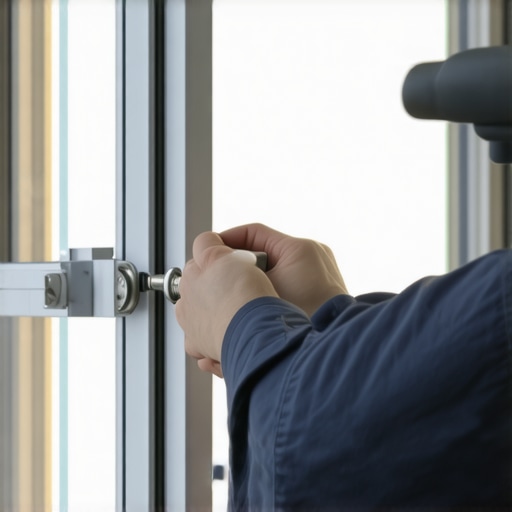
The Physics of the Perfect Counterbalance
A window is not merely a piece of glass; it is a mechanical system designed to combat gravity while managing the thermal envelope of your home. When we talk about a double-hung sash window, we are discussing a machine. If that machine requires a gym membership to operate, or if it slams down like a guillotine, the physics of the counterweight system have failed. As a master glazier, I have seen too many homeowners resort to a window cleaner or a handyman who simply sprays silicone on the tracks, ignoring the underlying mass imbalance within the weight pockets.
I once pulled a pair of historic sashes out of a Victorian home where the homeowner complained of a persistent draft. Upon opening the access panel in the Rough Opening, I found the header was nearly black with rot. The previous installer had not only used the wrong cord but had failed to install a Sill Pan or proper Flashing Tape. The moisture had wicked up from the sill, traveled into the weight pocket, and turned the cast-iron weights into a rusted mass that was twice its original diameter. This isn’t just a window repair issue; it is a structural failure caused by a lack of understanding of the shingle principle.
“Installation is just as critical as the window performance itself. A high-performance window installed poorly will fail.” – AAMA Installation Masters Guide
The Climate Context: The Chimney Effect
In colder northern climates, the weight pocket of a sash window is often the greatest source of heat loss. Because these pockets are essentially hollow voids in your wall, they act as chimneys for cold air. When we replace windows or restore them, we must consider the U-Factor. A lower U-Factor indicates better insulation. When you re-weight a window, you are often doing so because you have upgraded the glass to a dual-pane IGU (Insulated Glass Unit). This extra mass requires a recalibration of the lead or cast-iron weights to ensure the Sash stays where you put it without the need for excessive force.
Calculating the Mass: The Glazier’s Math
To achieve an effortless opening, you must understand the ratio. For a bottom Sash, the combined weight of the two counterweights should equal the weight of the sash plus one pound. This ensures the window stays closed against the sill, preventing drafts. For the top sash, the weights should be one pound lighter than the sash, ensuring gravity keeps it tucked tightly against the head jamb. This prevents the top sash from ‘creeping’ down, which is a primary cause of air leakage in historic homes.
“Properly functioning fenestration systems must account for the dynamic loads of the operable components to maintain the air barrier integrity.” – ASTM E2112 Standard Practice
Step-by-Step: Re-Weighting the System
First, you must remove the staff bead and the parting bead. Be careful not to snap the Glazing Bead if you are working with modern replacements. Once the sash is free, use a high-quality digital scale to find the exact weight of the wood and glass assembly. If you have added thicker glass for better Solar Heat Gain control, your old weights will be insufficient.
Next, access the pocket. This is where the Rough Opening is revealed. Inspect the pulleys. If they are pitted or rusted, no amount of weight will make the window smooth. Replace them with high-quality brass pulleys with ball bearings. When selecting your cord, avoid cheap nylon. Use a #8 or #10 waxed cotton cord with a synthetic core. This prevents the ‘stretch’ that leads to the weights bottoming out in the pocket.
If you find that your sash is now heavier than your weights can handle, you have two options: lead add-ons or ‘stacking.’ Lead is denser than iron (approximately 11.34 g/cm³), allowing you to fit more mass into the narrow Rough Opening without the weights hitting the sides of the pocket. This is a technical precision job. A Shim may be required to ensure the pulley sits perfectly plumb, preventing the cord from fraying against the housing. Once the weights are hung, test the Operable range. The sash should move with the touch of a finger and stop exactly where you release it.
The Myth of the Quick Fix
Many window repair companies will try to sell you on ‘spring balances’ to replace the weight and cord system. This is a mistake. Spring balances have a finite life cycle and do not provide the same linear resistance as a gravity-based system. A well-maintained weight and pulley system can last another century, whereas a spring balance will likely fatigue within fifteen years. When you manage the Weep Hole and the Sill Pan during this process, you are not just fixing a window; you are preserving the envelope of the building.