The Professional Glazier Perspective on Glass Clarity
I have spent over two decades looking through glass, but more importantly, I have spent those years looking at glass. Most homeowners view a window as a simple transparent barrier, but to a master glazier, it is a complex thermal envelope component. When you see streaks on your window, you are not just seeing dirt: you are seeing a failure in surface tension management. Many people jump straight to a full house replace windows project when they see cloudy glass, but often the issue is a combination of environmental pollutants and improper maintenance techniques. Achieving a streak-free shine requires more than just a bottle of blue liquid and a paper towel. It requires an understanding of the molecular behavior of the glass surface.
The Condensation Crisis: A Narrative of Misdiagnosis
A homeowner recently called me in a panic because their new windows were constantly sweating. I arrived at the property with my hygrometer and thermal imaging camera. The client was convinced the seals had failed and was demanding a full window repair under warranty. I walked into the kitchen, checked the readings, and showed them that their indoor humidity was hovering at 65 percent while the outdoor temperature was plummeting. It was not a hardware failure: it was their lifestyle and ventilation habits. The ‘fog’ they were trying to scrub away was actually interior condensation caused by a lack of air exchange. This is a common misunderstanding where people mistake physics for product failure. Once we stabilized the humidity, we focused on the glass itself. They had been scrubbing the panes so hard they were actually leaving behind microscopic levels of paper fiber and surfactant residue, which provided more surface area for moisture to cling to.
The Blackboard Eraser Secret Revealed
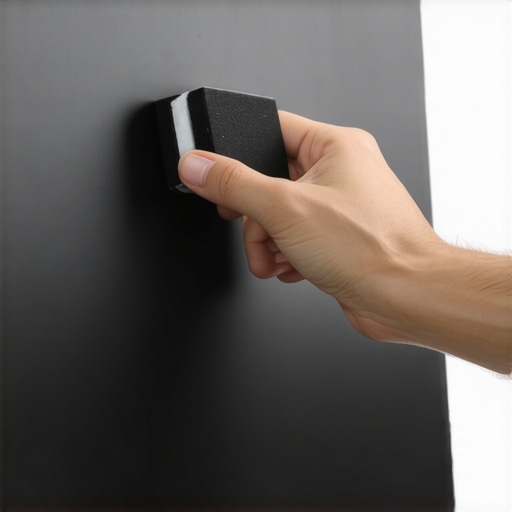
If you want the secret to a professional finish that defies the sun, you have to look back to the classroom. The blackboard eraser is the ultimate tool for the final buff. Why does a wool felt eraser work where a microfiber cloth fails? It comes down to the density of the natural fibers and the static charge they generate. After you have used your professional window cleaner and a squeegee to remove the bulk of the contaminants, you will often notice ‘ghosting’ or faint lines when the sun hits the glass at a low angle. This is typically residual minerals from hard water or un-evaporated cleaning solution. Taking a dry, clean felt blackboard eraser and buffing the glass in a circular motion creates a slight friction-based heat. This heat helps to flash-evaporate remaining moisture while the dense wool fibers trap microscopic particles that are too small for a standard cloth. This technique ensures that the Visible Transmittance of your glass remains at its peak performance level.
“Installation is just as critical as the window performance itself. A high-performance window installed poorly will fail.” AAMA Installation Masters Guide
The Glass Class: Understanding U-Factor and SHGC
To truly care for your windows, you must understand what you are cleaning. Modern windows are not just slabs of glass: they are Insulated Glass Units (IGUs). In colder northern climates, we prioritize the U-Factor, which measures the rate of heat loss. A lower U-Factor means your window is better at keeping the furnace heat inside where it belongs. This is achieved through Low-E coatings, typically applied to Surface #3 (the outward-facing side of the inner pane of glass). If you are cleaning an older window and notice a strange metallic tint or a ‘rainbow’ effect, you might be looking at an exposed or degrading coating. High-performance windows in the north also utilize warm-edge spacers to keep the perimeter of the glass warmer, which significantly reduces the risk of the condensation crisis I mentioned earlier.
Anatomy of the Window: Beyond the Glass
When we discuss window repair or maintenance, we have to look at the assembly. The Sash is the part of the window that holds the glass and the Glazing Bead is the trim that secures the glass within that sash. If your window is Operable, it means it can open and close, which introduces more points of failure for air infiltration. During a routine cleaning, you should always inspect the Weep Hole. These are small openings in the frame designed to allow water to exit the Sill Pan area. If these are clogged with debris, water will back up and eventually rot the Rough Opening or the Shim space. I have seen countless headers and sub-sills destroyed because a homeowner didn’t realize their window was designed to ‘leak’ water back to the exterior through these managed channels.
“The primary purpose of the NFRC rating system is to provide fair, accurate, and credible information on fenestration performance.” NFRC Fact Sheet
Why DIY Cleaning Often Leads to Repair
Many homeowners use high-pressure hoses to wash their windows, which is a recipe for disaster. High-pressure water can overcome the bulb seals and the Flashing Tape, forcing moisture into the wall cavity where it can’t escape. This leads to the black rot I often find during a replace windows job. Instead, stick to the bucket and squeegee method, finished with the blackboard eraser trick. If you notice that your windows are foggy between the panes, no amount of cleaning will help. This indicates a ‘blown seal’ where the desiccant in the spacer is saturated and the argon gas has escaped. In this case, you are looking at a window repair that involves replacing the entire IGU, though the frame may still be salvageable.
Structural Integrity and Thermal Performance
When selecting new windows, don’t be swayed by marketing jargon. Focus on the numbers. In a cold climate, you want a window with a high condensation resistance rating. This often means moving to a triple-pane system where two separate air spaces provide an extra layer of insulation. The Muntin bars (those grids that divide the glass into smaller squares) can also affect performance. True divided lites are beautiful but create more thermal bridges. Simulated divided lites, which are applied to the surface of the glass, allow for a continuous IGU which maintains a better U-Factor. Whether you are dealing with a historic wood window or a modern fiberglass unit, the principles of water management and thermal resistance remain the same. Keep the glass clean, keep the weep holes clear, and never ignore a draft. A small amount of maintenance today prevents a massive structural repair tomorrow. Finalizing your cleaning with the felt eraser doesn’t just make the windows look good: it allows you to inspect every square inch of the glazing bead and seal, catching minor issues before they become catastrophic failures.