Standing next to a single-pane window in the middle of January feels like standing next to a block of ice. As a master glazier with over 25 years in the field, I can tell you that a single sheet of glass is not a thermal barrier; it is merely a transparent membrane that happens to keep the squirrels out. When we talk about the best ways to insulate old single-pane windows, we are fighting a battle against the fundamental laws of thermodynamics. Heat moves toward cold, and a single pane of 1/8-inch thick glass provides an R-value of roughly 0.9. For context, a standard insulated wall is R-13 or higher. You are essentially living in a tent with glass walls.
The Reality of the Condensation Crisis
A homeowner called me in a panic because their new windows were ‘sweating.’ I walked in with my hygrometer and showed them the humidity was 60%. It wasn’t the windows; it was their lifestyle, specifically how they managed the interior environment. However, with old single-pane units, the ‘sweat’ or condensation is almost inevitable. When the interior air, warm and laden with moisture, hits the cold surface of the glass, it reaches the dew point instantly. The water vapor turns into liquid, runs down the glass, and begins to rot the wooden sash and the muntins. This is why insulation is not just about comfort; it is about preservation. If you do not manage the thermal bridge, you will eventually need a full window repair or a total replace windows project due to structural decay.
“Installation is just as critical as the window performance itself. A high-performance window installed poorly will fail.” – AAMA Installation Masters Guide
The Science of the Air Gap
The most effective way to insulate a single-pane window without replacing it is to create a dead air space. Air is an excellent insulator, provided it is not moving. When air circulates, it creates convection currents that carry heat away from your living space. This is why those flimsy plastic shrink-wrap kits actually work. They are not insulating because of the plastic itself; they are insulating because they trap a volume of air against the glass. By sealing the plastic to the rough opening or the trim, you prevent the convective loop from stripping heat from the room. To do this properly, you must ensure the glazing bead is intact and the glass is not rattling. If the glass is loose, no amount of plastic will stop the draft.
The Shingle Principle and External Storm Windows
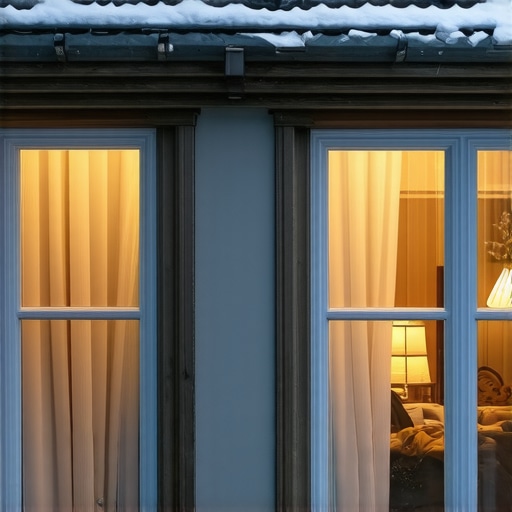
In northern climates like Chicago or Minneapolis, the gold standard for old window preservation is the high-quality storm window. A storm window acts as a second skin. When we install these, we follow the ‘Shingle Principle’ where every layer overlaps the one below it to ensure water flows down and out. This setup creates a primary thermal break. The exterior storm takes the brunt of the wind pressure, while the original single-pane sash maintains the aesthetic integrity of the home. [IMAGE_PLACEHOLDER] Modern storm windows often feature a Low-E coating. In cold climates, we want that coating on Surface #3, which reflects long-wave infrared radiation back into your home. This prevents the radiant heat from escaping through the glass into the night sky.
Weatherstripping: The Seal is Everything
You can have the thickest glass in the world, but if air is leaking around the sash, it is useless. I often see people go crazy with a window cleaner, thinking a clean window is an efficient one. While a clean window looks great, efficiency lives in the gaps. You need to inspect the rough opening and the meeting rail. I recommend using high-density foam or V-strip weatherstripping. When you close the window, the shim should be tight enough that the sash compresses the seal. If you can see daylight or feel a breeze, you are losing money. A common mistake is to ‘caulk-and-walk,’ where an amateur fills an operable gap with permanent sealant. Never caulk an operable sash shut. Instead, use a removable caulking cord or professional-grade weatherstripping that allows the window to function while remaining airtight.
“Thermal performance in fenestration is measured by the U-factor, where a lower number indicates a greater resistance to heat flow.” – NFRC Performance Standards
Thermal Curtains and Cellular Shades
If you cannot afford a replace windows job and storm windows are out of the budget, you must look at interior treatments. Thermal curtains are effective, but they have a flaw: they often allow room air to slip behind the curtain, hit the cold glass, and drop to the floor as a cold draft. To prevent this, the curtain must be sealed at the top and sides. Cellular shades, or honeycomb shades, are superior because they trap air in individual pockets. When fitted tightly within the window frame, they create a series of miniature thermal buffers that significantly slow down heat transfer. This is particularly important at night when temperatures plummet and the U-factor of your single-pane glass becomes your biggest enemy.
When Repair is No Longer an Option
There comes a point where window repair is throwing good money after bad. If the sill pan is rotted or the frame has shifted so much that the rough opening is no longer square, insulation is a temporary bandage on a mortal wound. When we look at replacement, we look for units with warm-edge spacers. These spacers separate the panes of glass in a modern IGU (Insulated Glass Unit) and are made of materials that do not conduct heat. This prevents the edges of the glass from becoming cold spots that attract condensation. In our cold northern context, we look for a low U-factor and a high Solar Heat Gain Coefficient (SHGC) if the window is south-facing, allowing the sun to help heat the home during the day.