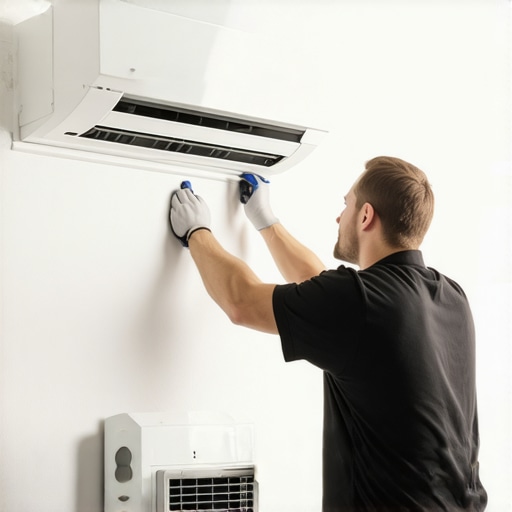
The Thermal Failure of Temporary Installations
When you install a window air conditioning unit, you are essentially creating a massive thermal bridge and an intentional breach in your building envelope. As a glazier with over two decades in the field, I see homeowners obsessed with the U-factor of their glass while ignoring the fact that their AC unit has a giant gap around the sash. A window is a precision-engineered system designed to manage air infiltration and water diversion. The moment you slide that unit in and pull down the sash, you have compromised the rough opening. Most people use the flimsy plastic accordion wings that come with the unit, but those have an R-value close to zero and do nothing to stop air leakage at the meeting rail.
A homeowner once called me in a panic because their new windows were sweating and they feared the seals had failed. I walked in with my hygrometer and showed them the humidity was 60 percent. It was not a window failure: it was their lifestyle and a poorly sealed AC unit. They were allowing moist, warm outdoor air to infiltrate through the gaps, hitting the cool glass and condensing. It was a classic case of ignoring the physics of the building envelope. To fix a drafty AC unit, you have to treat it like a permanent glazing installation, not a temporary convenience. You are managing the dew point and the air pressure of the interior space.
“Installation is just as critical as the window performance itself. A high-performance window installed poorly will fail.” – AAMA Installation Masters Guide
The Physics of Air Infiltration and the Sash Gap
To understand why your AC unit is drafty, you must understand the concept of air changes per hour. In the glazing industry, we measure air leakage in cubic feet per minute per square foot of window area. A standard window sash is designed to compress against weatherstripping. When you lift that sash to accommodate an AC unit, the weatherstripping no longer makes contact. The most significant draft does not come from the sides of the unit: it comes from the gap between the inner and outer sash, known as the meeting rail. When the lower sash is raised, the space between the glass panes of the upper and lower sash is wide open to the elements. If you do not seal this, you might as well leave a small window open all summer and winter.
You need to look at the rough opening and the way the unit sits on the sill. Most people do not realize that a window sill is sloped to the exterior to shed water through weep holes. If your AC unit is not pitched correctly, water can back up into the wall cavity, leading to rot in the jack studs and king studs. This is where window repair becomes expensive. If you see water on your interior stool or apron, your pitch is wrong, or your seal is failing. We use a level to ensure a slight exterior tilt, but we also ensure the unit is not putting too much pressure on the vinyl or wood glazing bead, which can crack or distort the frame over time.
Professional Grade Sealing Materials
Forget the blue painter’s tape or the cheap open-cell foam that comes in the box. Open-cell foam acts like a sponge for moisture and does nothing to stop high-pressure drafts. You need closed-cell EPDM foam or high-density silicone gaskets. These materials maintain their memory and provide a true airtight seal. When you are looking at the side panels, the best way to seal the gap is to replace the plastic wings entirely. I recommend using 0.25 inch thick rigid foam insulation board or even clear polycarbonate sheets. These can be cut to fit the exact rough opening and then sealed into the window track using removable glazing putty or a high-quality weatherstripping tape.
When you are fitting these panels, you need to use a shim to ensure the AC unit stays centered. If the unit shifts, it will tear the seal. A proper shim should be made of a non-porous material like plastic or composite to prevent rot. Once the side panels are in place, you must address the meeting rail. This is where the heavy lifting happens. You need a backer rod or a custom-cut piece of foam that fills the entire width of the window between the two pieces of glass. This prevents the stack effect from pulling hot air in or letting your expensive conditioned air out. If you do not seal the meeting rail, your window cleaner will find a layer of soot and dust on the inside of your glass next spring, which is a tell-tale sign of air bypass.
“The air barrier must be continuous and joined to the window frame in a manner that withstands the expected wind pressures.” – ASTM E2112 Standard Practice
Climate Logic: Managing the Thermal Bridge
In northern climates like Chicago or Minneapolis, the goal is to prevent heat loss and condensation. The U-factor of your window system is compromised by the AC unit, which acts as a massive thermal bridge. The metal casing of the unit conducts cold directly into the room. If you leave the unit in during the shoulder seasons, you must insulate the entire metal housing. Using a quilted cover on the outside is a start, but the real work happens inside. You need to create an air seal that prevents the warm, humid indoor air from touching the cold metal of the AC unit. If you fail at this, you will get condensation, which will lead to mold growth on the sash and the window repair will involve more than just a bit of paint.
For those considering if they should replace windows to solve draft issues, I always ask them to look at their seasonal habits first. Even the best triple-pane window will feel like a single-pane relic if there is a 0.25 inch gap at the head or sill due to a poorly installed appliance. If your window is old and the balancer is broken, it might not even hold the weight of the sash against the AC unit, causing the unit to tilt dangerously. In these cases, a full frame replacement with a reinforced sill is the only professional solution. We look for fiberglass frames in these scenarios because they have the highest dimensional stability and do not expand and contract like vinyl, which can cause seals around the AC unit to pop during temperature swings.
The Glazier’s Final Checklist for AC Sealing
Before you consider the job done, perform a smoke pencil test. Run the AC unit and move the smoke pencil around the perimeter. If the smoke is sucked in or blown away, you have a leak. Pay close attention to the corners of the sill pan. If you find a leak, do not just throw caulk at it. Caulk is for permanent joints. For an AC unit, you want mechanical seals like compression gaskets. These allow you to remove the unit in the fall without destroying the finish on your wood sash or leaving a sticky residue on your vinyl. A true professional installation looks clean because it is engineered, not just patched. When you eventually need a window cleaner, they should be able to work around your seals without them falling apart. If your seals are held together by luck and masking tape, you have failed the building envelope test. A solid installation protects the window repair budget by ensuring that moisture never reaches the wood or the sensitive mechanical parts of the window frame.
[IMAGE_PLACEHOLDER]