The Science of Surface Integrity: Why Your Cleaning Method Is Ruining Your Glazing
As a master glazier who has spent nearly three decades looking through and fixing the mistakes of others, I find it staggering how many people treat their windows like a kitchen counter. A window is a precision engineered component. It is a thermal barrier designed to manage the dew point and maintain the U-Factor of your building envelope. When I see a homeowner attacking a stubborn bird dropping with a plastic scraper or a dry rag, I do not just see a dirty window; I see the beginning of an expensive window repair or an eventual need to replace windows prematurely.
I recall a client in Chicago who thought their windows were pitting from acid rain. I took one look at the header and the sash and realized they had been using a high-pressure power washer to blast off bird waste. They had forced water past the glazing bead and into the rough opening. The wood was rotting from the inside out because they did not understand the shingle principle of water management. I walked in with my hygrometer and showed them the humidity was 60 percent. It wasn’t the windows; it was their lifestyle choices and their aggressive cleaning habits that had compromised the entire assembly. They had essentially turned a minor maintenance task into a structural disaster.
“Installation is just as critical as the window performance itself. A high-performance window installed poorly will fail.” – AAMA Installation Masters Guide
The Chemistry of Avian Waste and Glass Micro-Structure
To understand why you cannot just scrub a window, you must understand what glass is. Modern glazing is an amorphous solid, but it is not perfectly smooth at a molecular level. Bird droppings are highly acidic, containing uric acid with a pH range between 3.0 and 4.5. When this sits on your glass in a cold climate like Minneapolis or Chicago, the temperature fluctuations cause the glass to expand and contract. This acidity can begin to etch the silica surface if left too long. More importantly, birds often consume grit and small stones to aid digestion. When you wipe a dry dropping, you are essentially taking 100-grit sandpaper and grinding it into your sash. If you have high-performance windows with a Low-E coating on Surface #1, which is rare but does exist in some specialized northern applications to maximize solar heat gain, you are effectively destroying the thermal performance of the unit with one swipe.
The Glazier Method: Hydration Over Abrasion
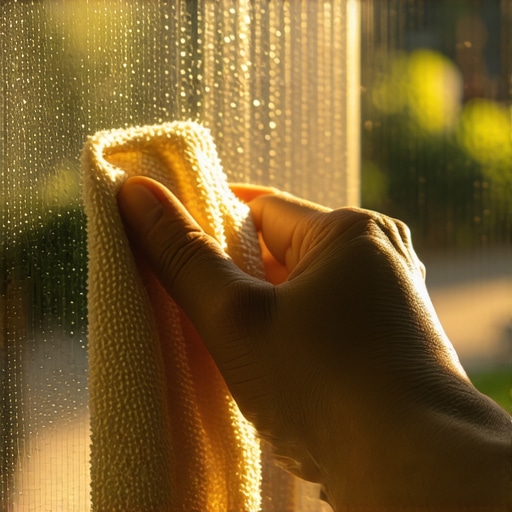
The first rule of being a professional window cleaner is that you never touch dry glass. In cold northern climates, we deal with the U-Factor, where we want to keep heat inside. If you scratch the glass, you create micro-fissures. During the freeze-thaw cycle, moisture enters these scratches, freezes, and expands. Over a decade, this can lead to spontaneous glass breakage or the failure of the hermetic seal in your Insulated Glass Unit (IGU). To remove bird waste safely, you must utilize the principle of chemical softening. You saturate the area with a pH-neutral solution. This rehydrates the uric acid and suspends the mineral grit in a liquid buffer. Only then do you use a microfiber cloth to lift, not rub, the debris away.
“The integration of the window with the rough opening is the primary defense against environmental loads.” – ASTM E2112
The Installation Autopsy: When Cleaning Reveals a Deeper Problem
Often, a homeowner starts cleaning and notices that the bird dropping is actually inside the window. This is a common misconception. What they are usually seeing is mineral desiccation or mold growth between the panes. If you see spots that you cannot wash off the exterior or interior, your IGU has reached its end of life. The desiccant in the spacer bar is saturated, and the argon gas has leaked out. At this point, no window cleaner in the world can help you; you are looking at a window repair that involves replacing the glass pack or choosing to replace windows entirely to upgrade to a better U-Factor. In northern zones, I always recommend triple-pane units with warm-edge spacers. These spacers are made of low-conductivity materials that prevent the edge of the glass from getting cold enough to reach the dew point, which stops the condensation that often traps dust and bird dander in the first place.
Technical Steps for Safe Removal
Step one is to inspect the weep holes at the bottom of your sash. If you are using a lot of water to soak off bird droppings, you must ensure the window’s internal drainage system is clear. If those holes are plugged with debris, the water you use for cleaning will back up into the sill pan and eventually the rough opening. Step two is the application of a surfactant. This breaks the surface tension of the water, allowing it to penetrate the hardened waste. Step three is the dwell time. Give it five minutes. Step four is a gentle flush with low-pressure water. If you are a window cleaner who reaches for a razor blade first, you are a liability to the industry. Razor blades can leave microscopic tin-side signatures on float glass that lead to visible ghosting under certain light conditions.
Conclusion: Precision Maintenance for Longevity
Windows are the most vulnerable part of the building envelope. Whether you are dealing with vinyl frames that expand and contract at different rates than the glass or fiberglass frames that offer superior stability, the way you maintain the transparency of that opening matters. Don’t be the homeowner who needs a full window repair because they were too impatient to let a little water do the work. Water management is a science, from the way we install the flashing tape to the way you remove a simple bird dropping. Treat your glazing with the technical respect it deserves.