The Mechanical Reality of Dirty Tracks
In twenty-five years of window installation and glazing, I have seen thousands of high-performance units fail not because of a manufacturing defect, but because of a lack of mechanical maintenance. A window is an operable machine. Like any machine with moving parts, the presence of abrasive particulates in the track acts as sandpaper against the weatherstripping and the glazing bead. When a homeowner asks about a window cleaner recommendation, they are usually focused on the glass. However, as a specialist, I am looking at the sill. The sill is the heart of the window’s drainage system. If that system is compromised by silt, pet hair, and organic debris, the entire thermal envelope of your home is at risk. Many people think they need to replace windows when they feel a draft, but often, the sash is simply unable to seat properly because the track is packed with grit.
The Condensation Crisis: A Narrative of Neglect
I recall a specific case in a suburb where a homeowner called me in a panic because their expensive new casement windows were ‘sweating’ and leaking water onto the hardwood floors. They were convinced the seal had failed. I walked in with my hygrometer and a simple plastic putty knife. I showed them that the interior humidity was nearly 60 percent, but more importantly, the tracks were filled with a thick sludge of dust and pollen. This sludge had completely plugged the weep hole system. Because the water could not exit the frame through the exterior baffles, it backed up over the internal dam leg and onto the floor. It was not a product failure; it was a maintenance failure. I spent twenty minutes clearing the tracks, and the ‘leaks’ vanished. This is why understanding the Rough Opening and how water moves through it is vital for every homeowner.
“Installation is just as critical as the window performance itself. A high-performance window installed poorly or maintained improperly will fail to meet its energy ratings.” – AAMA Installation Masters Guide
The Physics of the Sill and Track
To understand why you should not spend hours scrubbing, you must understand the materials involved. Most modern frames are made of extruded polyvinyl chloride (PVC) or fiberglass. These materials have specific thermal expansion coefficients. In a cold climate like Chicago or Minneapolis, the U-Factor is the most critical metric. When dirt builds up, it creates a bridge for thermal conduction. This is known as a thermal bridge. If your tracks are filthy, the cold from the exterior aluminum or vinyl is transferred more efficiently to the interior air, leading to a lower dew point on the frame and subsequent condensation. This moisture then mixes with the dirt to create a corrosive paste that can degrade the shim points and even the flashing tape if it manages to bypass the sill pan.
The Glazier’s No-Scrub Cleaning Protocol
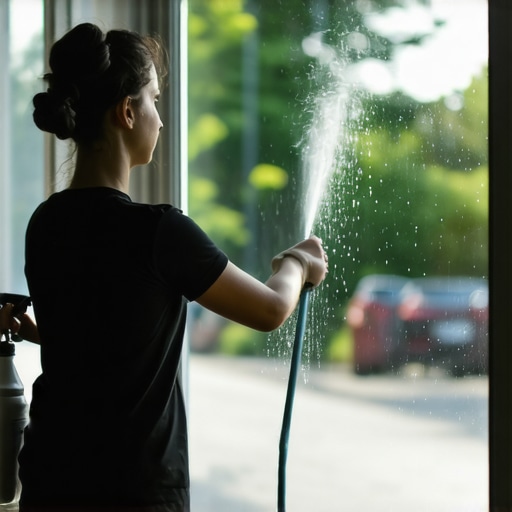
Stop reaching for the abrasive sponges. You are likely scratching the finish of the vinyl, which creates microscopic grooves where more dirt will sit. Instead, we use a method of chemical suspension and vacuum extraction. First, use a HEPA-filtered vacuum with a crevice tool to remove all loose particulates. Do not skip this. If you add liquid to dry dust, you create mud. Once the loose grit is gone, we use a pH-neutral solution. Avoid harsh cleaners that can degrade the silicone gaskets or the muntin clips. [image_placeholder_1] Spray the solution and let it dwell for three minutes. This breaks the ionic bond between the dirt and the frame. Instead of scrubbing, use a handheld steam cleaner to agitate the crevices. The steam reaches into the glazing bead and under the sash in ways a brush never could. Wipe away the suspended grime with a microfiber cloth. This method preserves the integrity of the weatherstripping and ensures the operable parts of the window move with minimal friction.
When Maintenance Becomes Window Repair
If you find that even after a thorough cleaning, the window is difficult to move or you still feel a significant draft, you may be looking at a window repair situation. Check the balance systems in double-hung windows or the crank mechanisms in casements. If the track is physically warped, which often happens in cheap vinyl installations where the Rough Opening was too tight, cleaning won’t solve the underlying structural issue. This is where the ‘caulk-and-walk’ installers fail you. They force a window into a space that is not square, and over time, the frame bows. At that point, the only solution may be to replace windows with a more stable material like fiberglass or a thermally broken aluminum, especially in climates with extreme temperature swings.
“Water penetration resistance is dependent upon the integrity of the joinery and the clear passage of moisture through designed drainage paths.” – ASTM E2112 Standard Practice
The Role of Lubrication
Once the track is clean, do not use WD-40 or any petroleum-based grease. These are magnets for dust. In a professional setting, we use a dry-film silicone or Teflon spray. This creates a non-stick surface on the track that allows the sash to glide without attracting the soot and pollen that lead to future clogs. Apply it sparingly to the contact points. This ensures that the next time you need a window cleaner, the job will take five minutes rather than five hours. Remember, a clean track is not just about aesthetics; it is about maintaining the air-tightness of the thermal envelope. Every millimeter of gap caused by a pebble in the track is a highway for heat loss in the winter and solar heat gain in the summer. By keeping the tracks clear, you ensure the Low-E coatings and gas fills of your glazing are actually doing their job rather than being bypassed by a simple air leak at the sill.