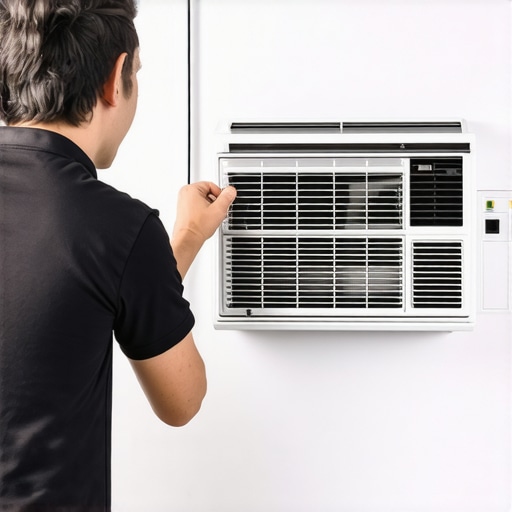
The Silent Summer: Why Your Window AC is Shaking the House
A window is a precision-engineered void in a building envelope. When you shove a sixty pound vibrating mechanical compressor into that void, you are not just cooling a room; you are stress testing the structural integrity of your glazing system. Most homeowners think the noise is just a standard byproduct of cooling. As a master glazier with twenty five years in the field, I can tell you that the noise is actually the sound of your window frame and glass resonating at a frequency they were never designed to handle. This vibration is a symptom of poor mechanical decoupling between the appliance and the Sash.
A homeowner called me in a panic because their new windows were sweating and rattling like a diesel engine. I walked in with my hygrometer and showed them the humidity was 60 percent. It was not the windows; it was their lifestyle and a poorly seated AC unit. The unit was resting directly on a vinyl sill without any isolation. The compressor was vibrating at approximately 60 Hz, and because the vinyl frame was hollow and lacked internal steel reinforcement, it acted like a violin soundbox, amplifying the drone throughout the master bedroom. The sweat they saw was moisture from the room condensing on the freezing cold metal casing of the improperly installed unit, dripping back onto the Sill Pan and saturating the Rough Opening.
The Installation Autopsy: Why Vibration Happens
The problem begins with the interface. When an Operable window is partially opened to accommodate a cooling unit, the structural path of the window is broken. The Sill Pan, which is designed to manage water egress through Weep Hole channels, becomes a weight bearing surface. If that AC unit sits directly on the frame, you are transferring mechanical energy directly into the Rough Opening studs. This is where the Shim stack becomes critical. If the installer did not pack the shims tightly or if they used cheap cedar shims that have since compressed or rotted, the entire window frame has room to move. That movement is what you hear as a rattle.
“Installation is just as critical as the window performance itself. A high-performance window installed poorly will fail.” – AAMA Installation Masters Guide
We also have to look at the Glazing Bead. In many lower quality vinyl windows, the bead that holds the glass in the frame is just a snap-in piece of plastic. High frequency vibration from an AC unit can loosen these beads over time. Once the bead is loose, the glass pane itself starts to chatter against the frame. This is why a simple window repair often involves more than just tightening screws; it requires restoring the acoustic seal of the glass unit itself.
The $5 Gasket Hack: Mechanical Decoupling
The hack is essentially a lesson in mechanical decoupling. By using a closed cell EPDM foam gasket or a heavy duty rubber strip between the bottom of the AC and the window sill, and another between the top of the AC and the Sash rail, you create an acoustic break. This gasket does not just stop the air; it absorbs the kinetic energy of the compressor before it can reach the Glazing Bead and the glass itself. For five dollars, you are buying a material with high damping properties that converts kinetic energy into trace amounts of heat rather than sound.
When you apply this gasket, you must ensure you are not blocking the Weep Hole system. If the foam is too thick or placed incorrectly, it will trap rainwater against the Sill Pan. This leads to the rot I often see when I replace windows in older homes. Water needs a clear path out. The gasket should be placed on the high point of the sill, usually the inner dam leg, to ensure the drainage path remains clear. If you are unsure, use a window cleaner to spray the exterior and watch where the water pools before you set your gasket.
Thermal Logic: Why the AC Works So Hard
In hot climates, your AC works harder because of Solar Heat Gain. If your windows have a high SHGC (Solar Heat Gain Coefficient), the glass is essentially acting as a radiator. When the sun hits Surface #2 of your glass, it transmits short wave radiation that turns into long wave heat inside. This forces the AC compressor to run at a high duty cycle. By performing a window repair that includes applying a high quality Low E film or upgrading to glass with a Low E coating on Surface #2, you reduce the load on the AC. A cool AC is a quiet AC because the compressor cycles off more frequently.
“Performance ratings, including U-factor and SHGC, provide a reliable way to compare the energy efficiency of fenestration products.” – NFRC Performance Standards
The physics of the Sash also play a role. A wood sash has much better natural damping than an aluminum or vinyl sash. If you have metal windows, the vibration will be much sharper and louder. In these cases, the $5 gasket is even more vital. You might also consider checking the Muntin bars. If you have decorative grids between the glass panes, they can sometimes vibrate against the glass if the internal spacers have failed. While the gasket hack wont fix internal glass rattles, it reduces the overall energy reaching the unit.
Maintenance and Long Term Care
Every spring when you install the unit, you should inspect the Flashing Tape around the exterior of the window. Vibration can actually cause microscopic cracks in old, brittle caulking. If you see gaps, do not just caulk and walk. Dig out the old material and ensure the seal is tight. This prevents moisture from reaching the Rough Opening where it can cause the wood to soften. Soft wood is the enemy of a quiet window because it cannot hold a Shim in place under the weight of an AC unit. Consistency in your window repair habits will save you thousands in structural repairs later. Finally, use a professional window cleaner to keep the glass and tracks free of grit. Dirt in the tracks can prevent the Sash from closing tightly against your new gasket, which leaks both air and noise. A clean, well maintained window is the foundation of a quiet, cool home. Don’t buy the marketing hype of expensive soundproof covers until you have spent five dollars on a proper EPDM gasket and checked your sill integrity.