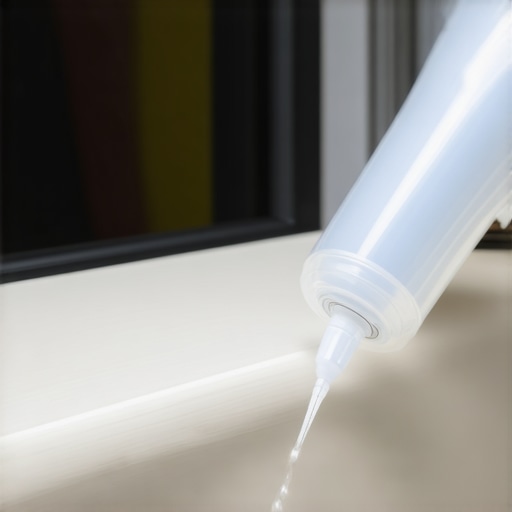
The Invisible Culprit: Why Your Sills Are Rotting from the Inside Out
In my twenty-five years of swinging a hammer and setting glass, I have seen more structural damage caused by a single, missing bead of sealant than by catastrophic storms. A window is essentially a controlled breach in your building envelope. When that breach is not managed with surgical precision, water finds a way. Homeowners often overlook the humble window sill, assuming that because the wood or vinyl looks intact on the surface, the assembly is sound. However, the intersection where the glazing bead meets the sash is a primary point of failure. A tiny gap, often no wider than a human hair, can allow wind-driven rain to migrate behind the glass, where it sits on the internal wood core, unseen and unventilated. This is where a simple $4 tube of high-quality neutral-cure silicone becomes the most valuable tool in your arsenal for window repair.
“Installation is just as critical as the window performance itself. A high-performance window installed poorly will fail.” AAMA Installation Masters Guide
The Condensation Crisis: A Master Glazier’s Perspective
I recall a specific project where a homeowner called me in a panic because their new, expensive double-pane units were ‘sweating’ so profusely that water was pooling on the sills, causing the paint to bubble and the wood to soften. They were convinced they needed to replace windows they had only bought three years prior. I walked into the living room, pulled out my hygrometer, and showed them that the internal humidity was hovering at 62 percent while the outside temperature was a biting ten degrees Fahrenheit. It wasn’t a manufacturing defect; it was a physics problem. The U-Factor of the glass was being overwhelmed by the interior moisture levels. The moisture was condensing at the base of the glass, running down into the internal channel, and because the previous installer had clogged the weep hole with cheap caulk, the water had nowhere to go but into the wall. I didn’t sell them new windows; I sold them a dehumidification strategy and a proper resealing of their sill pan area.
The Physics of the Seal: Why Silicone Matters
When we talk about window repair, people often reach for the cheapest latex caulk they can find at the big-box store. That is a mistake that will cost you thousands. In the glazing world, we prioritize silicone because of its elongation properties and UV resistance. A window is a dynamic object. It expands and contracts as the sun hits it. Vinyl has a high coefficient of thermal expansion; it moves significantly more than the rough opening it sits in. If you use a rigid sealant, it will crack within one season. A high-grade silicone remains flexible, maintaining a watertight bond between the operable sash and the frame. This prevents water from entering through capillary action. Capillary action is the phenomenon where liquid flows into narrow spaces without the assistance of, or even in opposition to, external forces like gravity. Without a proper silicone barrier, your window frame is essentially drinking the rain.
Window Cleaner Intelligence: Spotting Trouble Early
Your window cleaner is often your first line of defense against total window failure. Professional cleaners see the muntin bars, the glazing bead, and the shim gaps closer than anyone else. If your cleaner notices that the seal at the bottom of the glass is pulling away, they are seeing the early warning signs of a failing sill. A gap there allows water to bypass the primary drainage plain. When you replace windows, you are often paying for the failure of a seal that could have been fixed for the cost of a cup of coffee. I always tell my clients to inspect the perimeter of their glass twice a year. If you see a breach, you must clean the area with denatured alcohol and apply a thin, clean bead of silicone to bridge the gap. This prevents the moisture from reaching the rough opening, where it can rot the jack studs and the header.
“The moisture management system of a window assembly must be designed to withstand the environmental loads specific to its climate zone.” ASTM E2112 Standard Practice
Thermal Dynamics and the U-Factor
In cold climates like Chicago or Minneapolis, the U-Factor is the most critical metric on the NFRC label. This number represents the rate of heat loss. A lower U-Factor means the window is better at keeping the heat inside. However, even the best triple-pane window with argon gas fill will perform poorly if the air infiltration is not controlled. Air leaks often occur around the sash weatherstripping. If you feel a draft, your window repair should start with checking the compression of the seals. If the seals are worn, the cold air hits the warm interior air, reaches the dew point, and transforms into liquid water right on your wood sill. By using silicone to seal the fixed points of the frame and replacing worn weatherstripping on the operable parts, you maintain the thermal integrity of the unit. This is how you avoid the massive expense of a full-frame replacement.
The Proper Way to Apply the $4 Cure
Do not just squirt silicone into a hole and call it a day. That is ‘caulk-and-walk’ behavior that I won’t tolerate. First, you must remove any old, failing sealant. Use a plastic scraper to avoid scratching the finish of the sash. Once the area is clean and dry, apply a bead that is sized appropriately for the gap. Use a tooling tool or a gloved finger to profile the bead so that it sheds water away from the glass. You are creating a miniature watershed. Ensure you do not cover the weep holes located at the bottom of the exterior frame. These holes are designed to allow any water that gets into the track to escape. If you seal those, you are trapping water inside your walls, which is a guaranteed way to ensure you will have to replace windows and your siding within five years. True craftsmanship is about understanding how water moves and giving it a clear, unobstructed path back to the outdoors. Technical precision in these small details is what separates a master glazier from a handyman.