The Anatomy of a Window Leak: Why Your Sill is Wet
When a homeowner notices water pooling on their interior window stool, the immediate reaction is usually panic. They assume the seal has failed or that it is time to replace windows entirely. Before you spend thousands of dollars on a full frame tear out, you need to understand the physics of the window extrusion. Modern vinyl and aluminum windows are not designed to be waterproof on the exterior. They are designed to be water-managed. This means that water is expected to enter the track of the window. The critical component that prevents this water from entering your home is the weep hole system.
“Installation is just as critical as the window performance itself. A high-performance window installed poorly will fail.” AAMA Installation Masters Guide
A homeowner called me in a panic because their new windows were ‘sweating’ and water was overflowing onto the hardwood floors. I walked in with my hygrometer and showed them the humidity was 60%, but the real culprit was more mechanical. I stepped outside, looked at the bottom of the window frame, and saw that the weep holes were completely obstructed by a combination of mulch dust and spider webs. It wasn’t the windows; it was a simple maintenance oversight. This is a common scenario where a professional window cleaner or a master glazier can save a client a fortune by simply understanding how drainage works.
The Physics of the Weep Hole
A weep hole is a small exit point at the base of the window frame. In a vinyl window, the frame is a series of chambers or extrusions. The sash sits in a track where water can collect during heavy rain or from condensation running down the glazing bead. Surface tension and capillary action can often hold water within these small spaces. The weep hole relies on gravity and a slight pressure differential to allow that water to exit to the exterior. If these holes are blocked, the water level in the track rises until it reaches the top of the interior leg of the frame, at which point it spills over into the wall cavity or onto the floor. This leads to rot in the rough opening and can destroy the shim and flashing tape that protects your home.
The $2 Solution for Window Repair
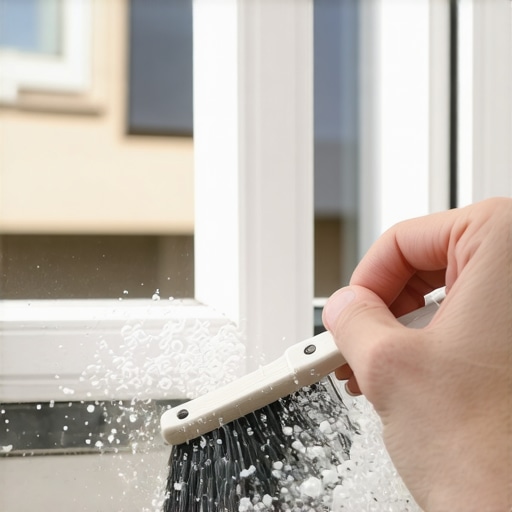
You do not need a specialized tool kit to perform this essential window repair. The best solution costs less than $2. A simple piece of heavy-duty weed-whacker line or a thin, flexible zip tie is often the most effective tool. Unlike a metal wire, which can scratch the finish of the window or damage the internal baffles, a nylon line is flexible enough to navigate the internal chambers of the extrusion. To begin, open the operable sash. Locate the drainage slots in the bottom track. Gently feed the nylon line into the slot and wiggle it to break up any compacted silt or organic matter. This allows the built-in drainage system to function as designed. For stubborn clogs, a small bottle of compressed air can be used to blow out the remaining debris. This is a task that any window cleaner should include in their seasonal maintenance routine to ensure the longevity of the unit.
“Water penetration resistance is dependent on the integrity of the drainage path from the glazing pocket to the exterior.” ASTM E2112 Standard Practice
When to Replace Windows vs. Repairing Weep Holes
If you have cleaned the weep holes and water still enters the home, you may be facing a more serious issue. Check the sill pan. A properly installed window should have a sill pan that directs any water that gets past the frame back to the exterior. If the original installer skipped this step or failed to use proper flashing tape, the water may be bypassing the window frame entirely and entering the wall through the rough opening. In these cases, window repair might only be a temporary bandage. When the wood of the muntin or the sash begins to show signs of soft rot, or if the insulated glass unit has fogged due to prolonged moisture exposure, it is often more cost-effective to replace windows with high-performance fiberglass or thermally broken aluminum units. In cold northern climates, look for windows with a low U-Factor to minimize condensation. In the hot south, prioritize a low SHGC to keep the radiant heat from taxing your cooling system.
Maintaining the Glazing Bead and Hardware
Beyond the weep holes, the glazing bead plays a vital role in water management. This is the strip of vinyl or wood that holds the glass in the sash. If the glazing bead is loose or cracked, it allows excessive water to enter the internal chambers, overwhelming the weep system. During your annual inspection, ensure the bead is seated tightly. Additionally, check the weatherstripping. If the weatherstripping is flattened or torn, it allows wind-driven rain to be pushed into the track at a higher velocity than the weep holes can handle. Keeping the track clean with a standard window cleaner and a soft brush is the first line of defense against the costly damage caused by moisture intrusion.