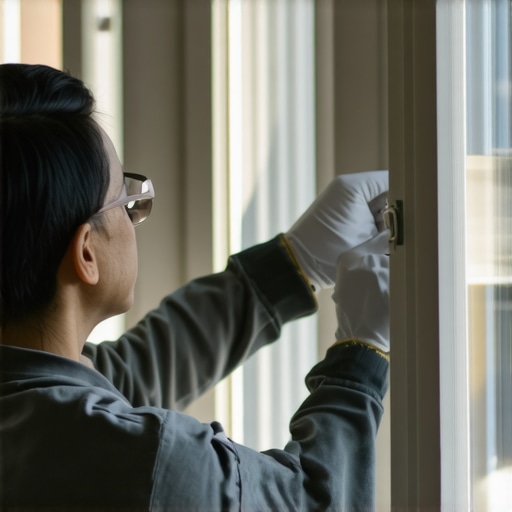
The Invisible Thief: Why Your Home Is Losing Energy
I have spent over twenty-five years staring at the gaps between glass and wood. I have climbed scaffolds on fifty-story towers and crawled into crawlspaces of Victorian restorations. One thing remains constant: most homeowners think a draughty window is a death sentence for the unit. They assume that the moment they feel that cold lick of winter air across their ankles, it is time to spend fifteen thousand dollars to replace windows throughout the house. Often, they are wrong. I remember walking into a home where the owner was in a total panic because their brand-new, high-performance double-hungs were sweating and letting in a gale. I walked in with my hygrometer and a simple incense stick. I showed them that the humidity was sixty percent and the draught wasn’t coming from the glass, but from a failure to engage the sash locks properly, which prevented the weatherstripping from compressing. It was a lifestyle and operation issue, not a product failure.
“Installation is just as critical as the window performance itself. A high-performance window installed poorly will fail.” AAMA Installation Masters Guide
The Anatomy of a Draught: Understanding Air Infiltration
To understand the ten dollar fix, you have to understand the physics of the window assembly. A window is an operable mechanical system. When you have an operable sash, you have moving parts that must meet a stationary frame. The industry measures this through air infiltration ratings, which denote how many cubic feet of air pass through a square foot of window area at a specific wind speed. If your window repair involves just squirt-and-forget caulking, you are missing the point. The air isn’t just coming through the Rough Opening; it is often bypassing the weatherstripping at the check rail or the stiles. In cold climates, we deal with the stack effect. Warm air rises and escapes through the top of the house, creating a vacuum that pulls cold, dense air through any opening in the lower levels. This is where the Glazing Bead and the sash interface become critical. If the Glazing Bead has shrunk over the last decade, it creates a microscopic path for air to reach the interior. This is why a window cleaner often notices dark streaks of dust on the white vinyl; that is atmospheric soot being filtered by your window as air forced its way through.
The Ten Dollar Solution: V-Seal Weatherstripping
The most effective, low-cost fix for a draughty window is the application of high-quality polypropylene V-seal weatherstripping. This is not the bulky foam tape that prevents the window from closing. A V-seal is a tensioned strip that folds into a V-shape. When the sash is closed, it compresses the V, creating a spring-loaded tension seal that stops air dead in its tracks. You can buy a roll of this for under ten dollars at any hardware store. To install it, you must first clean the jambs. Any professional window cleaner will tell you that adhesive won’t stick to a layer of oxidized paint or window grit. Once clean, you apply the V-seal to the side jambs so that the sash slides against the fold. This creates a mechanical barrier. This is significantly more effective than rope caulk because it allows the window to remain operable. You aren’t sealing the window shut; you are restoring the mechanical seal that the original manufacturer likely underspecified.
When the Fix Fails: The Installation Autopsy
Sometimes the ten dollar fix is a bandage on a gunshot wound. If the draught is coming from under the stool or around the casing, the problem is not the window sash; it is the Rough Opening. During a poor installation, contractors often skip the Flashing Tape or fail to use low-expansion foam in the gap between the window frame and the house framing. Instead, they stuffed fiberglass batts in there. Fiberglass is a filter, not an air barrier. If you pull your casing back and see black fiberglass, you have found your leak. Water management is a science, and air management is its twin.
“The building envelope must be continuous. Any breach in the air barrier, especially around fenestration, leads to convective heat loss and potential interstitial condensation.” ASTM E2112 Standard Practice
If you are in a northern climate like Chicago or Minneapolis, the U-Factor is your primary metric. A lower U-Factor means the window resists heat flow better. But if the air is leaking around the frame, that U-Factor is irrelevant. You could have a R-5 center-of-glass rating, but if you have a quarter-inch gap at the sill, your effective R-value for the wall opening is near zero. This is why a Sill Pan is vital. It isn’t just for water; it provides a flat, level surface for the window to sit on, ensuring the frame is square and the weatherstripping meets the sash evenly. If the window isn’t square, the Shim was likely placed incorrectly, causing the frame to bow. A bowed frame will never seal, no matter how much weatherstripping you apply.
The Thermal Bridge and Condensation
In the dead of winter, the temperature of the interior glass surface is what determines your comfort. This is the science of the Dew Point. When warm, moist indoor air hits a cold surface, it turns to water. If you see ice forming on the bottom of your sash, your window is failing at thermal separation. Modern windows use warm-edge spacers between the panes of glass to break the thermal bridge. Older windows used aluminum spacers, which act like a highway for cold to travel from the outside pane to the inside. While the ten dollar weatherstripping fix stops air, it doesn’t stop radiant heat loss. For that, you need to look at the Low-E coating. In the North, we want that coating on surface number three (the outside of the inner pane) to reflect heat back into the room. If you are not ready to replace windows, thermal cellular shades are the next step up from weatherstripping, providing a secondary air gap that acts as a crude insulator.
Maintaining the Mechanics
Window repair is often just simple maintenance that has been deferred for twenty years. Every operable window has Weep Holes at the bottom of the frame. These are designed to let water out. If they are clogged with debris, water backs up, rots the wooden sill, or freezes and expands, warping the vinyl. Part of your annual maintenance should involve a thin wire to ensure these holes are clear. Furthermore, check your Muntins. On older windows, if the Muntin is loose, it might be allowing the glass to rattle, which means the Glazing Bead is no longer providing a compression seal. A small bead of clear silicone (not caulk) can often stabilize this and stop the rattle and the draught simultaneously. Real ROI on windows takes decades, so maintaining the units you have through technical precision is always the smarter financial move than a premature replacement. Focus on the seals, clear the weeps, and engage your locks to ensure the mechanical system performs as designed.