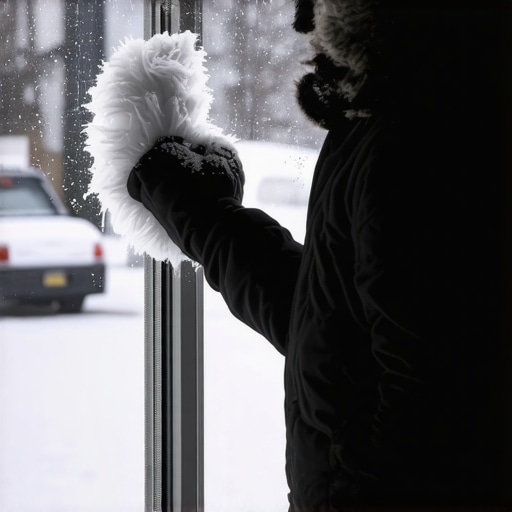
The Thermodynamics of Winter Window Maintenance
Cleaning glass when the thermometer dips below 32 degrees Fahrenheit is not merely a chore; it is a battle against the physics of phase change. Most homeowners and novice window cleaner crews approach a frozen pane with the same bucket of soapy water they used in July, only to find the solution crystallizing into a opaque sheet of ice before the squeegee even touches the top glazing bead. As a glazier with over two decades in the field, I have seen how improper winter maintenance leads to more than just streaks. It can mask underlying issues that necessitate a full window repair or even a total window replacement if the structural integrity of the seal is compromised by ice expansion.
A homeowner called me in a panic last January because their new high-performance windows were ‘sweating’ and then freezing solid on the interior of the sash. I walked in with my hygrometer and showed them the humidity was 60% inside while it was -5 degrees outside. It wasn’t the windows; it was their lifestyle—too many humidifiers and zero air exchange. That moisture was hitting the cold glass, reaching the dew point, and turning into ice. This is the first lesson of winter glass: you must understand the relationship between interior vapor pressure and the thermal conductivity of your glass package. If you are cleaning windows in these conditions, you are dealing with a surface that is likely far colder than the ambient indoor air, especially if you have a high U-Factor on an old single-pane unit.
“Installation is just as critical as the window performance itself. A high-performance window installed poorly will fail, particularly under thermal stress.” – AAMA Installation Masters Guide
The Chemistry of Antifreeze Cleaning Solutions
To clean windows in freezing temperatures without the water turning to ice, you must manipulate the freezing point of your cleaning solution. This is where most people fail. Professional window cleaner technicians utilize a mixture of water and either Isopropyl alcohol (rubbing alcohol) or Ethanol. At a 50/50 ratio, an Isopropyl solution can remain liquid down to roughly -20 degrees Fahrenheit. However, you must be careful with the concentration. High concentrations of alcohol can degrade certain types of glazing bead materials or dry out the EPDM rubber gaskets used in modern high-performance sashes. You are looking for that sweet spot where the solution stays liquid long enough for a single pass of the squeegee but evaporates quickly enough to prevent runoff into the rough opening.
When we talk about the chemistry of the pane, we have to mention the Low-E coating. In northern climates, we typically see the Low-E coating on Surface #3 (the indoor-facing surface of the outdoor pane in a double-glazed unit). This is designed to reflect long-wave infrared radiation back into the room. If you are cleaning the exterior, you are working on Surface #1. This surface is exposed to the elements and is the most susceptible to thermal shock. Using boiling water on a frozen Surface #1 is a guaranteed way to cause a stress crack, leading to an immediate need to replace windows. The temperature differential causes the glass to expand unevenly, and because glass is a brittle material with low tensile strength, it snaps. Always use lukewarm water treated with an alcohol-based antifreeze agent.
The Role of the Frame and Rough Opening
The efficiency of your cleaning—and the longevity of your window—depends heavily on the frame material. If you have old aluminum frames without a thermal break, the frame itself will be a heat sink, drawing warmth out of the house and making the edges of the glass even colder. This is where you see the most ice buildup. During a window repair, we often find that the shim space between the window frame and the rough opening was never properly insulated with low-expansion foam. This creates a cold draft that chills the perimeter of the glass, making it impossible to clean without instant freezing. In these cases, no amount of alcohol in your water will help until you address the thermal bypass at the installation point.
“The U-factor of a window is a measure of the rate of non-solar heat loss. The lower the U-factor, the greater a window’s resistance to heat flow and the better its insulating properties.” – NFRC Performance Standards
If you find that ice is forming between the panes of a double-glazed unit, cleaning is no longer the priority. This indicates a seal failure. The desiccant inside the spacer bar has become saturated, and the Argon gas has leaked out, replaced by moist air. When the temperature drops, that moisture condenses and freezes inside the unit. This cannot be fixed by a window cleaner; it requires a glazier to perform a sash replacement or a full-frame installation. When you replace windows in a cold climate, you should look for warm-edge spacers made of structural foam or stainless steel, which conduct less heat than traditional aluminum spacers and significantly reduce the risk of edge-of-glass condensation.
Step-by-Step Professional Cold-Weather Technique
To execute a clean in sub-zero temps, start by prepping your solution: 2 gallons of water, a heavy squirt of professional-grade dish soap (which acts as a lubricant), and 1 quart of 90% Isopropyl alcohol. Use a specialized scrubber sleeve made of microfiber to agitate the dirt. You must work in small sections. In the summer, you might scrub three windows and then squeegee them all. In the winter, you scrub half a pane and squeegee immediately. The ‘squeegee drag’ is your enemy; if the blade starts to chatter or stick, your solution is starting to freeze or your rubber is too cold. Keep your squeegees in a warm place, like inside your jacket or a heated van, until the moment you use them.
Pay close attention to the weep holes at the bottom of the frame. If these are clogged with frozen debris or dirt, any water that gets past the glazing bead will be trapped in the sill pan. If that water freezes, it expands, and it can actually lift the glass or crack the vinyl welds at the corners of the frame. Part of a professional cleaning in winter includes clearing these drainage paths to ensure the window’s water management system is functional. A window is essentially a hole in your thermal envelope that we have plugged with glass; we must ensure that the flashing tape and the sill assembly are doing their jobs even when covered in frost. If you notice the wood trim around your window is discolored, that is a sign that the flashing has failed, and the rot I often see during a tear-out is likely already beginning behind the drywall.
Summary of Thermal Logic for Cold Climates
In a northern climate, your windows are your primary defense against heat loss. Every time you clean them in the winter, you are performing a mini-inspection. Look for gaps in the sealant, check the operation of the sash to ensure the weatherstripping is compressing correctly, and observe how the glass reacts to the cold. If your windows are consistently covered in ice despite low interior humidity, it is a sign that the U-Factor is insufficient for your local climate. While the upfront cost to replace windows with triple-pane units featuring a Low-E coating on Surface #3 can be significant, the increase in surface temperature on the interior glass will eliminate the ice problem and significantly improve the comfort of your home. Until then, keep your alcohol levels high and your squeegee movements fast.