The Myth of the Blue Spray: Why Your Window Maintenance is Failing
For twenty-five years, I have stood on ladders and scaffolding, staring through everything from 19th-century wavy glass to modern triple-pane units with Low-E coatings so sensitive they could be scratched by a rough paper towel. I have seen homeowners spend hundreds of dollars on ‘professional grade’ blue liquids, only to call me six months later because their window repair needs have skyrocketed or their seals have prematurely aged. The truth is, the commercial glass cleaner industry has sold you a bill of goods that might actually be degrading your replace windows investment.
A homeowner called me in a panic because their new windows were ‘sweating’ and looked perpetually streaky no matter how much they scrubbed. I walked in with my hygrometer and showed them the humidity was 60%. It wasn’t a defect in the glass; it was their lifestyle and their cleaning habits. They were using heavy ammonia-based cleaners that were reacting with the moisture and leaving a surfactant film on Surface #4 (the interior room-side surface). They were trying to scrub off what they thought was grime, but it was actually a chemical residue that was attracting more dust. I handed them a bottle of distilled white vinegar and a squeegee, and their ‘defective’ windows suddenly became crystal clear. This brings us to the core reality of glazing: the best tool for the job is likely sitting in your pantry right now.
“Installation is just as critical as the window performance itself. A high-performance window installed poorly will fail.” – AAMA Installation Masters Guide
The Chemical Warfare on Your Glazing Bead
When you spray a commercial cleaner, you aren’t just hitting the glass. The liquid runs down into the glazing bead and can seep toward the sash and the secondary seal of the Insulated Glass Unit (IGU). Most commercial cleaners contain ammonia or alcohol as fast-drying agents. While these evaporate quickly, they are aggressive solvents. Over time, these chemicals can cause the drying out of the EPDM gaskets or the silicone sealants that hold your glass in place. Once those seals lose elasticity, you are looking at argon gas loss, which effectively kills your U-Factor. In cold climates like Chicago or Minneapolis, a compromised seal means the Dew Point moves inside your glass unit, leading to permanent fogging that no amount of cleaning can fix.
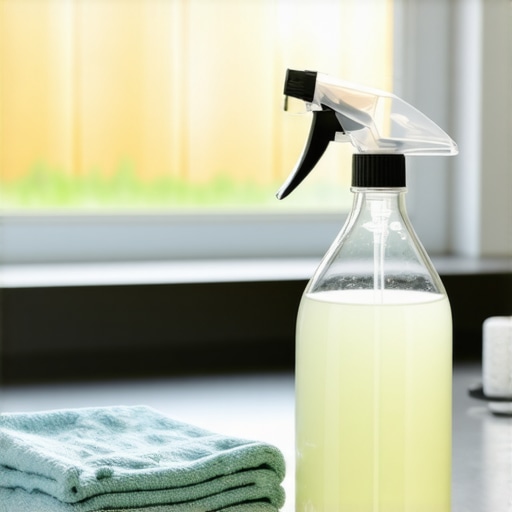
The ‘kitchen staple’—distilled white vinegar—is acetic acid. When diluted with distilled water (not tap water, which contains minerals that create the very streaks you are trying to avoid), it creates a mild acidic solution that dissolves the alkaline bonds of bird droppings, salt spray, and finger oils. It does this without attacking the chemical bonds of the polyisobutylene (PIB) seals that keep your replace windows energy efficient. If you are serious about window cleaner protocols, you must stop thinking about ‘spraying and wiping’ and start thinking about pH balance and mechanical agitation.
Surface Chemistry: Why Vinegar Wins
Glass is not as smooth as it looks under a microscope. It has a ‘tin side’ and an ‘air side’ from the float glass manufacturing process, and it is full of microscopic peaks and valleys. Commercial cleaners often use soaps (surfactants) to lift dirt. These soaps are notoriously difficult to remove completely from those microscopic valleys. This creates a ‘tack’ that catches pollen and dust. Vinegar, however, acts as a rinsing agent. It breaks down mineral deposits—calcium and magnesium—that accumulate on the exterior from rain runoff or rough opening flashing leaks.
“The performance of a fenestration product is dependent on the maintenance of its components, including the integrity of the glass surfaces and the functionality of the drainage systems.” – NFRC Maintenance Guidelines
In Northern climates, we worry about the U-Factor, which measures the rate of heat loss. A dirty window actually slightly increases your Solar Heat Gain by absorbing more radiant energy rather than reflecting it or allowing it to pass through cleanly. By using a vinegar solution, you maintain the original VT (Visible Transmittance) of your glass, ensuring that your Low-E coating on Surface #3 can do its job reflecting long-wave infrared radiation back into your home during a brutal January freeze. If your glass is etched by harsh chemicals, that performance is compromised.
The Master Glazier’s Cleaning Protocol
To avoid a premature window repair or the need to replace windows due to seal failure, follow this technical procedure. First, inspect your weep holes. If you are cleaning your windows but the water isn’t draining out of the bottom of the frame, it will back up into the sill pan and rot your rough opening. Use a small wire to clear any debris from the weep system before you start. Mix one part distilled white vinegar with four parts distilled water. Do not use tap water; the calcium in tap water will leave ‘ghost’ streaks that look like seal failure. Use a microfiber cloth for agitation, then a professional-grade squeegee with a sharp rubber blade to remove the solution in a single, continuous motion. This prevents the ‘dry lines’ that occur when you stop and start a stroke. Finally, use a dry cloth only on the muntins and the glazing bead to ensure no moisture sits against the seals. This isn’t just about aesthetics; it’s about preserving the structural integrity of the fenestration unit.