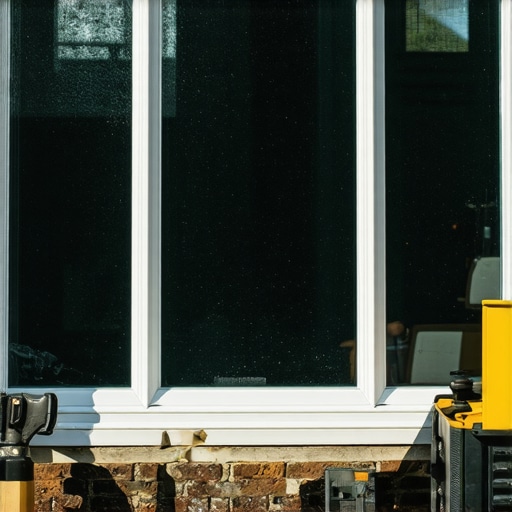
The Gravity of the Situation: Why Heavy Panes Fail
When a homeowner calls me claiming their glass is sagging, the average window cleaner might shrug it off as an optical illusion. But after twenty-five years of inspecting rough opening tolerances and diagnosing IGU (Insulated Glass Unit) failures, I know better. In 2026, we are seeing a surge in sash racking and seal creep, specifically in high-performance triple-pane units that were installed by crews who didn’t understand the physics of dead loads. A window is a precision instrument, and when you are dealing with the weight of three layers of glass plus gas fills, ‘close enough’ installation is a recipe for structural rot. This is not just a cosmetic issue; it is a fundamental breakdown of the fenestration system.
“Installation is just as critical as the window performance itself. A high-performance window installed poorly will fail.” – AAMA Installation Masters Guide
The Condensation Crisis: A Narrative of Misdiagnosis
A homeowner called me in a panic because their new windows were ‘sweating.’ I walked in with my hygrometer and showed them the humidity was 60%. It was not the windows; it was their lifestyle. They had a humidification system running in a sealed house during a Chicago winter. However, while I was there, I noticed something more sinister than the surface moisture. The heavy triple-pane sash in the master bedroom was sitting 1/8th of an inch lower on the strike side than the hinge side. The glass was not sagging in the literal sense—glass is a solid, not a slow-moving liquid—but the entire unit was shifting within the frame because the installer failed to use high-durometer setting blocks. The weight was literally crushing the lower glazing bead and compromising the primary polyisobutylene seal.
The Anatomy of a Sagging Sash
To understand why you might need to replace windows or perform a complex window repair, you have to understand the ‘shingle principle’ of water management and the structural support of the sash. In our northern climate, heat loss and condensation are the primary enemies. We use low-E coatings on Surface #3 to reflect heat back into the room and argon or krypton gas to reduce convective heat transfer. But these high-tech solutions add significant mass. If the rough opening is not perfectly level, or if the installer used cheap cedar shims instead of composite high-density shims, the weight of the glass will eventually cause the frame to bow. This creates gaps in the weatherstripping, leading to the very drafts the homeowner paid thousands of dollars to eliminate.
When we perform an installation autopsy on a leaking window, we often find the absence of a proper sill pan. A sill pan is a non-negotiable component that directs incidental moisture back to the exterior through weep holes. Without it, that ‘sagging’ sash eventually allows water to bypass the flashing tape and sit on the wooden header. I have seen headers turned to mush because an installer relied on a nailing fin and a bead of caulk rather than a mechanical flashing system.
NFRC Ratings and the Reality of Thermal Performance
Before you commit to a full frame tear-out, you must decode the NFRC label. In cold climates, the U-Factor is your most important metric. We are looking for a U-Factor of 0.20 or lower for true 2026 performance. This is achieved through warm-edge spacers—typically made of stainless steel or structural foam—which prevent the edge of the glass from becoming a thermal bridge. If your glass feels cold to the touch or shows frost at the perimeter, your spacer has likely failed due to the structural stresses of a sagging unit.
“Standard Practice for Installation of Exterior Windows, Doors and Skylights requires that the fenestration product be supported in a manner that prevents distortion of the frame and ensures the long-term integrity of the seal.” – ASTM E2112
The Fix: Engineering Stability
Fixing a sagging heavy pane requires more than a simple window cleaner wipe-down. It requires ‘toeing and heeling’ the glass. This is a technical process where we place setting blocks at the lower hinge corner and the upper strike corner to use the glass’s own rigidity to square the sash. We then check the glazing bead to ensure it is seated correctly. If the IGU has already experienced seal failure—identifiable by a hazy or ‘oily’ appearance between the panes—the only solution is to replace the glass unit itself. For 2026, we recommend upgrading to units with structural glazing tape that bonds the glass directly to the sash, providing a secondary layer of support against gravity.
This post highlights crucial aspects of heavy-pane window installation that often go unnoticed until failure occurs. I’ve encountered similar issues where improper shimming or neglecting to use high-density spacers resulted in early seal failure and sash bowing. It’s interesting how the weight of triple-pane units can subtly cause frame distortions over time, especially if not properly supported from the start. I’ve found that proactive measures like proper ‘toe and heel’ shimming and supporting the sash with structural glazing tape can make a significant difference in longevity and thermal performance. Has anyone experienced success with retrofitting existing sagging sash to prevent further deterioration, or is replacement generally the only practical solution once these issues become apparent? I’d love to hear different approaches to extending the life of these high-tech windows.