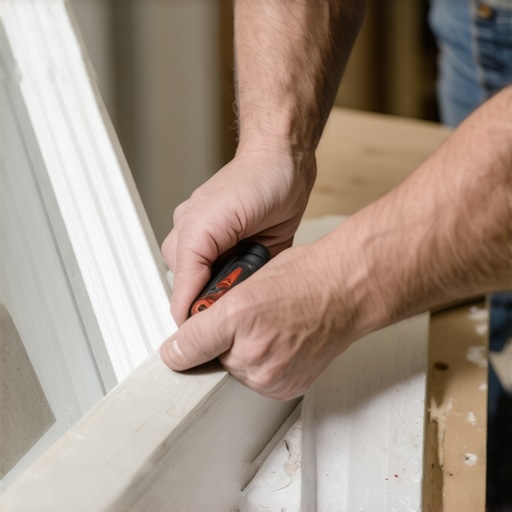
The Silent Decay of the Fenestration System
In my twenty-five years of holding a glazing slick and a pry bar, I have seen more good wood sent to the landfill than I care to admit. Property owners often assume that a sticky sash or a bit of peeling paint signifies the end of a window’s lifecycle. They listen to the siren song of the high-pressure salesman who promises that to replace windows is the only path to comfort. That is a fallacy. Most historic wood windows were built from old-growth lumber with a cellular density that modern kiln-dried pine cannot match. The key to preservation is not a massive capital expenditure but the surgical application of a simple putty knife. This tool, when used by a hand that understands the physics of a rough opening, is the difference between a hundred-year-old sash and a pile of sawdust.
The Rot Repair Reality: A Lesson in Flashing
I remember pulling a double-hung wood window out of a Victorian home in Boston during a particularly brutal November. The homeowner was complaining about a draft, but once I got the trim off, the situation was far more dire. The header was completely black with rot. Why? The previous installer, likely a jack-of-all-trades who didn’t understand the shingle principle, had relied on a thick bead of cheap silicone rather than proper flashing tape and a drip cap. Water had bypassed the glazing bead, sat in the window repair zone where the sash meets the sill, and began to digest the wood from the inside out. I had to explain that the window cleaner they hired last summer wasn’t seeing the problem because it was hidden behind layers of failed latex paint. If they had used a putty knife to probe the wood and maintain the glazing compound years ago, we wouldn’t have been looking at a structural failure. This is why we focus on the details of the sash and the muntin before we talk about replacement.
“Installation is just as critical as the window performance itself. A high-performance window installed poorly will fail.” AAMA Installation Masters Guide
The Anatomy of the Sash: More Than Just Glass
To save a frame, you must understand the mechanical assembly of the window. A window is an operable system designed to manage moisture and thermal transfer. The glass is held in place by a bedding of glazing compound, often referred to as ‘putty.’ Over decades, this oil-based material loses its plasticizers, becomes brittle, and cracks. Once that seal is broken, capillary action pulls rainwater into the wood fibers. This is where the putty knife becomes a scalpel. You aren’t just scraping; you are excavating the failure points. A stiff-handled putty knife allows you to apply leveraged pressure to remove the calcified glazing bead without marring the muntins. When you strip the sash down to the bare wood, you are resetting the clock on the wood’s lifespan.
The Physics of Heat and Moisture in Cold Climates
In northern climates, the enemy is the dew point. When warm, humid indoor air hits the cold surface of a single-pane glass, condensation forms. This moisture runs down the glass and pools at the bottom rail. If your glazing is cracked, that water enters the wood. From a thermal perspective, people think they need to replace windows to get a better U-Factor. While it is true that triple-pane glass offers superior insulation, a well-maintained wood window with a high-quality storm window can achieve a U-Factor that rivals modern mid-grade vinyl units. By using your putty knife to ensure a tight seal and then applying a modern low-e film or a secondary glazing layer, you are managing the radiant heat without the five-figure price tag of a full-frame tear-out.
Step-by-Step: The Surgical Use of the Putty Knife
First, identify the ‘operable’ status of the sash. If it is painted shut, your putty knife needs to be used to break the paint bridge between the sash and the stop. Do not use a hammer; use steady, controlled pressure. Once the sash is removed, the real window repair begins. You must use the corner of the knife to rake out the old linseed oil putty. You will likely find ‘glazier points’—small metal triangles holding the glass in the frame. Be careful not to provide too much lateral pressure, or you will crack the glass. After the glass is out, use the knife to scrape away any fungal growth or oxidized wood. This creates a fresh substrate for the new primer. If you skip this, your new glazing will not bond, and you will be back in the same position within two seasons.
“Field moisture measurements and proper substrate preparation are the foundations of any successful window rehabilitation project.” ASTM E2112 Standard Practice
The Fallacy of the Quick Fix
Many people try to use a window cleaner or a topical spray to ‘fix’ their frames. This is a cosmetic solution to a structural problem. The putty knife allows you to check for ‘soft’ spots in the sill. If the knife sinks into the wood with little resistance, you have active rot. In these cases, you don’t necessarily need to replace windows; you can use wood epoxy. You excavate the rot, treat the remaining fibers with a consolidant, and then use your putty knife to profile the epoxy to match the original wood’s architecture. This is ‘Glazing Zooming’ in action: focusing on the microscopic bond between the resin and the wood tracheids to ensure the structural integrity of the rough opening remains intact.
Why the Installer Matters More Than the Product
You can buy the most expensive fiberglass window on the market, but if the shim placement is wrong or the sill pan isn’t sloped correctly, it will fail. The same applies to repair. Using a putty knife requires patience and a technical eye. You are looking for the ‘weep hole’ pathways and ensuring that the flashing tape from a previous renovation hasn’t been compromised. When I see a ‘caulk-and-walk’ installer, I see someone who doesn’t respect the science of the building envelope. They use a tube of caulk where a putty knife and a piece of solid wood should have been used. To truly save a window frame, you must be willing to do the tedious work of mechanical stripping and manual re-glazing. It is a lost art, but for the homeowner who values the history and thermal mass of their original windows, it is the only way to go. Don’t be swayed by the ‘Tin Man’ selling you a product you don’t need. Pick up a knife, check your muntins, and preserve the soul of your home.