The Anatomy of an Annoyance: Why Your Windows Are Shaking
A rattling window is more than just a nuisance that keeps you awake during a storm. To a master glazier, that sound is a diagnostic signal. It is the audible vibration of a mechanical failure within the fenestration assembly. When a sash moves within its frame, it indicates that the tolerances between the operable components and the jambs have exceeded their design specifications. This movement is often caused by the degradation of weatherstripping or the settling of the rough opening. I remember a specific job in Chicago where I was called to a historic brownstone. The homeowner was convinced they needed to replace windows throughout the entire facade because of a persistent chattering during windy nights. I pulled a vinyl window out of a house nearby during that same trip and the header was completely black with rot. Why? The previous installer relied on the nailing fin instead of proper flashing tape and left a gap that allowed air pressure to oscillate the entire unit. In the brownstone, however, the issue was simpler: the wood sash had shrunk over decades of seasonal humidity cycles, leaving a gap that no amount of paint could fill. This is where the physics of wind pressure meets the reality of home maintenance.
The Glazing Zoom: Understanding Wind Pressure and Vortex Shedding
To understand why a window rattles, we have to look at the fluid dynamics of air. When wind hits the exterior face of your home, it creates a high-pressure zone. As that air tries to move around the corners of the building or past the protrusions of a window sill, it creates areas of low pressure. This pressure differential is what drives air through every microscopic gap in your building envelope. If your sash is not held firmly against the stop by its weatherstripping, the wind will cause it to vibrate. This is known in engineering circles as vortex shedding. The sash essentially becomes a reed in a musical instrument, vibrating at a frequency determined by the wind speed and the mass of the glass. In a cold climate like Minneapolis or Chicago, this isn’t just about noise. That movement is actively pumping heated air out of your house and pulling freezing air in. We measure this through the U-Factor, which is the rate of heat loss. A rattling window has a functional U-Factor that is significantly higher than its laboratory rating because the air infiltration bypasses the thermal performance of the glass entirely.
“Installation is just as critical as the window performance itself. A high-performance window installed poorly will fail.” AAMA Installation Masters Guide
The $2 Solution: The Physics of the Rubber Wedge
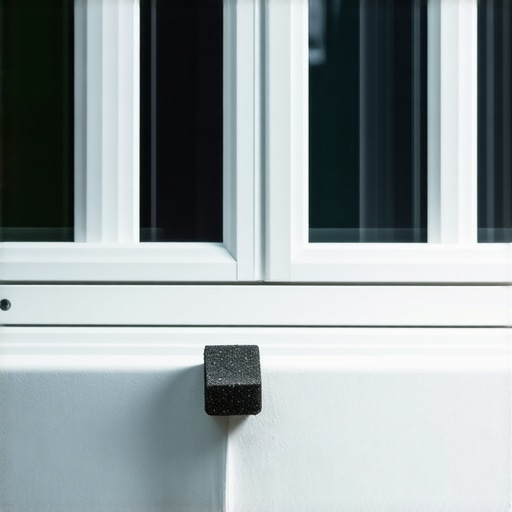
Before you commit to an expensive window repair or a full-scale replacement, you can utilize a simple mechanical fix: the rubber wedge. This is not just a piece of plastic; it is a compression tool designed to restore the tension between the sash and the frame. By inserting a rubber wedge between the sash and the stop, you are essentially pre-loading the assembly. This eliminates the ‘play’ or the gap that allows the vortex shedding to occur. For less than the price of a cup of coffee, you are re-establishing the structural integrity of the operable unit. You want to look for wedges made of EPDM or a high-grade silicone. These materials have a high resistance to UV radiation and ozone, meaning they won’t become brittle and crack after one season of exposure to the sun through the glass. When you place the wedge, you are looking to create a uniform seal. I often tell homeowners that if they see their window cleaner struggling to wipe the edges of the glass because the sash moves under the pressure of the squeegee, they have a tension problem. The wedge should be placed at the point of maximum deflection, usually at the meeting rail or the top of the upper sash in a double-hung configuration.
When Repair Becomes Resignation: The Limits of the Wedge
While a wedge can stop the noise, it cannot fix a failed IG (Insulated Glass) unit. If you look at your windows and see a foggy haze or actual water droplets between the panes, your seal has failed. At this point, the argon or krypton gas that provided your thermal barrier has escaped, replaced by moisture-laden air. This is the ‘Dew Point’ crisis. Once the interior temperature of the glass drops below the dew point of the air trapped between the panes, condensation forms. No rubber wedge can fix the loss of R-value that follows a seal failure. This is often when a homeowner must decide to replace windows rather than continue with incremental window repair. If you are in a northern climate, you need to look at the NFRC label for a low U-Factor and a warm-edge spacer. These spacers, located between the panes of glass, are made of less conductive materials than traditional aluminum, which helps keep the edge of the glass warmer and prevents the very condensation that leads to mold on your muntins or glazing bead.
“Standard practice for installation of exterior windows, doors and skylights requires a continuous air barrier and integrated flashing to ensure long-term performance.” ASTM E2112
The Technical Guide to Installing Your Wedge
To properly install a rubber wedge for rattle prevention, follow these steps. First, clean the area thoroughly. A window cleaner will tell you that dirt and soot act as an abrasive. If you wedge a sash against a dirty frame, you will eventually grind away the finish. Second, identify the gap. Close and lock the window, then gently push on the sash. If it moves more than a sixteenth of an inch, that is your rattle source. Third, select your shim. Don’t use wood, as it absorbs moisture and will eventually rot the sash. Use a tapered rubber wedge. Fourth, slide the wedge into the gap between the sash and the window stop. You want enough pressure to stop the movement but not so much that you bow the frame. If you bow the frame, you could potentially crack the glazing bead or put undue stress on the glass itself, leading to a stress crack. This is particularly dangerous in high-altitude or extremely cold environments where the glass is already under tension from pressure differentials.
Climate Specifics: Why Your Region Matters
If you are in the North, your enemy is heat loss. You want your windows to be as tight as possible to prevent convection currents from forming inside your rooms. In these regions, a rattling window is a heat thief. You should look for windows with Low-E coatings on Surface #3 to reflect heat back into the house. However, if you were in the South, the strategy changes. There, the Solar Heat Gain Coefficient (SHGC) is the metric that matters most. You would want Low-E coatings on Surface #2 to reflect the sun’s energy before it even enters the home. In either case, the mechanical stability of the window is what allows these coatings to do their job. If the window is rattling, the air is moving, and if the air is moving, the coatings are irrelevant. A rubber wedge is a temporary bridge to comfort, but it is also a reminder that the building envelope is a dynamic system that requires constant vigilance.
Final Professional Assessment
In my 25 years of standing on scaffolding and looking at rough openings, I have learned that the small things matter. A $2 rubber wedge can save your sanity during a winter gale, but it should also serve as a prompt to inspect your sills, your weep holes, and your flashing tape. If you find that the wedge is no longer enough, or if you see the telltale signs of black mold or wood rot that I found in that Chicago project, it is time to call in a professional glazier. Don’t settle for a ‘caulk-and-walk’ contractor who wants to just slap a new unit into a rotting frame. Demand a full-frame inspection. Ensure your sill pan is properly sloped and that your drip cap is diverting water away from the header. Windows are the eyes of your home, but they are also the most complex part of your wall. Treat them with the technical respect they deserve.
Comments are closed.