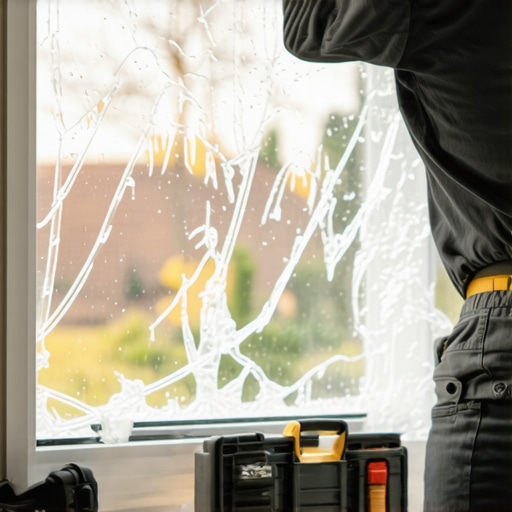
The Emergency Physics of a Broken Glazing Unit
A shattered window pane is not merely an aesthetic grievance; it is a critical failure of the building envelope. When a glass unit is breached, you are no longer managing the thermal boundary of your home. Instead, you have an uncontrolled exchange of air, moisture, and pressure. As a master glazier with over two decades in the field, I have seen homeowners attempt to solve this with a roll of clear packing tape and a prayer. This is a mistake that leads to structural degradation and exorbitant energy loss. Understanding how to mitigate the damage requires more than just a quick fix; it requires an understanding of how an Insulated Glass Unit (IGU) functions and how to preserve the integrity of the Sash and the Rough Opening until a professional window repair can be executed.
A Narrative of Moisture and Mismanagement
A homeowner called me in a panic because their new windows were ‘sweating’ and the plywood they used to cover a break was dripping with black mold after only three days. I walked in with my hygrometer and showed them the humidity was 60 percent. It wasn’t the windows; it was their lifestyle combined with an improper temporary seal. They had trapped high-moisture air against a cold surface without a vapor barrier. This is the reality of a ‘caulk-and-walk’ mentality. When a pane breaks, you aren’t just dealing with glass; you are dealing with a localized climate crisis within your wall cavity. If you do not manage the dew point during your temporary fix, you are inviting rot into the very framing of your house.
“Installation is just as critical as the window performance itself. A high-performance window installed poorly will fail.” – AAMA Installation Masters Guide
Analyzing the Glazing System Anatomy
To secure a shattered pane, you must understand what you are looking at. Most modern homes utilize double or triple-pane IGUs. These units consist of two or more sheets of glass separated by a spacer bar, often containing a desiccant to absorb residual moisture. The space between the panes is typically filled with an inert gas like Argon or Krypton to lower the U-Factor. When one pane breaks, that gas escapes instantly, and the thermal resistance of the unit plummets. If the unit is Operable, the weight of the glass and the tension of the Sash balance must be considered. Removing the shards requires careful manipulation of the Glazing Bead, the plastic or wood strip that holds the glass in the frame. If you damage the bead, you may find yourself having to replace windows entirely rather than simply performing a glass swap.
The Technical Protocol for Temporary Securing
First, identify the type of glass. If it has shattered into thousands of tiny cubes, it is tempered safety glass. If it has broken into large, lethal shards, it is annealed glass. You must wear cut-resistant gloves. Begin by using a stiff putty knife to gently pry the glazing beads away from the sash. Do not force them; if they snap, you are in trouble. Once the beads are removed, you can assess the bed of the glazing. In a ‘wet glaze’ system, the glass is bedded in silicone or high-performance sealant. In a ‘dry glaze’ system, a rubber gasket is used. To secure the opening, you need a material that offers both structural rigidity and a thermal break. A piece of 1/2-inch rigid foam insulation cut to the size of the Rough Opening is far superior to plywood. It provides a much lower U-Factor and prevents the condensation issues I mentioned earlier.
Climate Logic: The Cold Weather Defense
In northern climates where the U-Factor is the primary metric of concern, a broken window in January is an emergency. The heat loss occurs through three mechanisms: conduction, convection, and radiation. A plywood board has a U-Factor of approximately 1.0, which is abysmal compared to a modern Low-E IGU with a U-Factor of 0.25. To mitigate this, your temporary fix must include a radiant barrier. I recommend taping a layer of heavy-duty aluminum foil to the interior side of your foam board. This reflects long-wave infrared radiation back into the room. Use Flashing Tape to seal the perimeter of the board to the window frame. This tape is designed for moisture management and will not leave the gummy residue that duct tape leaves, which would otherwise frustrate a window cleaner later. Ensure you do not block the Weep Hole at the bottom of the frame; these are vital for allowing moisture that bypasses the primary seal to exit the system.
“Field-measured performance often differs from laboratory ratings due to deficiencies in the installation of the rough opening or the failure of the perimeter seal.” – ASTM E2112 Standard Practice
The Southern Strategy: Solar Heat Gain Management
If you are in a hot climate, the enemy is the Solar Heat Gain Coefficient (SHGC). A broken pane allows the sun’s radiant energy to pour into your living space unabated. In these regions, a temporary fix must prioritize blocking the sun. A dark-colored board or heavy plastic will absorb heat and transfer it into the house via conduction. The goal here is to reflect the energy before it enters. This is why high-performance windows in the South have Low-E coatings on Surface #2 (the inner face of the outer pane). For your temporary fix, use a reflective insulation product or a white-faced board to bounce the solar energy back toward the exterior. This prevents the ‘oven effect’ that occurs when a breach is left unmanaged.
Why the Installer Matters More Than the Brand
When the repairman finally arrives, the quality of the window repair depends on their adherence to the ‘Shingle Principle.’ This means every layer of the window system must overlap the one below it to shed water. A proper installer will check the Sill Pan for integrity and ensure that any Shim used to level the unit does not interfere with the drainage path. If the professional suggests you replace windows because of a single broken pane, they should be able to justify it based on the failure of the primary seal or damage to the Muntin bars. Often, an older window frame has warped so significantly that a new IGU will not sit flat, leading to stress cracks in the future. This is the technical nuance that separates a master glazier from a handyman.
Long-term Maintenance and Prevention
Finally, once the pane is replaced, maintenance is key. A professional window cleaner can often spot the early signs of seal failure, such as ‘creeping’ of the primary sealant or the presence of calcium deposits between the panes. These are indicators that the desiccant is saturated and the unit’s thermal performance is compromised. Regularly checking the Flashing Tape integrity and ensuring the Weep Hole is clear of debris will extend the life of your glazing units and protect the structural members of your home from the silent threat of rot.