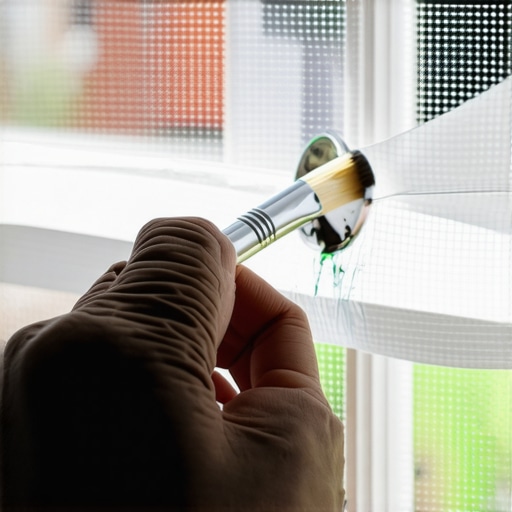
In the world of professional glazing, we often say that a window is only as good as the maintenance it receives. While most of my days are spent calculating wind load pressures for curtain walls or ensuring a rough opening has the exact three-eighths of an inch tolerance required for a perfect sill pan installation, I recognize that for the average homeowner, the humble window screen is the first line of defense. A small tear in that mesh can be an invitation for pests, but before you rush to replace windows entirely, there is a technical, albeit temporary, fix involving clear nail polish. As a specialist with over 25 years in the field, I have seen every shortcut in the book. A homeowner once called me in a panic because their new windows were ‘sweating’ and they thought the seals had failed. I walked in with my hygrometer and showed them the humidity was 60 percent. It was not the windows; it was their lifestyle and the lack of proper ventilation. They were keeping their operable sashes locked tight year-round without ever utilizing their screens for natural air exchange. That experience taught me that educating people on the small things, like screen repair, leads to better long-term window health. When we talk about how to repair a hole in your window screen with clear nail polish, we are discussing the application of a nitrocellulose-based polymer to a damaged substrate, typically fiberglass or aluminum mesh. This is not a permanent solution for a massive gash, but for a pinhole or a small snag, it acts as a mechanical bridge. The process begins with cleaning. You cannot expect adhesion on a surface covered in oxidation and environmental pollutants. Use a specialized window cleaner that does not contain ammonia, as ammonia can degrade certain types of PVC coatings on fiberglass screens. Gently wipe the area around the hole. Once the mesh is dry, you apply the clear nail polish in thin, successive layers. The goal is to create a web of dried resin that spans the gap. If the hole is larger than a pencil eraser, this method will fail because the surface tension of the liquid polish cannot bridge the void. For those larger issues, you are looking at a full window repair or mesh replacement.
“Installation is just as critical as the window performance itself. A high-performance window installed poorly will fail.” – AAMA Installation Masters Guide
This principle applies to even the smallest components. If your screen is sagging or the glazing bead is popping out, the thermal envelope of your home is compromised. In northern climates like Chicago or Minneapolis, the primary enemy is heat loss. We focus heavily on the U-Factor, where a lower number indicates better insulation. If you are repairing screens to allow for summer ventilation, you must ensure that when the windows are closed, the sash is fully seated against the weatherstripping. I often see homeowners obsess over a tiny screen hole while ignoring the fact that their wood sash has rotted at the bottom rail because they neglected the weep holes. A screen allows you to manage the dew point within your home by controlling interior humidity. If you live in a cold climate, you likely have Low-E coatings on Surface #3 of your glass to reflect long-wave infrared radiation back into your living space. When you use your screens and open your windows, you are balancing the interior air pressure.
“The fenestration system must be viewed as a holistic assembly where every component, from the flashing tape to the operable hardware, plays a role in water management and thermal resistance.” – ASTM E2112 Standard Practice
To perform a proper repair with nail polish, follow these technical steps. First, stabilize the screen on a flat surface if possible. If the screen is still in the frame, place a piece of cardboard behind the hole to provide a temporary backing. Apply a single drop of clear polish to the edge of the hole. Let it cure for at least ten minutes. The solvent must evaporate, leaving behind the hardened resin. Repeat this process, working from the outside of the hole toward the center. This creates a structural lattice. If you find yourself frequently needing to repair screens or if the frames are bent, it might be time to replace windows. Modern units offer far superior energy efficiency. We look for warm-edge spacers that separate the glass panes and prevent the edge-of-glass temperature from dropping too low, which is the primary cause of condensation. When I am consulting on a window repair, I check the balance shoes and the shim placement. If a window does not operate smoothly, the screen will eventually get damaged from the force required to open the sash. Professional window cleaner services often catch these issues early. They notice when a muntin is loose or when the flashing has started to fail. Do not ignore the technical indicators of window failure. If you see fogging between the panes, that is a clear sign of desiccant saturation and seal failure. No amount of nail polish or surface repair will fix a blown IGU (Insulated Glass Unit). In the North, we prioritize argon gas fills because argon is denser than air and significantly reduces convective heat transfer within the glazing cavity. Every time you touch your window, from cleaning the glass to dabbing polish on a screen, you are interacting with a complex piece of engineering. Respect the rough opening, maintain the integrity of the sill pan, and always ensure your flashing tape is layered in a shingle-fashion to shed water. Small repairs keep the system functioning until a full replacement is necessary.