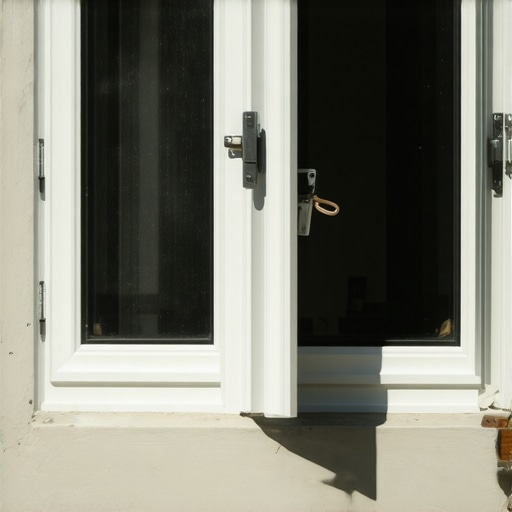
The Mechanics of a Restricted Sash: Why Your Window is Stuck
When a window refuses to budge past a certain point, most homeowners reach for the pry bar. As a glazier with over two decades in the field, that sound makes my skin crawl. A window that only opens a few inches is a symptom of a mechanical conflict, not a test of strength. Whether you are dealing with a double-hung, a slider, or a crank-out casement, the physics of the operable unit remain the same: something is obstructing the travel path or the balance system has reached its terminal limit due to failure. I remember a call from a homeowner in a panic because their new windows were ‘sweating’ and wouldn’t open more than a hand’s width. I walked in with my hygrometer and showed them the humidity was 60 percent. It wasn’t the windows; it was their lifestyle. Those wood sashes had absorbed so much ambient moisture that they had physically expanded within the jambs, creating enough friction to seize the movement. This is why we talk about the ‘Dew Point’ and moisture management as much as we talk about glass.
“Installation is just as critical as the window performance itself. A high-performance window installed poorly will fail.” – AAMA Installation Masters Guide
Identifying the Culprit: Mechanical Failure vs. Safety Features
Before you commit to a full window repair, you must verify if the restriction is intentional. Modern building codes, specifically regarding child safety, often require Window Opening Control Devices (WOCDs). These are small, spring-loaded tabs located on the jamb or the sash that physically stop the window from opening more than four inches. If your window hits a hard stop and you hear a metallic ‘click,’ check the sash for these latches. However, if the stop is ‘mushy’ or feels like it is grinding, you are likely looking at a failure of the balance system. In a double-hung window, the sash is supported by a block-and-tackle or a constant force balance. When these springs snap or the cords fray, they can bunch up inside the track, creating a physical barrier that prevents full travel. If the internal components are shredded, the only long-term solution is to replace windows or at least the balance cartridges, as a ‘caulk-and-walk’ fix won’t restore the tension required for safe operation.
The Role of the Window Cleaner in Operational Maintenance
Many homeowners overlook the simplest solution: cleanliness. A professional window cleaner does more than wipe away streaks; they remove the particulate matter that accumulates in the sill and the tracks. In high-traffic or coastal areas, salt and grit act like sandpaper on the vinyl or aluminum tracks. This friction increases the load on the operator hardware. If you are struggling with a window that won’t move, vacuum the tracks and use a soft brush to clear the weep hole. If the weep holes are clogged, water backs up into the sill pan, causing wood components to swell or metal hardware to corrode. Use a dry silicone spray for lubrication; never use oil-based products like WD-40, which attract dust and eventually turn into a sticky sludge that will seize the sash permanently.
Structural Stress and the Rough Opening
If the rough opening of the house has shifted due to foundation settling or a sagging header, the window frame may be ‘racked.’ This means the frame is no longer a perfect rectangle. When the frame is pinched into a trapezoid or a parallelogram, the sash will bind against the jambs. You can test this by measuring the diagonals of the frame; if they aren’t identical within an eighth of an inch, the house is squeezing your window. In cold climates like Minneapolis or Chicago, thermal contraction can also play a role. A vinyl frame expands and contracts significantly more than the glass it holds. If the original installer didn’t leave enough of a gap for expansion and used rigid shims instead of flexible foam, the frame can bow inward during a cold snap, locking the sash in place.
“Water penetration through the window assembly often results from a failure to integrate the sill pan with the weather-resistive barrier.” – ASTM E2112
Climate Logic: The North/Cold Context
In northern climates, the enemy is heat loss and condensation. If your window is stuck during winter, it might be literally frozen shut. Ice forms when warm, moist indoor air escapes through a failing glazing bead or a worn weatherstrip and hits the cold outer pane. This moisture freezes in the tracks, creating a weld of ice. This is where U-Factor becomes king. A window with a low U-Factor and a warm-edge spacer reduces the temperature differential at the edge of the glass, preventing the condensation that leads to ice-locking. If you find yourself frequently chipping ice to get some fresh air, your window’s thermal envelope has failed. While window repair can replace weatherstripping, sometimes the only way to solve the thermal bridge is to replace windows with triple-pane units that feature Low-E coatings on Surface #3 to reflect heat back into the room.
Final Checklist for Restoring Movement
First, inspect the tracks for physical debris or protruding screws that might have backed out of the shim points. Second, check the sash for signs of warping or swelling; a simple wood plane can sometimes shave off just enough material to restore the glide, though this requires resealing the wood immediately. Third, examine the balance hardware. If you see a coiled spring or a string hanging loose, the balance is shot. Finally, evaluate the age of the unit. If the window is a single-pane relic with failing putty, the energy savings and improved operability of a modern fiberglass or thermally broken aluminum frame will provide a much higher return on investment than struggling with a 50-pound sash that won’t move. Don’t buy the marketing hype; look at the NFRC label and ensure the hardware is rated for the weight of the glass. Proper water management and mechanical alignment are the only things standing between a functional window and a hole in the wall that just causes headaches.