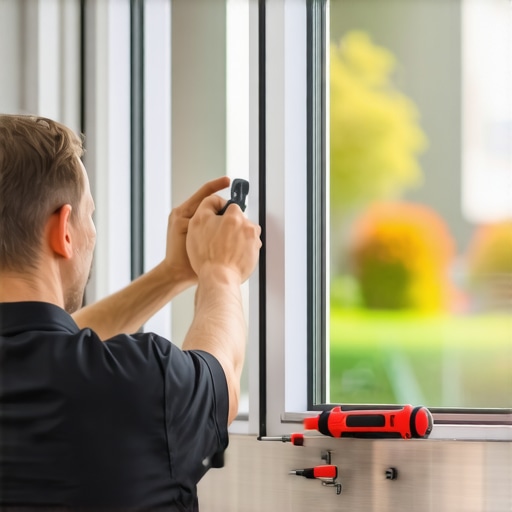
The Frustrating Mechanics of the Non-Starting Cam Lock
You go to close your window for the night, you rotate the handle, and instead of a satisfying click and the compression of weatherstripping, you hear the harsh scrape of metal on metal. The window latch does not line up. For most homeowners, this is a minor annoyance. For a master glazier, it is a diagnostic symptom of a structural or mechanical failure. When a latch fails to engage, it is rarely the fault of the lock itself. Instead, it is a signal that the sash, the frame, or the rough opening has moved out of its engineered tolerance. This is not just a security concern; it is a thermal disaster. A window that cannot lock cannot seal, and a window that cannot seal is simply a very expensive air leak. In northern climates, this gap becomes a highway for heat loss, spiking your U-factor and inviting condensation to rot your interior trim.
The Rot Discovery: A Case Study in Poor Installation
I recall a call-out for a window repair in a ten-year-old development. The homeowner complained that the upper sash of his double-hung window kept slipping, making it impossible to line up the locks. When I pulled the window out of the wall, the problem was immediately visible: the header was black with rot. The previous installer had relied entirely on the nailing fin and a bead of cheap caulk rather than using proper flashing tape and a sloped sill pan. Over a decade, water had infiltrated the rough opening, causing the wood framing to swell and compress the window frame. This ‘racking’ of the frame meant the sash was no longer square. No amount of window cleaner or lubrication was going to fix a latch that was being physically crushed by a failing house structure. We had to replace windows across the entire south-facing wall because the installation was fundamentally flawed from day one.
“Installation is just as critical as the window performance itself. A high-performance window installed poorly will fail.” AAMA Installation Masters Guide
The Anatomy of Sash Alignment
To understand why your latch is missing its mark, you must understand the geometry of the window. A window is an assembly of parts designed to move within a millimetric scale. The sash must sit perfectly level within a frame that is perfectly plumb. If the sill of the window is not level, the sash will ‘rack’ or lean to one side. This causes the meeting rail (the horizontal part where the two sashes meet) to sit at an angle. Even a 1/8-inch deviation across a 36-inch span will prevent the cam lock from finding the strike plate. This is why we use a shim during installation. Shims are small wedges of plastic or cedar used to fine-tune the position of the window frame within the rough opening. If a house settles, those shims can shift, or the framing can move, throwing the entire system out of alignment.
The Thermal Cost of a Bad Seal
In cold climates, the primary enemy is air infiltration. The NFRC (National Fenestration Rating Council) rates windows based on their U-factor, which measures the rate of heat loss. When your latch does not line up, the interlock (the part where the two sashes hook together) does not engage. This interlock is the only thing standing between your living room and a 20-degree wind chill. Without that mechanical compression, your high-efficiency argon-filled glass is useless because the air is simply flowing around the sash. You are effectively paying to heat the neighborhood. Proper window repair involves more than just moving the lock; it involves restoring the mechanical seal that ensures the weatherstripping is fully compressed.
Diagnostic Steps: Finding the Root Cause
Before you start drilling new holes for your hardware, follow this technical checklist. First, check for debris. Use a professional-grade window cleaner to scrub the tracks and the balance channels. Often, a buildup of grit or a stray pebble in the bottom track prevents the sash from closing that last millimeter. Second, inspect the sash balances. If you have a constant-force spring or a block-and-tackle balance that has failed, the sash will not stay level. Third, use a four-foot level to check the sill. If the center of the sill is bowed upward (a condition known as crowning), it will push the bottom sash up in the middle, preventing the meeting rails from touching. Fourth, check for squareness by measuring the window diagonally from corner to corner. If the two measurements are not identical, the frame is racked.
“The window manufacturer’s instructions shall be followed for all aspects of installation. Failure to do so may void warranties and lead to premature product failure.” ASTM E2112 Standard Practice
How to Realign a Misaligned Latch
If the frame is square but the latch still does not hit the strike, you may need to adjust the sash itself. On many modern vinyl and fiberglass windows, the hardware has a small amount of play. You can loosen the screws on the cam lock and the strike plate to see if there is enough ‘slop’ to bring them into alignment. However, if the gap is significant, you may need to ‘drop’ or ‘lift’ one side of the sash. This is often done by adjusting the pivot shoes or the balance tension. In wood windows, we often have to plane a small amount of material off the bottom of the sash or the meeting rail to get the geometry back to true. Always remember that the goal is to have the lock pull the two sashes together. This ‘camming’ action is what creates the airtight seal necessary for energy efficiency.
When to Repair and When to Replace
Not every window is worth saving. If you are dealing with an old single-pane wood window with a rotted meeting rail, no amount of hardware adjustment will fix the thermal bridge. In these cases, it is better to replace windows with modern units that feature low-E coatings on surface #3 to reflect heat back into the room during winter. Modern windows also feature much more robust locking mechanisms that use multiple points of contact. If your current window frame is structurally sound but the sashes are failing, a ‘pocket replacement’ or insert window might be a viable middle ground, though as a glazier, I always prefer a full-frame replacement to ensure the flashing tape and sill pan are properly integrated into the building envelope.
The Final Seal
A window is the most complex part of your home’s exterior. It is a moving part that must also be a thermal barrier and a structural component. When you treat a misaligned latch as a minor problem, you ignore the physics of your home. By taking the time to square the sash, clean the tracks, and ensure the hardware is properly seated, you protect your home from water damage and high energy bills. Don’t be a ‘caulk-and-walk’ DIYer. Use the right shims, check your levels, and ensure that every time you turn that latch, you are creating a seal that can withstand the elements.