A cracked window pane is more than just a visual blemish on your home; it is a structural failure in your building envelope. As someone who has spent over two decades in the glazing industry, I have seen homeowners ignore a hairline fracture in October only to face a shattered mess by January when the thermal gradient between the indoor heating and the biting external frost creates enough tension to finish the job. When you see that jagged line across your glass, you are looking at a compromised thermal barrier. The immediate goal is to stabilize the Sash and prevent moisture from migrating into the Rough Opening. While you might be searching for a window cleaner to clear up the view, the priority is structural stabilization before a full window repair or the decision to replace windows becomes an emergency.
The Condensation Crisis: A Master Glazier Perspective
I recall a specific call in a midwestern winter where a homeowner was convinced their new double-pane units were defective because of ‘sweating’ and a small crack on the interior surface. I walked in with my hygrometer and found the interior humidity was hovering at 65 percent while the exterior temperature was zero degrees. It was not a product defect; it was a physics problem. The high humidity was hitting the cold glass, causing condensation that pooled in the Glazing Bead, eventually freezing and causing a stress crack due to the restricted expansion. This is why understanding the U-Factor is critical. In colder climates, we prioritize a low U-Factor to keep the heat inside. When a pane cracks, you lose the seal, and if it is an Insulated Glass Unit (IGU), you lose the argon gas fill that provides your insulation. You are no longer living in a protected environment; you are living in a tent with a glass wall.
“Installation is just as critical as the window performance itself. A high-performance window installed poorly will fail.” AAMA Installation Masters Guide
The Science of the Temporary Tape Fix
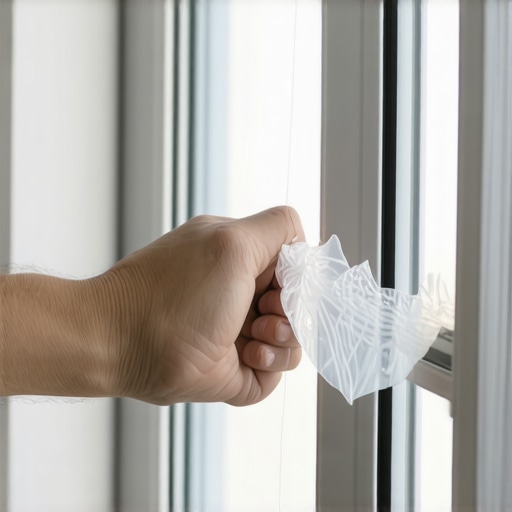
To fix a cracked pane temporarily, you must understand the material you are working with. Most residential windows are made of annealed glass, which breaks into sharp, dangerous shards. If you have tempered glass, it will usually crumble into small pebbles, making a tape fix impossible. For annealed glass, the Simple Tape Method is about tension management. You are not just ‘sticking’ tape on a crack; you are creating a bridge to redistribute wind load and thermal stress. First, clean the area meticulously. Any window cleaner used must be non-residual; any oils left behind will prevent the adhesive from bonding to the silica surface. Using a high-quality Flashing Tape or even a clear heavy-duty packing tape is preferred over duct tape, which degrades under UV radiation and leaves a catastrophic residue.
Step-by-Step Stabilization
Apply the tape to both the interior and exterior sides of the glass. This is non-negotiable. You need to create a localized ‘laminated’ effect. Start the tape at least two inches beyond the visible end of the crack. This is the ‘arrest point.’ As the building shifts or the wind puts pressure on the Operable Sash, the tape absorbs the micro-movements that would otherwise cause the crack to travel. If the crack reaches the Glazing Bead, you must ensure the tape creates a weather-tight seal against the frame to prevent water from entering the Sill Pan area. Water ingress is the silent killer of window frames, leading to rot that a simple window repair cannot fix.
Thermal Dynamics and Climate Logic
In our northern climate, the enemy is heat loss and the dreaded dew point. When you have a crack, the temperature of the glass surface drops significantly. This shifts the dew point to the interior of your home, leading to mold growth on the Muntin bars or the frame. A temporary tape fix acts as a rudimentary thermal break, but it does nothing to restore the U-Factor of the original IGU. If you find yourself needing to replace windows frequently, you might be dealing with a structural shifting issue in the Rough Opening or poor Shim placement from a previous ‘caulk-and-walk’ installer who did not level the unit properly. A window that is not level and square puts constant ‘racking’ stress on the glass, making it far more susceptible to cracking under minor thermal changes.
“Standard Practice for Installation of Exterior Windows requires that the installer ensures the fenestration product is integrated into the water-resistive barrier correctly to prevent air and water leakage.” ASTM E2112
When to Stop Repairing and Start Replacing
There is a point where window repair becomes a sunk cost. If your Sash is showing signs of rot, or if the Weep Hole system is clogged and causing internal frame saturation, a new pane of glass is just a bandage on a gunshot wound. When we look at the ROI of a window, we aren’t just looking at the heating bill. we are looking at the preservation of the wall assembly. A cracked window allows moisture to reach the Rough Opening, which can lead to thousands of dollars in hidden damage behind the siding. If the crack is larger than a few inches, or if it is a ‘star’ fracture from an impact, the structural integrity of the pane is gone. In these cases, the tape method is only a 24-hour solution until a professional glazier can arrive to replace windows with a properly rated unit that matches the thermal requirements of your specific zone.