The Glass Surface Science: Beyond the Spray Bottle
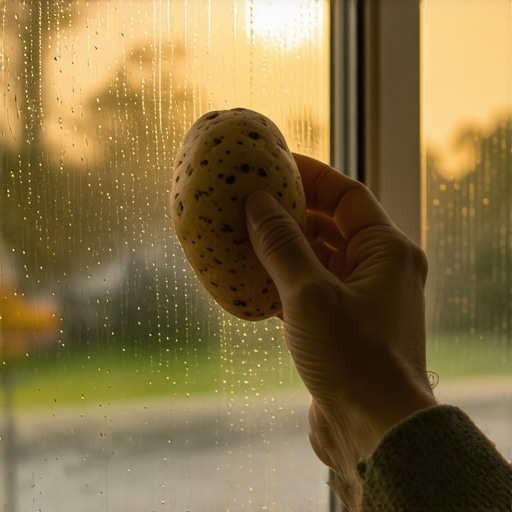
In twenty-five years of handling everything from high-performance storefronts to historic window repair projects, I have seen every gimmick in the book. Homeowners often ask me why their brand-new, high-efficiency windows look like a smeared mess after the first autumn storm. They reach for the blue spray, thinking it is the gold standard for a window cleaner. It is not. In fact, if you have modern soft-coat Low-E glass, that ammonia-based spray is doing more harm than good to your investment. Let me tell you about a trick we used back when we were glazing massive curtain walls in rainy climates: the humble potato. It sounds like folklore, but it is pure physics. A homeowner called me in a panic because their new windows were sweating. I walked in with my hygrometer and showed them the humidity was 60 percent. It was not the windows; it was their lifestyle, but the condensation was leaving behind mineral streaks that seemed impossible to clear. I took a raw potato, sliced it, and rubbed it on the exterior glass. They thought I was losing my mind until the next rainstorm hit and the water sheeted off perfectly while their neighbor’s windows looked like a topographical map of salt deposits. This is not just a cleaning hack: it is an introduction to the world of surface tension and glazing integrity.
The Starch Factor: Breaking Surface Tension
When you rub a raw potato on a glass pane, you are depositing a thin, transparent layer of starch. This starch acts as a surfactant. In the world of high-end window replacement, we talk a lot about hydrophobicity versus hydrophilicity. Most glass is naturally somewhat hydrophobic, meaning water wants to bead up. When those beads catch dust and pollutants, they dry into those annoying spots. The starch from a potato creates a hydrophilic surface, which lowers the surface tension. Instead of beading, the water sheets. This is the same principle used in factory-applied self-cleaning coatings. It is a temporary fix, but it illustrates a deeper point: the way you treat your glass affects its long-term performance. If you are constantly scrubbing at your sash with abrasive chemicals, you are micro-scratching the surface, which gives those rain streaks a place to anchor. When we talk about window repair, we are often just talking about restoring the clarity and functionality that was lost through poor maintenance habits.
“Installation is just as critical as the window performance itself. A high-performance window installed poorly will fail.” – AAMA Installation Masters Guide
The Anatomy of a High-Performance Window
If you are looking to replace windows, you need to understand that the glass is only one-third of the equation. As an installer, I look at the Rough Opening first. If your Rough Opening is out of square by more than a quarter-inch, I do not care if you have triple-pane krypton-filled glass: that window will leak air. We use a Shim to ensure the frame sits perfectly level and plumb, allowing the Operable parts of the window to move without binding. For those in coastal or high-moisture areas, the management of water starts at the Sill Pan. Every window installation must follow the shingle principle: every layer must overlap the one below it so water is directed outward. If your installer is not using high-quality Flashing Tape to seal the nailing fin to the weather-resistive barrier, you are just waiting for a rot crisis. I have seen countless DIY jobs where they skipped the Drip Cap, and two years later, the header is a sponge. This is why professional window repair often involves tearing out the entire frame to fix what is hidden behind the drywall.
U-Factor, SHGC, and the Thermal Envelope
In my decades of experience, I have noticed that people buy windows based on price rather than physics. If you live in a climate with heavy rain and humidity, you are fighting two enemies: radiant heat and moisture. We look at the NFRC label like a doctor looks at a blood test. The U-Factor tells us how well the window insulates; in cold, wet climates, you want that number as low as possible to prevent the interior glass temperature from dropping below the dew point. If the glass stays warm, you do not get condensation. Then there is the Solar Heat Gain Coefficient (SHGC). In the South, we want a low SHGC to block the sun’s infrared energy. We achieve this by placing the Low-E coating on Surface #2 (the inner face of the outer pane). This reflects the heat before it even enters the air gap. If you are in a cold climate, we might put it on Surface #3 to keep the furnace heat inside. Using a potato to keep your glass clear is great, but if your glass package is wrong for your climate, you are just polishing a thermal bridge.
“The selection of the proper glass and frame combination is essential to achieving energy efficiency goals in any residential structure.” – NFRC Technical Bulletin
Maintenance: Beyond the Potato
While the potato trick is a great glazier’s secret for exterior glass, you must be careful with the interior. Many modern windows have a hard-coat Low-E on Surface #4 (the side you can touch). Ammonia can oxidize this coating over time, leading to a permanent haze. This is why we advocate for mild soap and water or specialized cleaners. But let’s talk about the parts people forget: the Weep Holes. Every vinyl and aluminum window has them. They are small slots at the bottom of the frame designed to let water out of the track. If these get clogged with dirt or insects, the water backs up and leaks into your wall. I have been called for a window repair where the homeowner thought the seal had failed, but in reality, their weep holes were just plugged with mulch. A quick clean with a stiff wire saved them thousands. Also, check your Glazing Bead. This is the strip of vinyl or wood that holds the glass in the sash. If it is cracked or popping out, water will find its way into the IGU (Insulated Glass Unit) and cause that dreaded fogging which no potato or spray can fix.
The Glazier’s Final Verdict
Whether you are trying to extend the life of your current panes with clever cleaning or you are ready to replace windows entirely, remember that science governs the result. A window is a complex system involving thermal expansion, moisture migration, and structural integrity. A potato can help you see through the rain, but only a proper installation can keep the rain out of your house. Stop looking for the cheapest quote and start looking for the installer who understands capillary action and thermal breaks. If they do not know what a Sill Pan is, keep looking. Your home deserves more than a caulk-and-walk job. It deserves a window that performs as well as it looks on the day it was installed. Keep your weep holes clear, your sash balanced, and your glass clean, and you will not have to see me for another twenty-five years.
Comments are closed.