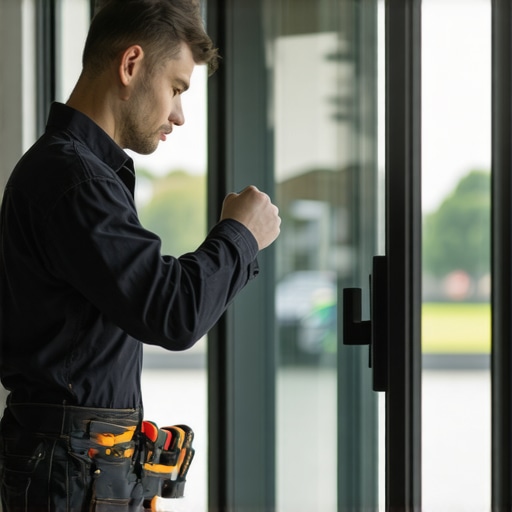
The Anatomy of a Failed Slider
There is a specific, grinding sound that signals the slow death of a sliding glass door. It is the sound of stainless steel rollers fighting against a track filled with sediment, or worse, the sound of a collapsed bearing housing dragging across an aluminum threshold. As a glazier with over two decades in the field, I have seen homeowners nearly throw their backs out trying to open a patio door that should glide with the touch of a single finger. When we talk about window repair or specialized glass door maintenance, we are really talking about the management of friction and the physics of the building envelope.
The Condensation Crisis: A Diagnostic Tale
A homeowner called me in a panic because their new windows were ‘sweating’ and the sliding door was becoming nearly impossible to lock. I walked in with my hygrometer and showed them the humidity was 60 percent. It wasn’t the windows; it was their lifestyle. They had a massive collection of tropical plants and rarely used the range hood while cooking. This excess moisture was condensing on the cold glass surfaces and dripping into the roller track. Over months, this standing water caused the steel axle inside the tandem roller assembly to oxidize. The ‘stuck slider’ wasn’t a mechanical failure of the door itself, but a byproduct of the indoor microclimate. Once we addressed the dew point and the interior humidity, and replaced the seized rollers with high-performance nylon-encased bearings, the door moved like it was floating on air. This is why a simple window cleaner can often spot problems before they require a full tear-out; they see the salt and mineral build-up that signals a failing seal or a drainage issue.
“Installation is just as critical as the window performance itself. A high-performance window installed poorly will fail.” AAMA Installation Masters Guide
The Physics of Heat and the SHGC Factor
In hot climates, the sliding glass door is essentially a giant radiator. If you are in a high-sun environment, the Solar Heat Gain Coefficient (SHGC) is the most critical number on your NFRC label. We want to keep that number low, often below 0.25, by using a spectrally selective Low-E coating on Surface #2. This is the inner face of the outer pane of glass. By reflecting that long-wave infrared radiation back toward the street, we reduce the thermal expansion of the frame. When a vinyl or aluminum frame gets too hot, it expands. If the rough opening was too tight and the installer didn’t leave enough of a shim gap, that expansion has nowhere to go but inward, bowing the track and pinching the rollers. This is a common reason why doors become difficult to operate during the peak of the afternoon but slide better at night. When you choose to replace windows or doors, you must ensure the installer understands the thermal dynamics of your specific orientation.
The 2026 Roller Fix: Beyond Standard Maintenance
The industry is moving toward self-lubricating polymer rollers that are impervious to the corrosion issues that plague standard steel components. In a traditional window repair, we would simply swap like-for-like. But the modern approach involves assessing the track integrity. If the stainless steel cap on the track is pitted, new rollers will be shredded within months. We now utilize precision-engineered track covers that provide a perfectly smooth surface for the new tandem rollers to ride on. This isn’t a ‘caulk-and-walk’ fix; it involves checking the plumb and level of the entire door frame. If the head of the door has sagged due to a weak header, no amount of new rollers will fix the bind. You have to understand the ‘Shingle Principle’ of water management: every component must overlap the one below it to ensure that water hitting the glass is directed into the sill pan and out through the weep holes without ever touching the subfloor.
“The window assembly must be integrated into the water-resistive barrier using methods that ensure a continuous seal at the rough opening.” ASTM E2112 Standard Practice
The Decision: Repair or Replace?
Many homeowners ask if they should perform a window repair or simply replace windows entirely. The answer lies in the frame. If the frame is structurally sound, square, and the glass seals are intact, a roller and track restoration is a fraction of the cost of a full replacement. However, if you have a failed insulated glass unit (IGU) with visible fogging between the panes, you are losing your argon gas fill and your thermal efficiency has plummeted. In that case, we look at the ‘Rough Opening.’ Is the wood around the door frame soft? Is the flashing tape still adhered? If the bones are rotten, a new roller is just putting a bandage on a broken limb. True glazing expertise is knowing when the mechanical components can be saved and when the technology has simply been surpassed by modern standards. Maintenance by a professional window cleaner twice a year can extend the life of these components by removing the abrasive particulates that act like sandpaper on your glazing bead and roller assemblies.
Technical Specifications of Modern Sliding Systems
When we look at the operable parts of a high-end sliding door, we are looking at the ‘Muntins’ and ‘Sashes’ and how they interact with the weatherstripping. A common failure point is the interlocking rail. If the door isn’t perfectly vertical, the interlock won’t engage, allowing air infiltration. This draft is what makes a room feel cold, even if the glass itself is high-performance. We use shims to adjust the height of the rollers until the reveals are perfectly even. This ensures the lock engages without force, which prevents the handle from snapping off—a frequent call for window repair services. Proper maintenance of the weep holes is also non-negotiable. If those small slots at the bottom of the frame are clogged with dirt or paint, water will back up into the track, rot the subfloor, and destroy the roller bearings. It is a system, and every part must function for the whole to succeed. “