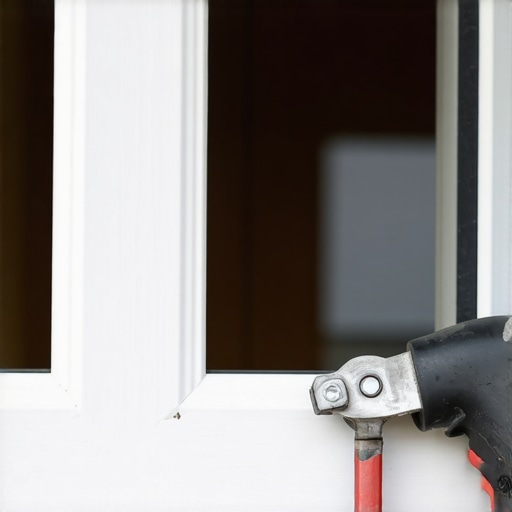
The Frustrating Reality of the Stripped Casement Handle
There is a specific, guttural sound that a window makes when the internal gears of a casement operator finally give up. It is a dry, metallic grinding—the sound of a zinc die-cast spline losing its battle against a seized sash. As a glazier with over 25 years in the field, I have seen homeowners nearly rip the hardware off the frame in a desperate attempt to close a window before a summer thunderstorm. Most people assume the entire mechanism is shot, leading them to call for an expensive window repair service or, worse, falling for a high-pressure sales pitch to replace windows entirely when a simple mechanical fix would suffice. In my decades of experience, I’ve found that 90% of handle failures aren’t due to the operator itself, but a failure to respect the physics of the Rough Opening and the thermal dynamics of the Sash.
The Milwaukee Rot Lesson: Why Installation Always Trumps Hardware
I remember pulling a vinyl window out of a house in Milwaukee about a decade ago. The homeowner complained the handle wouldn’t turn, and they had already snapped two replacement handles trying to force it. When I pulled the trim, the header was completely black with rot. Why? The previous installer relied solely on the nailing fin instead of proper Flashing Tape and a Sill Pan. The wood had swollen so much from moisture intrusion that it was putting ten times the intended pressure on the operator arm. No handle in the world can overcome a house that is literally squeezing its windows shut. This is why I tell every apprentice: we don’t just install glass; we manage a hole in the wall. If you don’t manage the water, the water will manage your hardware into an early grave.
“Installation is just as critical as the window performance itself. A high-performance window installed poorly will fail.” – AAMA Installation Masters Guide
The Anatomy of the $5 Hack: Reclaiming the Spline
Before you spend $150 on a new dual-arm operator, you need to examine the spline. The spline is the ridged post that the handle slides onto. Most modern handles are made of a softer zinc alloy, while the operator post is hardened steel. Over time, the teeth inside the handle strip away, leaving you with a round hole and no leverage. The $5 hack involves two items you likely already have: a small strip of heavy-duty aluminum foil and a high-strength thread-locking compound. By cutting a half-inch strip of foil and wrapping it tightly around the spline before sliding the handle on, you create a sacrificial shim that fills the gap between the worn teeth. When you back this up with a drop of blue thread-locker on the set screw, you’re not just ‘rigging’ it; you’re creating a high-friction mechanical bond that can withstand the torque required for an Operable window.
[image_placeholder]
The Physics of Thermal Expansion and Hardware Stress
In cold climates like Chicago or Minneapolis, the U-Factor is the metric that matters most. We want a low U-Factor to keep heat inside. However, what people forget is that as the temperature drops, materials contract at different rates. A vinyl frame has a much higher coefficient of thermal expansion than the glass it holds. In January, that frame is shrinking, potentially binding the Sash against the weatherstripping. If you try to force the handle during a cold snap, you are fighting physics. This is where the Glazing Bead and the Muntin alignment come into play; if the window isn’t perfectly square within the Rough Opening, the hardware is the first thing to fail. A professional window cleaner might notice the buildup of salt and grit in the Weep Hole, but it takes a glazier to understand how that debris leads to increased friction on the underside of the sash, eventually stripping that $5 handle.
When Maintenance Becomes a Necessity
If your window is older, you might be dealing with Single-Pane glass that lacks modern Low-E coatings. In a northern climate, we want that Low-E coating on Surface #3 to reflect heat back into the room. When you have high-performance glass but failing hardware, the energy efficiency is negated by air infiltration. A window that doesn’t lock tight is essentially a hole in your thermal envelope.
“Standard Practice for Installation of Exterior Windows, Doors and Skylights must account for the integration of the fenestration product into the building’s water-resistive barrier.” – ASTM E2112
This means that even a stripped handle is a symptom of a larger system that needs attention. If the hack doesn’t work, you aren’t just looking at a handle; you’re looking at the alignment of the Shim blocks and whether the window has ‘smiled’—a technical term for when the sill bows upward because it wasn’t properly supported.
The ROI of Repair vs. Replacement
The industry is full of ‘Tin Men’ who will tell you that a stripped handle is a sign that you need to replace windows throughout the entire house. They’ll talk about Argon gas fills and ‘Krypton-enhanced’ triple pane units. While triple-pane glass is excellent for sound dampening and extreme cold, the ROI in a moderate climate can be decades. Most homeowners are better off performing surgical window repair—replacing the operator, cleaning the tracks, and ensuring the Flashing Tape hasn’t degraded. Before you sign a contract for twenty thousand dollars, try the foil shim. Lubricate your tracks with dry silicone—never WD-40, which attracts dust and creates a grinding paste. Respect the Weep Hole and keep it clear. A window is a machine, and like any machine, it requires precision, not just a bucket of caulk.