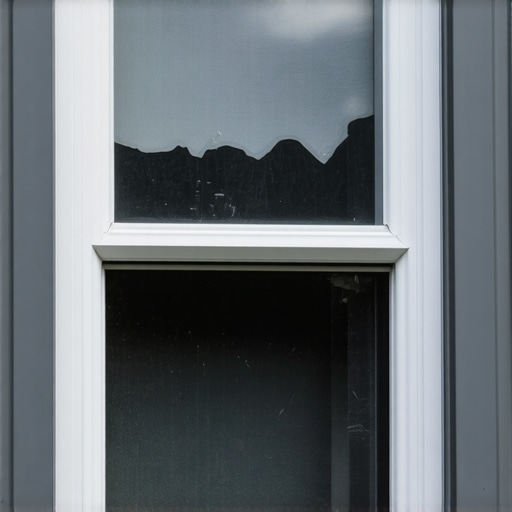
The Anatomy of a Failing Fenestration System
In my twenty-five years of pulling sashes and setting sill pans, I have seen it all, but nothing signals a terminal failure quite like a bowing frame. When you look down the line of a window jamb and see a visible curve, you are not just looking at a cosmetic defect; you are looking at a structural white flag. As we approach 2026, the standards for building envelopes are tightening, and what passed for a ‘good enough’ install in 2010 is now a liability for your thermal comfort and your home’s structural integrity. A window is essentially a managed hole in your wall. If the frame is bowing, that management system has collapsed.
A homeowner called me in a panic last season because their new high-end units were ‘sweating’ so badly that water was pooling on the hardwood. They were ready to sue the manufacturer. I walked in with my hygrometer and showed them the interior humidity was sitting at a staggering 60% while it was ten degrees outside. It wasn’t a product failure; it was a physics failure. The windows were actually doing their job, but the house’s lack of mechanical ventilation was forcing the dew point onto the glass surface. However, when I looked closer at the master bedroom unit, the frame had deflected nearly a quarter-inch. That wasn’t humidity—that was a botched installation where the installer skipped the mid-point shims, allowing the header to sag under the weight of the masonry above. This is the reality of ‘window repair’ versus total replacement: sometimes the window is fine, but the installation has failed the window.
“Installation is just as critical as the window performance itself. A high-performance window installed poorly will fail to meet its rated thermal and structural goals.” – ASTM E2112 Standard Practice
Sign 1: The Deflected Jamb and Thermal Expansion
Why do frames bow? In the world of vinyl, it is often a matter of ‘thermal pumping.’ Vinyl has a high coefficient of thermal expansion. In a cold climate like Chicago or Minneapolis, the exterior of the frame might be -10°F while the interior is 70°F. This temperature gradient creates massive internal stress. If the installer didn’t leave enough tolerance in the rough opening, or if they over-foamed with high-expansion spray foam instead of low-pressure window and door foam, the frame has nowhere to go but inward. By early 2026, we are seeing more fiberglass frames in the market because fiberglass is glass-fiber reinforced pultrusion; it expands and contracts at nearly the same rate as the glass itself, preventing that dreaded bow.
Sign 2: Hardware Binding and Operability Issues
If you find yourself wrestling with a sash just to get it to lock, you are likely dealing with frame deformation. When a frame bows, the keeper no longer aligns with the lock. People often call for a window cleaner thinking the tracks are just dirty, but no amount of silicone spray will fix a frame that has lost its square. We measure this by checking the diagonals of the rough opening. If the diagonals are off by more than 1/8th of an inch, the ‘operable’ parts of your window will never function correctly. This puts undue stress on the balances and the glazing bead, eventually leading to a seal failure.
Sign 3: Seal Failure and the Death of the IGU
The IGU, or Insulated Glass Unit, relies on a hermetic seal. When a frame bows, it exerts uneven pressure on the spacers—those metal or foam pieces that keep the glass panes apart. Once that seal is breached, the inert gas (typically Argon) escapes and is replaced by moisture-laden air. This is why you see fogging between the panes that a window cleaner can’t reach. In a cold climate, we want that Low-E coating on Surface #3 to reflect heat back into the room. If the seal is gone, your U-Factor (the rate of heat loss) skyrockets. You are essentially paying to heat the neighborhood.
“The NFRC label is the only way to verify that a window’s U-factor and Solar Heat Gain Coefficient have been independently tested. Without it, you’re just buying glass.” – NFRC Certification Standards
Sign 4: The Absence of a Proper Sill Pan
Water management is the ‘shingle principle’ applied to a vertical surface. Water must always flow down and out. I have performed dozens of ‘installation autopsies’ where the frame was bowing because the wood buck underneath it had rotted away. Why? Because the installer relied on a bead of caulk and a nailing fin instead of a proper sill pan and flashing tape. A sill pan is a secondary drainage plane that directs any water that gets past the primary seal back to the exterior through weep holes. If your frame is bowing, I guarantee you the water is getting into the rough opening, and by the time you see the bow, the rot is already deep in your framing.
Sign 5: Extreme Drafts and the Failure of the Weatherstripping
A bowing frame pulls away from the weatherstripping. You can have the best triple-pane glass in the world, but if the frame has moved 3mm away from the sash, you have a direct air bypass. In early 2026, energy audits are becoming more common during home sales. A blower door test will highlight these gaps instantly. We look for ‘daylight’ between the sash and the frame. If you see light, you have air infiltration. This is why replace windows is the only viable option when the structural integrity of the frame is compromised. You cannot ‘repair’ a bowed vinyl frame; it has a ‘memory’ of its deformed shape and will always return to it.
The 2026 Perspective: Why You Can’t Wait
As we look toward the building requirements of 2026, the focus is on the ‘Whole House’ approach. A bowing frame is a symptom of a larger problem—be it structural settling, poor initial installation, or inferior material choice. When you replace windows, you aren’t just buying glass; you are buying a flashing system, a shim schedule, and a thermal barrier. If your frame is bowing, the clock is ticking on your wall’s interior. Don’t be the homeowner who waits until the mold is visible on the drywall. Get a glazier who knows the difference between a shim and a wedge, and who understands that the rough opening is the most important part of the house.