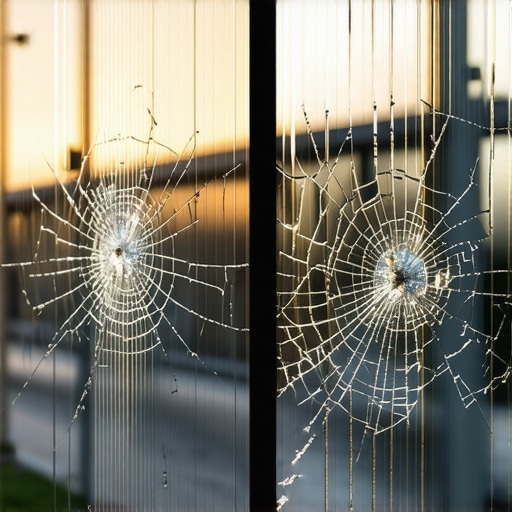
The Anatomy of Impact: Why Standard Glass is a Liability
As a master glazier with a quarter-century of hands-on experience, I have seen every imaginable window failure. When a standard annealed glass pane breaks, it doesn’t just crack; it shards into dagger-like shards that can slice through muscle and bone with zero resistance. That is why safety glazing isn’t just a recommendation or a line item in a sales brochure. It is a vital building code requirement designed to prevent catastrophic injury. Whether you are planning a window repair project, deciding to replace windows throughout your home, or simply trying to understand why your window cleaner uses specialized techniques on certain surfaces, you must understand the stark metallurgical and structural differences between tempered and laminated safety glass.
“Glazing in hazardous locations, such as sliding doors, storm doors, and shower enclosures, must employ safety glazing materials that comply with CPSC 16 CFR 1201 or ANSI Z97.1 standards to mitigate penetration and laceration hazards.” — ASTM E2112 Standard Practice for Installation of Exterior Windows
To understand how these glass types behave under stress, we have to look at how they are manufactured. I recall sitting across from a fast-talking home improvement salesperson who was trying to convince a couple in a moderate climate to buy incredibly overpriced double-laminated windows for a standard living room. He was using fear tactics, claiming tempered glass would spontaneously shatter and rain down shards on their pets. I had to step in and break down the actual engineering physics of both glass types. The truth is, both materials are classified as safety glazing, but they manage mechanical energy in completely opposite ways. Misapplying them is a costly mistake that can compromise both home security and thermal performance.
Blueprint: The Glass Class—Decoding Safety Glazing
To make an informed decision when you replace windows, you must look beyond the marketing jargon and decode the physical properties of these two distinct materials. Let us dive deep into the micro-structure of tempered and laminated glass to see how they perform under pressure, thermal stress, and physical attack.
Tempered Glass: The Rapid-Cooled Powerhouse
Tempering is a thermal strengthening process. We take standard annealed glass, heat it to approximately 1,200 degrees Fahrenheit in a tempering furnace, and then rapidly cool its outer surfaces with high-pressure air blasts. This process is called quenching. Because the outer surfaces cool faster than the inner core, it pulls the exterior into high compression while leaving the center in tension.
This internal tension profile gives tempered glass its remarkable strength. It is roughly four to five times stronger than annealed glass of the same thickness. When it does break, the stored energy releases instantly, causing the entire pane to fracture into tiny, relatively harmless pebble-like pieces. This is why you will find it in sliding patio doors, side-lite windows adjacent to entry doors, and low-level glazing near the floor line. However, because of this high internal tension, tempered glass cannot be cut, drilled, or altered after the tempering process. Any attempt to modify the pane will cause it to instantly disintegrate.
Laminated Glass: The Heavy-Duty Interceptor
Laminated glass takes an entirely different engineering approach. Instead of modifying the molecular tension of a single pane, it relies on a multi-layer sandwich construction. We take two sheets of standard annealed glass and bond them together under heat and pressure with a tough, transparent plastic interlayer, typically Polyvinyl Butyral (PVB) or Ethylene-Vinyl Acetate (EVA).
When laminated glass is struck by an object, the outer glass layer may crack, but the plastic interlayer holds the fragments firmly in place. The pane remains intact within the sash, preventing immediate entry and maintaining the structural integrity of the window opening. This makes laminated glass the premier choice for acoustic dampening, UV protection, and high-security installations where forced entry is a major concern.
Dynamic Climate Matching: Where Each Glass Type Excels
Your choice of safety glass must align with your local climate logic. In northern, cold climates like Minneapolis or Chicago, the priority is managing heat loss and preventing condensation. Here, we prioritize high thermal efficiency. Laminated glass works exceptionally well in these regions because the dense PVB layer helps reduce thermal conduction and provides sound dampening against howling winter winds, while the exterior pane can be treated with a Low-E coating on Surface #3 to bounce indoor radiant heat back into the living space.
Conversely, in hot southern regions like Phoenix or Florida, solar heat gain is the main threat. If you are going to replace windows in a southern climate, you need a low Solar Heat Gain Coefficient (SHGC). In these environments, tempered glass is frequently used in large patio doors and expansive picture windows to handle high wind loads and thermal stress without breaking. By applying a high-performance Low-E coating on Surface #2, we can reflect solar infrared radiation back out into the atmosphere before it ever enters the home, keeping your cooling bills manageable.
“The choice of safety glazing must always balance mechanical strength with localized thermal performance, ensuring that U-factor and SHGC ratings are not compromised for structural gains.” — National Fenestration Rating Council (NFRC) Glazing Manual
The Maintenance and Installation Reality: Spacers, Sashes, and Maintenance
Installing safety glass requires strict adherence to physical tolerances. You cannot simply slap a piece of heavy safety glass into an old, warped frame. When a glazier measures a rough opening for replacement windows, we look for precise plumb, level, and square tolerances. If the frame is out of alignment, it places uneven pressure on the glass edge. For tempered glass, edge damage is fatal; a single nick on the edge from a misplaced shim or a protruding screw can cause the entire pane to explode hours or days after the installation.
During a professional window repair, we ensure that a proper sill pan and high-grade flashing tape are used to create a watertight seal. This is especially true for laminated glass. If water penetrates the frame and pools around the edges of a laminated unit, it can cause the PVB interlayer to delaminate over time. This leads to a cloudy, white fogging around the perimeter of the window that cannot be repaired.
Furthermore, if you employ a professional window cleaner, they must treat these materials differently. Laminated glass can be easily scratched if abrasive tools or harsh chemical solvents are used, as the plastic interlayer can react negatively to certain cleaning agents if exposed at the edges. Tempered glass can sometimes carry tiny fabricating debris on its surface, meaning a careless scraper can cause widespread hairline scratching across the pane. Always ensure your maintenance crew understands the exact type of glazing they are cleaning.
The Bottom Line: Don’t Buy the Hype, Buy the Numbers
When deciding between tempered and laminated glass, do not let high-pressure sales pitches dictate your choice. Tempered glass is highly cost-effective, incredibly strong, and safe for standard residential risk zones. Laminated glass is more expensive but offers unmatched sound insulation, superior UV blockage, and robust security against break-ins. Speak with an experienced master glazier who understands the structural dynamics of your sashes, the thermal demands of your climate zone, and the physical reality of a proper installation. Invest your budget where it yields the highest returns in comfort, safety, and durability.