The Biology of Window Failure: Why Moss is More Than a Green Thumb
When I see a green velvet coating creeping across a window sill, I do not see a charming cottage aesthetic. I see a moisture management failure. As a glazier with over two decades in the field, I have witnessed how bryophytes—mosses—act as biological sponges that hold water against the sash and frame, eventually leading to structural rot or seal failure. If you are noticing moss growth, your window system is failing to shed water according to the shingle principle. This is not just a cleaning task; it is a diagnostic event for anyone concerned with window repair or deciding when to replace windows. Moss thrives in environments where the dew point is consistently reached on the exterior surface, providing the requisite hydration for spores to colonize the glazing bead and the rough opening. [image_placeholder]
The Condensation Crisis: A Narrative of Moisture Mismanagement
A homeowner called me in a panic because their new windows were ‘sweating’ and growing a fine layer of green moss along the bottom rail. I walked in with my hygrometer and showed them the humidity was 60 percent. It was not a product defect; it was their lifestyle and a lack of proper ventilation. They had heavy drapes closed 24/7, trapping moist air against the cold glass. The resulting condensation dripped onto the wooden sill, creating a micro-climate perfect for moss. I explained that even the highest quality window cleaner cannot fix a fundamental thermal bridge issue. Before we talk about removal, we must understand that moss is a symptom of a stagnant, wet environment that threatens the integrity of your fenestration. Replacement is often the only path when that moisture has migrated behind the flashing tape and into the wall cavity.
“Installation is just as critical as the window performance itself. A high-performance window installed poorly will fail.” – AAMA Installation Masters Guide
The Anatomy of the Sill: Where Moss Hides
To effectively remove moss, you must understand the anatomy of the window. The sill is not a flat piece of wood or vinyl; it is a complex drainage system. It includes the sill pan, which should be pitched to direct water away from the structure. Moss often takes root in the weep hole of a vinyl frame or the junction where the operable sash meets the frame. If these drainage paths are blocked by organic debris, water backs up, and moss flourishes. In my experience, a ‘caulk-and-walk’ installer often blocks these weep holes with sealant, inadvertently creating a moss nursery. Proper window repair involves clearing these pathways to ensure the unit can breathe and drain as designed. When I inspect a site, I look at the muntin and the glazing bead; if moss is lifting the bead away from the glass, the secondary seal is likely compromised, and argon gas—if it was ever there—has long since escaped.
Eco-Friendly Removal Protocol: Avoiding Harsh Chemicals
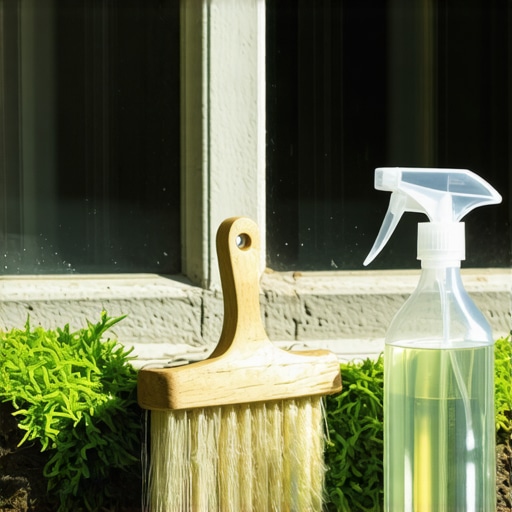
Most homeowners reach for bleach, but as a professional, I advise against it. Sodium hypochlorite can degrade certain finishes on aluminum frames and dry out the rubberized gaskets that keep your glass airtight. Instead, we use pH-neutral, eco-friendly methods that protect the window’s longevity. The Acetic Acid Solution: A mixture of distilled white vinegar and water is highly effective. The acid breaks down the moss cell structure without leaving toxic residues that can leach into your garden or corrode the shim hidden in the rough opening. The Oxygen Bleach Method: Sodium percarbonate is a safer alternative to chlorine. It breaks down into water, oxygen, and soda ash. It is particularly effective at lifting moss roots out of the porous grain of a wooden sill without stripping the paint. The Mechanical Approach: Use a stiff-bristle nylon brush. Never use a wire brush or a power washer. High-pressure water can force its way past the weatherstripping and saturate the interior drywall, leading to mold growth far worse than the moss you started with.
The Technical Math: U-Factor and Moss Prevention
In northern climates where moss is most prevalent, the U-factor of your window is your best defense. A lower U-factor means the interior surface of the glass stays warmer, reducing the likelihood of condensation. When the glass remains above the dew point, the sill stays dry, and moss cannot survive. I often tell clients that if they are tired of being a full-time window cleaner, they should look at triple-pane units with warm-edge spacers. These spacers, typically made of structural foam rather than highly conductive aluminum, break the thermal bridge at the edge of the glass. This technical detail is what separates a high-performance window from a budget replacement.
“The physical properties of the fenestration system must be matched to the local climate to prevent premature material degradation.” – NFRC Technical Bulletin
When to Stop Repairing and Start Replacing
There comes a point where cleaning is a fool’s errand. If you find that the moss has worked its way under the flashing tape or if the wood sill yields to the pressure of a screwdriver, you are looking at rot. Window repair at this stage is a bandage on a gunshot wound. When you replace windows, you have the opportunity to correct the original installation errors. This means installing a proper sill pan and ensuring the drip cap is integrated correctly with the building’s house wrap. We use a level to ensure the rough opening is square, using a shim only where necessary to maintain the structural integrity of the frame. A properly installed window in a damp climate should have a lifespan of 30 to 50 years, provided the weep holes remain clear and the exterior drainage plane is maintained. Moss is a warning sign; ignore it, and you will eventually be replacing more than just the window—you’ll be replacing the studs and the sheathing too.
Mastering the Maintenance Cycle
Long-term moss prevention requires a shift in how you view your home’s exterior. You need to think like a glazier. Every spring and fall, inspect the weatherstripping for elasticity. If it is brittle, it won’t seal, and moisture will find a home. Ensure that the glazing bead is tight against the glass. If there is a gap, that is where the moss starts. Use a professional-grade window cleaner that doesn’t leave a film; residues can actually provide a food source for fungal growth. Keep trees and shrubs trimmed back at least three feet from the glass to allow for airflow and sunlight, which are the natural enemies of bryophytes. By managing the micro-climate around each operable sash, you extend the life of the unit and maintain the thermal performance you paid for. Remember, a window is a high-tech piece of equipment; treat it with the technical respect it deserves, and it will keep your home dry and efficient for decades. If you see green, don’t just scrub—investigate why the water is there in the first place.