The Squish Test: A Warning Sign from Your Building Envelope
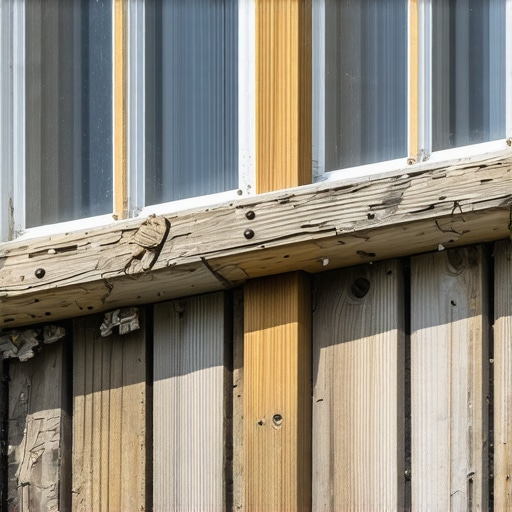
When you press your thumb against a wooden window sill and it yields like a wet sponge, you are not just looking at a cosmetic issue. You are witnessing a systemic failure of the building envelope. As a glazier with over two decades in the field, I have seen this thousands of times. That softness is the physical manifestation of cellulose and lignin breakdown within the wood fibers, caused by prolonged exposure to moisture that has no way to escape. It is the sound of a structural component losing its battle against the elements.
The Anatomy of a Failed Installation: A Forensic View
I recently pulled a series of high end vinyl windows out of a residence where the homeowner complained of a faint earthy smell. Upon removal, the header was completely black with rot and the jack studs were nearly disintegrated. The previous installer had relied entirely on the nailing fin and a heavy bead of cheap silicone rather than proper flashing tape and a mechanical drainage plane. They ignored the shingle principle: every layer of the exterior must overlap the one below it to direct water away from the rough opening. Because the head flashing was tucked behind the house wrap instead of over it, every rainstorm funneled water directly into the wall cavity. This is why window repair often turns into a full scale structural renovation.
Physics of the Failure: Why Wood Turns to Mush
Wood rot is a biological process fueled by moisture. When the moisture content of wood exceeds 20 percent, fungi begin to colonize. In a window assembly, this water usually enters through one of three pathways: failed glazing beads, improper window cleaner usage that degrades the perimeter sealant, or the absence of a sill pan. Once water is trapped between the window frame and the rough opening, it cannot evaporate. The dark, stagnant environment becomes an incubator for decay. This is why a simple coat of paint is never the solution for a spongy sill. You are merely masking the symptoms while the structural integrity of your wall continues to erode.
“Installation is just as critical as the window performance itself. A high performance window installed poorly will fail.” AAMA Installation Masters Guide
The Critical Role of the Sill Pan and Flashing Tape
In modern glazing, we do not assume the window will stay 100 percent watertight forever. We assume it will eventually leak and we design a system to manage that water. This is where the sill pan comes in. A proper sill pan is a flashing component that sits at the bottom of the rough opening. It features a back dam to prevent water from blowing into the interior and side dams to protect the framing. If your sill is spongy, it is almost certain that no sill pan was used, or it was installed without a proper slope to the exterior. Without a path for the water to exit through weep holes or gravity, the wood remains saturated. This is a fundamental violation of ASTM E2112 standards.
The Capillary Effect and Surface Tension
Water does not just fall; it climbs. Through capillary action, moisture can be drawn upward into small gaps between the window frame and the siding. If the gap is too small, surface tension holds the water there. This is why we use shims to ensure the window is level and plumb, but also to provide enough space for backer rod and sealant. A window shoved tight against a rough opening is a recipe for rot. We need that space to create a proper thermal break and a functional weather seal.
Identifying the Culprit: Condensation vs. Infiltration
Not all spongy sills are caused by exterior leaks. In cold climates, the dew point often moves to the interior surface of the glass or the frame. If you have high interior humidity, moisture will condense on the coldest part of the window. This liquid then runs down and pools on the wooden stool or sill. Over time, this localized humidity causes the same rot as an exterior leak. When you replace windows, you must look at the U-Factor. A lower U-Factor means the interior glass temperature stays closer to the room temperature, preventing the air from reaching its dew point and dumping water on your woodwork.
“Standard practice for installation of exterior windows, doors and skylights requires a continuous air and water barrier integration.” ASTM E2112
Repair or Replace? The Hard Truth about Window Integrity
Can a spongy sill be saved? If the rot is limited to the interior decorative stool, a carpenter can swap it out. But if the structural sill of the window frame itself is soft, you are likely looking at a full replacement. Trying to use wood filler or epoxy on a structural sill is like putting a bandage on a broken leg. The underlying moisture source is still there. When you decide to replace windows, you must choose between a pocket replacement and a full frame replacement. A pocket replacement keeps the existing trim but often fails to address the rot hidden in the rough opening. For a spongy sill, I always recommend a full frame tear out. It is the only way to inspect the jack studs and install a modern flashing system that guarantees 20 plus years of performance.
Technical Specifications for Modern Replacements
If you are in a northern climate, you need to focus on thermal resistance. Look for windows with a warm edge spacer. Older windows used aluminum spacers between the panes of glass, which acted as a thermal bridge, conducting cold directly to the interior and causing the very condensation that rots your sills. Modern spacers use composite materials to break that bridge. Furthermore, ensure your installer uses high quality flashing tape and a closed cell spray foam or backer rod for the internal seal. Do not let them use open cell foam, which acts like a sponge and can actually hold water against your new window frame.
The Math of Comfort and Longevity
Homeowners often ask about the return on investment for new windows. While energy savings are real, the true ROI is the preservation of your home’s structure. A 500 dollar window repair today prevents a 10000 dollar structural repair five years from now. When selecting a window cleaner, avoid anything with harsh chemicals that can dry out your gaskets and glazing beads. Maintaining the flexibility of these seals is your first line of defense against the spongy sill. Remember, a window is a complex mechanical system. It requires an operable sash that seals tightly against the weatherstripping and a drainage system that works with gravity, not against it. Do not accept a caulk and walk installation. Demand a system that manages water through science, not just chemistry.