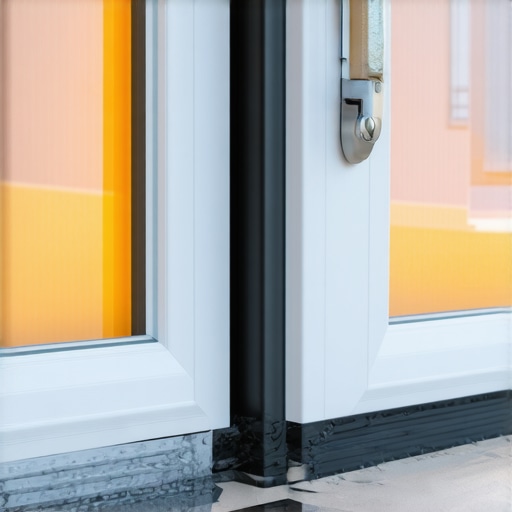
The first sign of trouble usually is not a loud crack or a shattered pane. It is a subtle, whistling sigh on a Tuesday evening when the wind picks up from the north. You walk over to your window, expecting to feel the solid protection of modern engineering, but instead, you find a thin ribbon of frigid air snaking past the frame. You look closer and notice the black rubber seal, the gasket that should be snug against the glass, has retreated into the corners, leaving a jagged gap. This is not just an aesthetic flaw; it is a total systemic failure of the thermal envelope. I remember a call-out last winter where the client swore they could hear the wind whistling through their brand-new casements. I did not bring a screwdriver; I brought a hygrometer and a smoke pen. Within five minutes, I showed them that the relative humidity in their master suite was hovering at 62 percent while the outside air was a crisp 10 degrees. The whistling was the sound of a failing seal system that had physically pulled back from the corners because the polymer was not rated for that specific thermal swing. It was not the glass that failed; it was the interface between the glass and the Sash.
The Anatomy of a Gasket Failure
In the world of professional glazing, we do not just call it rubber. We are talking about EPDM (Ethylene Propylene Diene Monomer) or TPE (Thermoplastic Elastomer). These materials are designed to remain flexible, but they are subject to the laws of polymer science. Over decades of service, windows undergo thousands of thermal cycles. In a northern climate, the exterior face of the window might reach 120 degrees Fahrenheit in direct summer sun and plummet to minus 20 in the winter. This constant expansion and contraction causes a phenomenon known as compression set. The gasket loses its memory. It forgets how to spring back. When the Glazing Bead that holds the glass in place is not perfectly tensioned, the gasket starts to migrate.
“Installation is just as critical as the window performance itself. A high-performance window installed poorly will fail.” – AAMA Installation Masters Guide
This migration is often accelerated by the very thing meant to keep the window looking good: the window cleaner. Many over-the-counter sprays contain ammonia or harsh solvents that strip the plasticizers from the rubber. Once those plasticizers are gone, the gasket becomes brittle, shrinks, and pulls away from the corners of the Sash, creating a direct path for air infiltration.
Thermal Dynamics and the U-Factor
When your gaskets shrink, you are not just losing air; you are losing money. We measure this through the U-Factor. While the Solar Heat Gain Coefficient (SHGC) tells us how much heat the sun pumps into the house, the U-Factor tells us how much of your expensive furnace heat is escaping.
“The U-factor measures how well a product can keep heat from escaping from the inside of a room. The lower the number, the better at retaining heat.” – NFRC Performance Standards
A shrinking gasket effectively bypasses the insulated glass unit. You could have the most expensive triple-pane glass in the world, but if the gasket has pulled back even an eighth of an inch, your U-Factor skyrockets. This leads to the Dew Point moving to the interior surface of the glass. When warm, moist indoor air hits that cold spot where the gasket used to be, you get condensation. This moisture then drips down into the Rough Opening, potentially rotting out the Shim blocks and the wooden framing of your home. This is why a simple window repair is often a race against time before structural damage occurs.
The Installation Autopsy: Why Gaskets Recede
If you are looking to replace windows, you must understand the Shingle Principle. Water and air should always be directed down and out. A proper installation involves a Sill Pan that catches any incidental moisture that gets past the primary gaskets. When I perform an autopsy on a leaking window, I often find that the Weep Hole is clogged or the Flashing Tape was applied in the wrong order. Without a clear path for moisture to exit, the water sits against the bottom gasket. In freezing temperatures, this water turns to ice, expands, and physically pushes the gasket out of its channel. This mechanical displacement is a death sentence for the seal. Furthermore, if the Rough Opening was not measured correctly and the window was forced in without proper clearance for expansion, the frame can bow. A bowed frame puts uneven pressure on the Glazing Bead, causing the gasket to pop out of its track. This is why precision in the initial window repair or installation is more important than the brand name on the sticker.
Choosing the Right Materials for Cold Climates
For those in cold regions, the goal is to keep the heat inside. You want a window with a Low-E coating on Surface #3. This reflects the long-wave infrared radiation back into your living room. But the coating is useless if the perimeter seal is compromised. When you replace windows, look for warm-edge spacers. These are the components that separate the two panes of glass. Older windows used aluminum spacers, which act like a thermal bridge, conducting cold right to the edge of the glass where the gasket sits. Modern spacers use structural foam or polymers that keep the edge of the glass warmer, reducing the thermal stress on the gaskets and preventing them from shrinking in the first place. This is the difference between a window that lasts 10 years and one that lasts 30. Do not let a salesman talk you into features you do not need; focus on the NFRC label and the quality of the EPDM seals. A true master glazier knows that the best window is the one that manages water and air through superior geometry, not just more caulk.