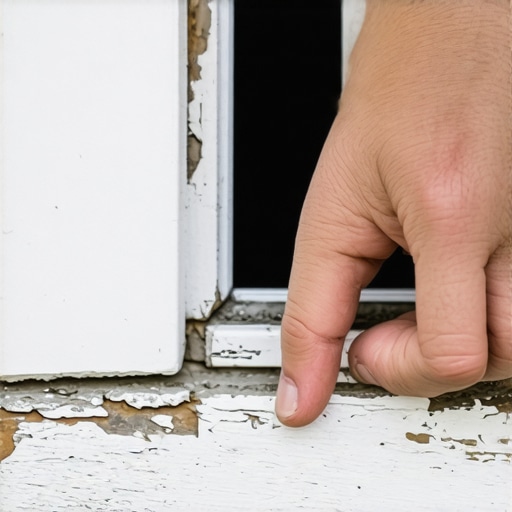
The Mushy Reality of Fenestration Failure
When you press your thumb against a wooden window sash or the interior sill and it yields with the consistency of an overripe peach, you are not just looking at a cosmetic blemish. You are witnessing the biological decomposition of your home’s primary barrier against the elements. As a master glazier with over 25 years in the field, I have seen this scenario play out in thousands of homes. It usually begins with a small leak, often invisible to the naked eye, and ends with a structural nightmare. That soft texture is the result of fungal spores feasting on the cellulose and lignin in the wood, a process that only occurs when the moisture content remains consistently above 20 percent.
I once pulled a double-hung window out of a Victorian home where the homeowner complained of a slight draft. As soon as I removed the exterior casing, the entire header was black with rot. The culprit was not the age of the wood, but a failure of the flashing system. The previous installer had relied entirely on the nailing fin and a bead of cheap latex caulk rather than proper flashing tape and a integrated drip cap. The water had been surreptitiously diverted behind the cladding for years, turning the structural framing into mulch. This is why I advocate for a deep understanding of the rough opening and the shingle principle of water management before any homeowner attempts a window repair or decides to replace windows entirely.
“Installation is just as critical as the window performance itself. A high-performance window installed poorly will fail.” AAMA Installation Masters Guide
The Biology of Wood Rot in Window Assemblies
To understand why your frame is soft, we must look at the microscopic level. Wood rot is a form of decay caused by fungi that thrive in damp, poorly ventilated environments. In the glazing industry, we differentiate between brown rot and white rot. Brown rot, often called dry rot, is particularly insidious because it attacks the cellulose, causing the wood to shrink and break into cubical pieces. This significantly compromises the structural integrity of the sash and the frame. When the wood becomes soft to the touch, the fungal colony has already established a complex network of hyphae that are transporting moisture throughout the timber. This is why a simple surface treatment or a quick visit from a window cleaner will not solve the underlying issue. The moisture is trapped within the assembly, often due to a lack of weep holes or a blocked drainage path.
The Installation Autopsy: Where Systems Fail
In a properly installed window, water is managed through a series of redundant systems designed to move liquid downward and outward. The first line of defense is the glazing bead and the weatherstripping. If these fail, water enters the sash channel. From there, it should be directed to a sill pan, a critical component that many ‘caulk-and-walk’ installers skip. The sill pan is a flashing element that sits at the bottom of the rough opening, sloped toward the exterior. If water bypasses the primary seals, the sill pan catches it and directs it back outside through weep holes. When I encounter a soft window frame, I almost always find a missing sill pan or a clogged weep hole. The water has nowhere to go but into the end grain of the wood, where it is wicked up through capillary action.
“Water penetration is the most common cause of window-related building envelope failures. Proper integration with the water-resistive barrier is mandatory for long-term performance.” ASTM E2112 Standard Practice
The Physics of Condensation in Cold Climates
In northern regions where the exterior temperature drops significantly below the dew point, the window frame often becomes soft from the inside out. This is due to condensation. If a window has a high U-Factor, meaning it is poor at resisting heat flow, the interior surface of the glass and the frame stays cold. When warm, humid air from inside the house hits that cold surface, it reaches its dew point and turns into liquid water. This moisture then pools at the bottom of the sash and the glazing bead, eventually saturating the wood. This is why triple-pane units with warm-edge spacers are essential in cold climates. A warm-edge spacer uses materials with low thermal conductivity to keep the edges of the glass warmer, which significantly reduces the risk of condensation and subsequent rot. If your frames are soft on the interior, it is a clear sign that your windows lack the thermal resistance required for your climate.
Window Repair vs. Full Frame Replacement
When faced with a soft frame, the question is always: can we fix it? A window repair using epoxy resins can be effective if the rot is localized to a small area of the sash or the sill. The process involves removing the decayed wood, treating the remaining fibers with a borate-based fungicide, and then filling the void with a high-strength epoxy. However, if the rot has reached the structural members of the rough opening, a pocket replacement or a simple insert window will not suffice. You must opt for a full-frame replacement. This involves removing the entire window, including the frame and the interior/exterior trim, to expose the rough opening. Only then can we ensure the structural integrity of the wall and install a modern flashing system that incorporates self-adhering membranes and a rigid sill pan. While a pocket replacement is cheaper, it relies on the existing frame being sound. Installing a new window into a rotten frame is like building a house on a swamp; it is destined for failure.
The Role of Maintenance and the Window Cleaner
Prevention is the best cure for wood rot. This is where a professional window cleaner becomes an asset beyond just aesthetics. During a deep clean, an observant professional will check the integrity of the glazing bead and ensure that the weep holes are clear of debris, spider webs, and paint. If the weep holes are blocked, the window’s internal drainage system fails, leading to the exact saturation that causes soft wood. Furthermore, maintaining the paint or stain on your windows is vital. The finish acts as a sacrificial layer that prevents liquid water from entering the wood fibers. Once that finish cracks or peels, the wood is vulnerable. Every shim and every muntin must be inspected annually for signs of moisture ingress.
Technical Specifications for the Modern Window
If you decide to replace windows, you must look beyond the sticker price and analyze the NFRC label. For those in colder climates, the U-Factor is the most critical metric. You should look for a U-Factor of 0.25 or lower. This is achieved through the use of Low-E coatings, typically applied to Surface #3 (the interior-facing surface of the outboard lite) to reflect heat back into the room. Additionally, the type of gas fill matters. While argon is standard, it is the quality of the primary and secondary seals that keeps that gas contained. If the seals fail, the insulating value of the window plummets, and the risk of internal condensation increases. For the frame material, fiberglass offers the best stability because it expands and contracts at nearly the same rate as the glass itself, which reduces stress on the seals and prevents the gaps that lead to rot.
Conclusion: Water Management is a Science
A window is more than just a piece of glass; it is a complex assembly of thermal barriers and water management systems. If your window frame is soft to the touch, the system has failed. Whether the cause is poor installation, lack of maintenance, or an inappropriate thermal profile for your climate, the solution requires more than a tube of caulk. You must address the source of the moisture, repair or replace the structural components, and ensure that the new assembly is properly integrated into the building’s water-resistive barrier. Do not settle for installers who ignore the technical details of the rough opening or the importance of a sill pan. In the world of glazing, precision is the only thing that stands between a dry home and a rotten one.