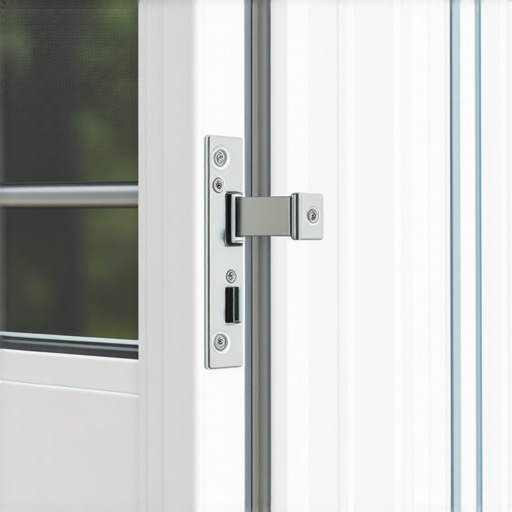
Understanding the Mechanics of Metal-on-Metal Friction
In my twenty-five years as a glazier, I have seen thousands of homeowners struggle with an operable metal sash that feels like it is welded shut. The physical resistance you feel when trying to slide a window open is not just a nuisance; it is a mechanical failure that puts immense stress on the rough opening and the hardware itself. Metal windows, particularly older steel or aluminum units, operate on tight tolerances where the coefficient of friction must be managed with precision. When that friction increases due to oxidation or debris, the risk of bending the track or snapping a crank handle rises exponentially.
I remember a specific case in a mid-century high-rise in Chicago where a facility manager was ready to replace windows across three floors because the sashes were virtually immovable. He was being pressured by a salesman who claimed the frames had warped beyond repair. I walked in with a simple hygrometer and a specialized cleaning kit. I showed him that the windows were not warped; they were victims of extreme atmospheric pollutants and the wrong lubricating agents. Someone had previously used a heavy petroleum-based grease that had emulsified with city soot, creating a sticky paste that acted more like an adhesive than a lubricant. We saved the building nearly fifty thousand dollars by simply performing a deep window repair protocol involving professional cleaning and the correct dry-film lubricant.
“Installation is just as critical as the window performance itself. A high-performance window installed poorly will fail.” – AAMA Installation Masters Guide
The Science of Lubrication: Why WD-40 is Not the Answer
The most common mistake I see in the field is the use of multi-purpose penetrating oils. While these products are excellent for loosening a rusted bolt, they are a disaster for a window sash. These oils are typically wet lubricants that remain tacky. In a window track, a tacky surface is a magnet for dust, pet hair, and skin cells. Over time, this mixture creates a grinding paste that will eventually wear down the metal surface or the glazing bead. For metal windows, we must look toward the chemistry of dry lubricants, specifically PTFE (Polytetrafluoroethylene) or high-grade silicone.
PTFE is the gold standard in the glazing industry. It is a dry-film lubricant that creates a micro-thin, low-friction barrier on the metal substrate. Unlike oils, it does not attract contaminants. When you apply a PTFE spray, the carrier solvent evaporates, leaving behind a hydrophobic layer that repels water and prevents the weep hole from clogging with oily sludge. This is particularly critical in cold climates where condensation is a constant threat. In cities like Minneapolis or Chicago, metal frames act as thermal bridges. When the interior humidity hits that cold metal, you get water. If your lubricant is water-soluble or attracts moisture, you are inviting rust and galvanic corrosion into your window system.
Climate Context: Managing Thermal Bridging and Oxidation
In Northern climates, the enemy of the metal window is the Dew Point. Metal has a high thermal conductivity, meaning it pulls heat out of your room and transfers it outside, making the interior surface of the frame ice-cold. This leads to heavy condensation. A stiff window in these regions is often the result of minor surface oxidation caused by this persistent moisture. If the metal is not properly lubricated, this oxidation creates a sandpaper-like texture on the sliding surfaces. This is why a lower U-Factor is so important for comfort, but for the mechanical longevity of the window, we must focus on moisture-displacing lubricants.
“The selection of a sealant or lubricant must be compatible with all components of the fenestration assembly to ensure long-term performance and prevent material degradation.” – ASTM E2112 Standard Practice
The Step-by-Step Restoration Protocol
Before you even think about the lubricant, you must act as a window cleaner. Use a high-pH degreaser to strip away the old, failed greases and accumulated grit. Use a stiff nylon brush to scrub the tracks until you see the bare metal. Check the muntin bars and the sash for any signs of physical misalignment. If the rough opening has shifted, no amount of lubricant will fix a structural bind. Once the track is clean and dry, apply the PTFE or silicone lubricant sparingly. You are not looking to drench the window; you are looking to create a molecular bond with the metal. Move the operable sash back and forth several times to distribute the agent. You should feel the resistance drop almost immediately as the lubricant fills the microscopic valleys in the metal surface.
When Maintenance Fails: Knowing When to Replace Windows
There is a point where lubrication cannot save a window. If you see signs of “pitting” on the aluminum or deep scaling rust on steel, the structural integrity of the frame may be compromised. Furthermore, if you find that the sill pan is holding water or the flashing tape behind the frame has failed, a mechanical fix is just a bandage. In these cases, it is time to replace windows with modern, thermally broken units. Modern fiberglass or thermally broken aluminum frames offer the same slim profiles as old metal sashes but with much higher energy efficiency and lower maintenance requirements. However, if the frames are sound, a proper window repair and lubrication schedule can extend the life of your glazing by decades. Do not let a stiff handle convince you to spend thousands on new units until you have addressed the friction physics of your current system.