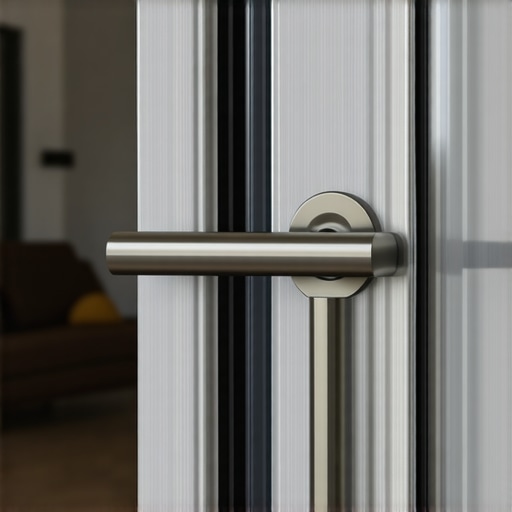
The Tactile Failure of the Entry Point
When you reach for your sliding patio door handle, you expect a firm, resistive response that translates your physical energy into the mechanical movement of a multi-point locking system. Instead, you feel that dreaded lateral play; a wobble that suggests the internal components are no longer in alignment. As a master glazier with a quarter-century in the field, I can tell you that a wiggling handle is rarely just a loose screw. It is a symptom of systemic mechanical fatigue or, more frequently, a failure in the original installation geometry. I pulled a vinyl sliding door out of a house in Chicago last year and the header was completely black with rot. Why? The previous installer relied on the nailing fin instead of proper flashing tape and failed to shim the door to account for the weight of the tempered IGUs (Insulated Glass Units). This caused the frame to sag, putting immense pressure on the locking mechanism until the handle assembly simply gave up the ghost. When your door is out of square, the latch cannot find the strike plate without friction, and that friction is transferred directly to your hand and the handle fasteners.
The Anatomy of the Wiggle: Material Science and Thermal Expansion
In northern climates like Minneapolis or Chicago, we deal with extreme thermal cycling. A sliding door frame made of polyvinyl chloride (vinyl) has a high coefficient of linear thermal expansion. This means as the temperature drops in January, the material contracts. If the rough opening was not sized correctly to allow for this movement, or if the fasteners were over-driven through the accessory groove, the frame bows. This bowing moves the sash away from the frame, forcing the mortise lock to reach further to engage. Every time you pull that handle to force a misaligned lock, you are stripping the internal threads of the spindle.
“Installation is just as critical as the window performance itself. A high-performance window installed poorly will fail.” AAMA Installation Masters Guide
This AAMA standard highlights why we cannot simply ignore a minor wiggle. We have to look at the U-Factor of the glass and how the warm-edge spacers are holding up. If the glass is failing, the weight distribution changes as the argon gas leaks out and moisture enters the cavity, adding weight and stress to the operable panel. A professional window repair specialist does not just tighten a screw; they check the plumb, level, and square of the entire unit.
The Shingle Principle and Water Management
Water is the silent killer of hardware. If your sill pan is not properly sloped or if your weep holes are clogged with debris, water backs up into the track. This moisture eventually finds its way to the handle mounting holes. Even if you use a high-quality window cleaner to keep the glass pristine, the internal oxidation of the hardware is happening where you cannot see it. The shingle principle dictates that every layer of the window or door assembly must shed water to the exterior. When the flashing tape is compromised, water enters the rough opening and swells the wood framing. This swelling pushes against the door frame, causing a misalignment that manifests as a wiggling handle. This is the difference between a master installation and a caulk-and-walk job.
“The installer must ensure that the flashing system is integrated with the water-resistive barrier in a weather-board fashion to prevent water intrusion into the wall cavity.” ASTM E2112 Standard Practice
When I perform an installation autopsy on a failing door, I often find that the absence of a drip cap or a poorly executed sill pan has led to the degradation of the fasteners holding the handle in place. If the wood behind the vinyl is soft, no amount of tightening will fix the wiggle.
The Role of the Window Cleaner and Proper Maintenance
Believe it or not, the chemicals you use can contribute to hardware failure. A standard window cleaner containing ammonia can actually strip the factory-applied lubricants from the mortise lock and the handle spindle. Once that lubrication is gone, the friction increases. Increased friction requires more force from the user, which leads to mechanical stress on the mounting screws. During a standard window repair, I always recommend using a silicone-based lubricant on the operable parts of the sash and the latch. This reduces the load on the handle. If you are at the point where the handle is spinning or won’t latch at all, it might be time to replace windows rather than pouring money into a failing frame. A new fiberglass unit, for example, offers much higher structural stability than old-fashioned vinyl, meaning the handle will stay tight for decades because the frame doesn’t move with the weather. We look at the SHGC (Solar Heat Gain Coefficient) for the glass, but for the hardware, we look at cycles of operation. A high-quality sliding door is rated for 10,000 cycles, but that rating assumes the door is perfectly level. If the door is sitting on a bed of poorly placed shims, you will hit mechanical failure in less than 2,000 cycles.
Identifying Structural Sag vs. Mechanical Wear
To determine if you need a simple fix or a total replacement, look at the reveal. Close the door almost all the way and look at the gap between the operable sash and the frame. Is the gap even from top to bottom? If it is wider at the top, your door is sagging. This sag is the primary cause of handle wiggle. The locking beak is hitting the strike plate at an angle, and the energy from that impact is being absorbed by the handle. A master glazier will attempt to adjust the rollers to square the door back up, but if the frame itself is warped from years of thermal stress, the only solution is to replace windows. When selecting a replacement, pay attention to the glazing bead and the muntins. High-quality construction in these areas usually indicates a higher grade of hardware. Don’t be fooled by a shiny handle; look at the thickness of the metal in the lock housing. That is where the real strength lies. Precision in the rough opening, the use of high-quality flashing tape, and a commitment to the physics of water management are what separate a door that lasts a lifetime from one that starts wiggling after the first winter.
{“@context”:”https://schema.org/”,”@type”:”HowTo”,”name”:”How to Diagnose a Loose Sliding Door Handle”,”step”:[{“@type”:”HowToStep”,”text”:”Inspect the reveal between the door sash and the frame to check for sag.”},{“@type”:”HowToStep”,”text”:”Remove the handle mounting screws and check for stripped threads or oxidation.”},{“@type”:”HowToStep”,”text”:”Clean the internal mortise lock with a non-ammonia cleaner and apply silicone lubricant.”},{“@type”:”HowToStep”,”text”:”Check the weep holes for blockages to prevent internal moisture buildup.”}]}