The Best Natural Degreasers for Kitchen Window Grime
In twenty-five years of hoisting glass and setting frames, I have seen it all. I have pulled windows out of century-old brownstones and installed triple-pane high-performance units in modern passive houses. But the most common complaint I get from homeowners—once the thrill of new glass wears off—revolves around maintenance, specifically in the kitchen. A kitchen window is not just a portal for light; it is a frontline soldier in the war against aerosolized fats and high-moisture environments. When you are searing a steak or boiling pasta, those microscopic particles of grease and steam do not just disappear. They migrate. They find the coolest surface in the room, which is invariably your glass, and they bond to it at a molecular level. Most people reach for a blue-tinted spray and a paper towel, but as a glazier, I can tell you that you are often just moving the filth around or, worse, damaging the glazing bead and the EPDM gaskets that keep your home airtight. To keep your views clear and your hardware functional, you need to understand the chemistry of a window cleaner that actually works without compromising the structural integrity of your sash.
The Condensation Crisis: A Narrative Lesson
A homeowner called me in a panic because their new windows were ‘sweating.’ I walked in with my hygrometer and showed them the humidity was 60%. It wasn’t the windows; it was their lifestyle. They were a family that loved to cook, but they never used their range hood. The ‘sweat’ on the glass was a mixture of water vapor and cooking oils. Over time, this mixture creates a sticky, yellowish film that standard cleaners can’t touch. This film increases the surface tension on the glass, making it even easier for more moisture to cling. It is a vicious cycle. If you don’t use a proper window cleaner that acts as a degreaser, you are leaving a residue that actually attracts more grime. This is where natural solutions shine, provided you understand the chemistry of the glass surface. I explained to them that until they managed their indoor air quality, no amount of high-tech glazing would stop the ‘sweat,’ and the resulting grime would eventually lead to the need for window repair as the moisture seeped into the frame components.
“Installation is just as critical as the window performance itself. A high-performance window installed poorly will fail.” – AAMA Installation Masters Guide
The Science of Kitchen Grime and Glass Physics
To understand why you need a specific type of window cleaner for the kitchen, you have to understand the physics of the glass. Modern glass is remarkably smooth, but under a microscope, it has peaks and valleys—a landscape of microscopic irregularities. In a kitchen, the enemy is lipids. These fats are hydrophobic, meaning they repel water. If you try to clean a greasy window with just water or a weak surfactant, the water will bead up and roll off without lifting the oil. You need a solution that can penetrate the lipid layer and break the bond between the oil and the silicon dioxide of the glass. This is where ‘Glazing Zooming’ becomes important. When we talk about emissivity and the U-Factor of a window, we are usually talking about the coatings on the glass. However, a thick layer of kitchen grease acts as a secondary, unintended coating. It can absorb solar radiation and change the SHGC (Solar Heat Gain Coefficient) of your window, making your kitchen hotter in the summer. Furthermore, the chemicals in some industrial degreasers can be catastrophic for the glazing bead—the strip of plastic or vinyl that holds the glass in place. If those beads degrade, the seal of the insulated glass unit (IGU) is compromised.
The Best Natural Degreasers: Glazier-Approved Formulas
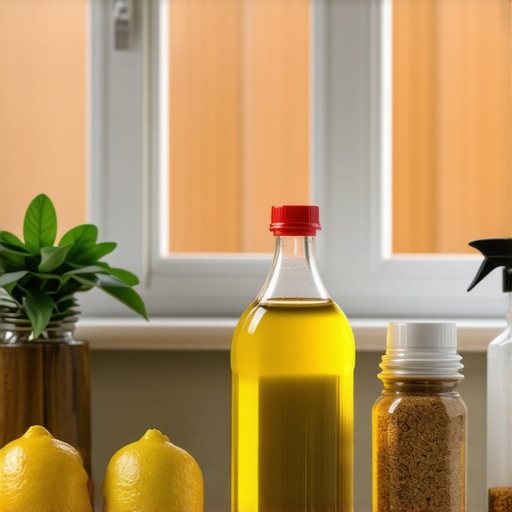
The gold standard in my toolkit is distilled white vinegar. Vinegar contains about 5% to 8% acetic acid. This acid is mild enough not to damage the flashing tape or the shim spacers hidden within your rough opening, yet aggressive enough to dissolve the fatty acid chains found in kitchen grease. For a heavy-duty kitchen window cleaner, I recommend a 50/50 mix of distilled water and white vinegar, with a single drop of a plant-based soap. The soap acts as the surfactant to lower the surface tension of the water, while the vinegar breaks down the grease. If the grime is particularly stubborn, perhaps because the window hasn’t been maintained since you decided to replace windows five years ago, you can add lemon juice. The citric acid provides an extra punch that is especially effective on mineral deposits left by hard water. In our trade, we often use a 1:1:1 ratio of vinegar, water, and isopropyl alcohol for an extremely fast-drying, streak-free finish that cuts through bacon fat like a hot knife through butter.
The Impact of Grime on Thermal Performance and Maintenance
Many homeowners do not realize that a dirty window is a less efficient window. In a cold climate, we rely on the Low-E coating to reflect long-wave infrared radiation back into the house. While the coating is usually protected inside the IGU, the buildup of grease on the interior surface can actually change the emissivity of the pane. A heavy layer of kitchen grease can absorb heat rather than allow the glass and its coatings to function as designed. Furthermore, if you allow grime to accumulate in the weep hole of the frame, you are inviting disaster. Weep holes are designed to allow water that bypasses the glazing bead to exit the frame. When grease and dust mix, they create a sludge that blocks these holes. In a freeze-thaw cycle, that trapped water can expand, cracking the frame and necessitating a full window repair or even a total replacement. Proper cleaning isn’t just about aesthetics; it is about the structural maintenance of the operable parts of the window, ensuring the sash moves freely and the sill pan remains dry.
“The performance of the fenestration system is dependent upon the maintenance of its components, including the glass surfaces and the drainage pathways.” – NFRC Performance Standards
The Proper Technique: Protecting the Rough Opening
Cleaning is part of the installation’s longevity. When I finish a job, whether it is a complex curtain wall or a simple double-hung, I tell the client: ‘Respect the glass.’ Start by dusting the muntins and the sash with a dry microfiber cloth. If you apply liquid to a dusty window, you just create mud that can settle into the tracks. Once the loose dust is gone, apply your natural degreaser. Instead of paper towels, which contain binders and can leave streaks, use a squeegee with a high-quality rubber blade. This is how we do it in the trade. You pull the solution across the glass, overlapping your strokes, and wipe the blade with a lint-free cloth after every pass. This ensures that you are removing the grease, not just relocating it to the edges of the glazing bead where it can cause the seal to fail over time. If you notice any rot on the sill during this process, it may be a sign that the flashing tape was never installed correctly, meaning you may need to replace windows sooner than expected.
When Cleaning Is Not Enough: Identifying Seal Failure
Sometimes, I get calls from people who say they have tried every window cleaner under the sun, and the grime won’t budge. I have to be the bearer of bad news: the ‘grime’ is actually inside the unit. If you see fogging or what looks like oily streaks between the two panes of glass, your seal has failed. This usually happens because the desiccant in the spacer bar is saturated, or the secondary seal has been breached. This is a common issue in kitchens where the constant expansion and contraction from the heat of the stove puts immense pressure on the IGU seals. At this point, you cannot clean your way out of the problem. You are looking at a glass replacement or a window repair. If the frames are still in good shape and the rough opening shows no signs of rot, we can often just swap out the glass unit itself, preserving the original sash and muntins.
Protecting Your Investment with Natural Solutions
Whether you have vinyl, fiberglass, or wood windows, the kitchen environment is the most challenging for any glazier to account for. The presence of heat, moisture, and organic fats requires a proactive maintenance schedule. Don’t wait until the glass is opaque and the grease has hardened. A quick wipe-down with a vinegar-based solution once a month will prevent the lipids from cross-linking and becoming a permanent part of your glass surface. Remember, a window is a complex system of gaskets, glass, and hardware. By using natural degreasers, you are protecting the integrity of the sill pan and the longevity of the sash. Take it from someone who has spent a lifetime in the trades: a little bit of vinegar today is a lot cheaper than a full-frame replacement tomorrow. Keep those weep holes clear, the glazing beads clean, and your view of the world unobstructed.