The Guillotine Effect: Why Your Window Won’t Stay Up
There is a specific, unsettling thud that occurs when a window sash loses its mechanical integrity. One moment you are trying to let in a spring breeze, and the next, the entire unit is sliding downward like a guillotine. This is not just a nuisance; it is a failure of the balance system, the hidden engine that counteracts gravity to make a thirty pound piece of glass feel weightless. Many homeowners assume that once the internal hardware snaps, the entire unit is destined for the landfill. They call a window salesperson who tells them they need to replace windows throughout the entire house. I am here to tell you that in most cases, you are looking at a twenty dollar part and an hour of your time, provided you understand the physics of the sash.
The Repair vs. Replacement Reality Check
I recall sitting in a kitchen in a drafty suburb of Chicago last February. The homeowner had three different quotes for full-frame replacements, all ranging between twelve and eighteen thousand dollars. The reason? Five of their double-hung windows would not stay open. The salesmen told them the frames had warped and the gas seals were gone. I walked over, popped the glazing bead on one unit, and showed them a snapped constant-force spring. It was a metal ribbon no thicker than a tape measure. I had to explain to them that while their windows were not top-of-the-line, the ROI on a full replacement for a mechanical failure was nearly non-existent. We repaired all five for under two hundred dollars in parts. This is the reality of the window industry: many pros want to sell you a hole in the wall when all you need is a new spring.
“Installation and maintenance are just as critical as the window performance itself. A high-performance window installed poorly or maintained improperly will fail to meet its energy ratings.” – AAMA Installation Masters Guide
Understanding the Anatomy of a Window Balance
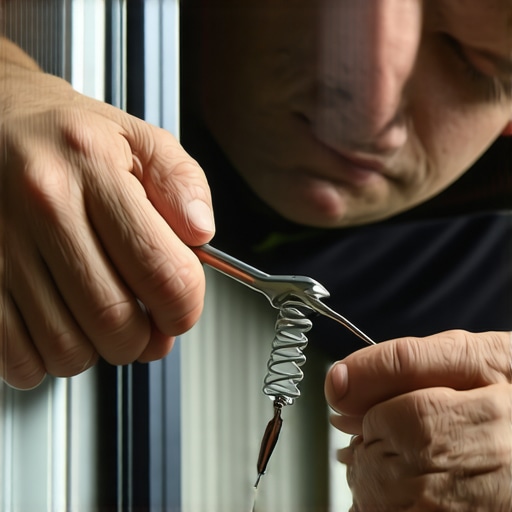
Before you start ripping at the vinyl, you must identify what kind of balance system you have. In the world of window repair, we generally deal with three types: the block and tackle, the spiral balance, and the constant-force coil. Each uses a different method to manage the load of the sash. The block and tackle uses a system of pulleys and a weighted spring, often hidden inside a metal channel. The spiral balance uses a twisted rod and an internal spring that requires a specific tensioning tool. The constant-force system, which is most common in modern vinyl windows, uses a coiled stainless steel ribbon. If your window is crashing down, that ribbon has likely lost its tension or snapped entirely at the attachment point.
When we talk about window repair, we have to look at the rough opening and the plumb of the frame. If the frame was over-shimmied during the original installation, it might be putting undue stress on the balance shoes, causing the springs to fatigue prematurely. This is why the technical side of glazing is so vital. You aren’t just swapping a part; you are diagnosing why the part failed in the first place.
Climate Logic: Why Springs Matter in the Cold
In northern climates where the U-Factor is king, a broken spring is more than a mechanical issue; it is a thermal disaster. When a sash does not sit perfectly level because of a failing balance, the weatherstripping cannot create a proper seal at the header or the sill. This leads to air infiltration. In a Minneapolis winter, that gap acts like a vacuum, pulling cold air in and pushing your expensive heated air out. You might have the best Low-E coating on surface number three to reflect heat back into your room, but if the sash is sitting a quarter-inch low, that coating is doing nothing to stop the convection currents cooling your floor. Replacing a spring ensures the sash is pressed firmly against the frame, allowing the warm-edge spacers and argon gas fill to actually do their jobs. A drafty window is often just a misaligned window.
Step-By-Step: Replacing a Constant-Force Balance
To begin, you must remove the operable sash. Most modern double-hung windows have tilt-latches. Slide these in and tilt the sash toward you until it is horizontal. Lift one side to disengage the pivot bars from the balance shoes. Set the sash aside on a soft surface. Now, look into the jamb tracks. You will see the balance shoes. If you have a constant-force system, the spring is housed in a plastic cover or attached directly to the track. You will need to unscrew the housing. Warning: these springs are under tension. If you release them carelessly, they can snap back with enough force to crack the vinyl frame or injure your hand.
Once the housing is removed, identify the weight rating. This is usually stamped on the metal ribbon or the plastic carrier. It might say something like 5#, which means it is rated for five pounds. If your sash weighs twenty pounds, you will likely have two five-pound springs on each side. Do not try to upgrade to a heavier spring thinking it will last longer; if the tension is too high, the window will ‘creep’ upward on its own. You need an exact match for the weight of your glass and frame assembly.
The Role of the Window Cleaner in Longevity
Many people do not realize that being a diligent window cleaner can actually extend the life of your springs. Dirt and grit act as abrasives inside the jamb tracks. When you raise and lower the window, that grit gets ground into the stainless steel springs and the plastic shoes. Over time, this increases friction, forcing the spring to work harder than intended. When you clean your glass, take a damp cloth and wipe out the tracks. Use a dry silicone-based lubricant on the tracks. Never use WD-40 or oil-based lubricants, as these will attract more dust and eventually turn into a sticky paste that will seize the balance system entirely.
“Standard practice for the installation and maintenance of exterior windows requires that all moving parts be kept free of debris to ensure the structural integrity of the fenestration assembly.” – ASTM E2112
The Technical Details: Glazing Beads and Sash Weight
While you have the window apart, it is the perfect time to inspect the glazing bead. This is the strip of vinyl or wood that holds the glass unit into the sash frame. If it is cracked or pulling away, moisture can seep into the sash, leading to internal rot or the failure of the insulated glass unit (IGU) seal. If you see fogging between the panes, your spring isn’t your only problem; the desiccant in the spacer is saturated, and the thermal performance has tanked. However, if the glass is clear, simply replacing the spring and snapping the glazing bead back into place will restore the window to its original efficiency.
Precision is everything. When you install the new balance, ensure the shoe is at the correct height. If the shoes are not aligned on both sides, the sash will sit crooked. A crooked sash will wear down the weatherstripping unevenly and can even lead to the pivot bars snapping. Use a level to check that your shoes are indexed properly before re-inserting the sash. This is the difference between a ‘caulk-and-walk’ amateur job and a professional glazier’s repair. You want the window to glide with a single finger of pressure.
Conclusion: When to Call the Pros
DIY window repair is empowering, but you must know your limits. If you have a large picture window with a broken transom or if you are dealing with a historic wood window where the lead weights are buried behind a plaster wall, the complexity increases significantly. For the average vinyl double-hung window, however, the balance system is designed to be serviceable. By taking the time to understand the tension and the mechanics of the sash, you save thousands in unnecessary replacement costs. You preserve the integrity of your home’s thermal envelope and ensure that your windows remain a functional part of your climate control strategy rather than just a hole in the wall that you have to prop open with a stick.