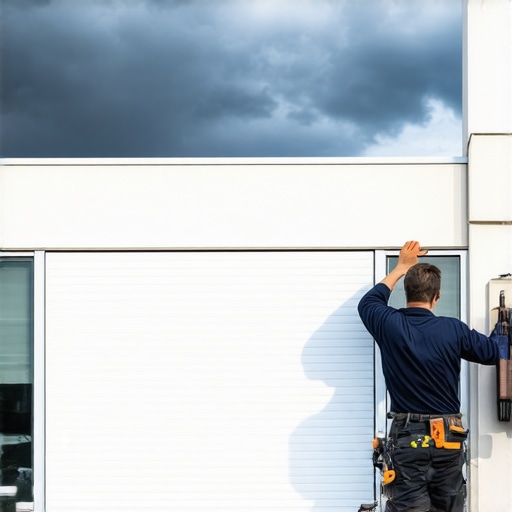
The Invisible Vulnerability of Commercial Glazing
When a storm front approaches, most building managers think about sandbags and backup generators. However, as a master glazier with over two decades in the field, I look at the glass. A commercial window is not a static object; it is a dynamic pressure valve. During severe weather, the difference between a building that remains dry and one that suffers catastrophic interior damage often comes down to a few millimeters of sealant and the integrity of the rough opening. Most people assume that if the glass does not break, the window succeeded. This is a fallacy. I have seen countless high-rise units where the glass remained perfectly intact while the internal drainage systems failed, flooding expensive office suites from the inside out.
I once pulled a massive storefront window out of a retail complex in a coastal district and the structural header was completely black with rot. Why? The previous installer relied on the nailing fin and a bead of cheap caulk instead of a comprehensive flashing tape system and a properly sloped sill pan. The window looked fine from the street, but every driving rain for five years had been diverted behind the facade. By the time the owner noticed the damp drywall, the structural steel was already pitted with corrosion. This is the reality of poor water management: it is a slow-motion disaster that severe weather merely accelerates.
“Installation is just as critical as the window performance itself. A high-performance window installed poorly will fail.” AAMA Installation Masters Guide
Understanding the Physics of Wind Pressure and Design Pressure (DP) Ratings
To prepare for severe weather, you must understand Design Pressure or DP ratings. This is a numerical value that represents a window system’s ability to withstand positive and negative wind loads. During a hurricane or a derecho, the wind does not just push on the glass. As it wraps around the corners of a building, it creates a vacuum effect on the leeward side. This negative pressure can literally suck an improperly anchored sash right out of the frame. When we talk about window repair in a commercial context, we are often looking at whether the glazing bead is still seated correctly or if the structural silicone has reached its fatigue limit.
If your building is located in a high-wind zone, you should be looking for a Missile Level D rating or higher for impact resistance. This involves a laminated glass sandwich where a polyvinyl butyral (PVB) interlayer is bonded between two heat-strengthened glass lites. Even if the outer glass shatters, the interlayer maintains the building envelope. This prevents the internal pressurization of the structure, which is often what causes roofs to lift off during extreme wind events. If your current glass is simple tempered or, worse, annealed, you should strongly consider a plan to replace windows before the next season hits.
The Science of Water Management: Weep Holes and Sill Pans
Every commercial aluminum window is designed to leak. That might sound counterintuitive, but it is a fundamental principle of glazing. Water will eventually bypass the outer gaskets. A professional system handles this through a series of internal channels and weep holes. Before a storm hits, your maintenance routine must include a check of these weep holes. If a window cleaner has accidentally waxed over them or if debris has clogged the exits, the water will back up. Once the internal glazing pocket fills, the water has nowhere to go but over the interior leg of the frame and into your floor slab.
“The window must be integrated into the water-resistive barrier of the wall in a manner that ensures water is shed to the exterior.” ASTM E2112 Standard Practice
A critical component often overlooked is the sill pan. This is a flashing element installed at the base of the rough opening before the window goes in. It acts as a secondary defense, catching any moisture that gets past the primary seals and directing it back outside. If your building suffers from chronic leaks during heavy rain, it is likely that the sill pan was either omitted or installed without end dams, allowing water to migrate into the wall cavity at the corners.
Sealant Integrity and Thermal Stress
In colder climates, severe weather also brings thermal shock. When the temperature drops from 50 degrees to sub-zero in a matter of hours, the aluminum frames of a commercial building contract significantly. Aluminum has a high coefficient of linear thermal expansion. If the sealant used between the window frame and the masonry is a low-modulus material that has become brittle with age, it will tear during this contraction. This creates an air gap that allows freezing air to reach the interior glazing bead, leading to condensation and ice buildup on the inside of the frame.
During your pre-storm inspection, do not just look at the glass. Take a dull putty knife and gently press against the perimeter sealant. If it feels like hard plastic rather than rubber, it has failed. At this point, a simple window repair involves cutting out the old material and installing a high-quality silicone or polyurethane sealant. This is not a job for a handyman with a tube of hardware store caulk; it requires proper joint design with a backer rod to ensure two-point adhesion, allowing the sealant to stretch and contract as the building moves.
The Glazier’s Checklist for Severe Weather Preparation
1. Inspect the Operable Hardware: Ensure all casement or awning windows are fully engaged and the locks are pulling the sash tight against the weatherstripping. An unlocked window can vibrate under wind load, causing the hardware to shear.
2. Clear the Drainage: Use a small canned air duster or a thin wire to ensure every weep hole is clear of dust, spider webs, or old paint.
3. Check the Glazing Bead: Ensure the vinyl or rubber strips holding the glass in the frame are not shrinking or pulling away at the corners. Gaps here allow water to enter the frame channels directly.
4. Evaluate the Perimeter: Look for cracks in the masonry or gaps in the sealant where the window meets the building’s skin.
5. Review the NFRC Labels: If you have access to the original building specs, check the U-factor and SHGC. In cold climates, a high U-factor indicates that the window will be a source of massive heat loss during a winter storm, potentially leading to frozen pipes near the perimeter.
When Repair is No Longer an Option
There comes a point where the cost of ongoing window repair exceeds the investment of a full-frame replacement. If you are dealing with systemic seal failure in your insulated glass units (indicated by permanent fogging or “creeping” of the spacer bar), the thermal performance of your building is compromised. Modern replacements offer thermally broken frames, where a polyamide strip separates the interior and exterior aluminum sections. This prevents the metal from acting as a bridge for heat or cold, significantly reducing your HVAC load during extreme weather. While the ROI on a commercial window replacement is a long-term play, the immediate gain in occupant comfort and the protection of the building’s structural integrity are undeniable. Do not wait for a catastrophic failure during a storm to realize that your windows have reached the end of their service life.