A loose patio door handle is never just a minor annoyance. To a master glazier, it is a flashing red light on the dashboard of your home’s thermal envelope. When that handle wobbles, it signals a breakdown in the mechanical compression required to keep the operable sash seated against the weatherstripping. You might think it is just a screw that needs a turn, but we need to look closer at the physics of the sliding assembly. A sliding door is a heavy piece of glass and metal moving on a track, and every time you operate it, you are applying torque to a hardware system that must remain rigid to maintain a seal against wind and moisture.
The Condensation Crisis: A Cautionary Tale
I recall a homeowner who called me in a panic because their new windows and sliding doors were ‘sweating’ profusely during a cold snap. I walked in with my hygrometer and showed them the humidity was 60 percent. It wasn’t the windows; it was their lifestyle choices combined with a failing hardware seal. They had been pulling on a loose handle for months, which had slightly misaligned the locking stack. This misalignment meant the door wasn’t pulling tight against the bulb seal, allowing cold air to infiltrate. That cold air chilled the glass and the frame below the dew point, causing the condensation they saw. It was a classic case where a simple hardware adjustment could have prevented a perceived product failure. As the industry standards dictate, the integrity of the installation and maintenance is paramount.
“Installation is just as critical as the window performance itself. A high-performance window installed poorly will fail.” AAMA Installation Masters Guide
The Anatomy of the Operable Sash
To understand why your handle is loose, you have to understand the rough opening and how the door sits within it. If the door frame was not installed with the correct shim placement, the entire frame can bow over time. This bowing puts undue stress on the mortise lock located inside the door stile. The handle is connected to this lock by a spindle, usually a square metal bar. If the set screws on the handle lose their bite on that spindle, the handle begins to play. This play isn’t just a nuisance; it’s a mechanical failure that can eventually strip the internal components of the lock. When we talk about window repair, people often forget that doors are essentially giant windows that move. The same rules of glazing apply. The weight of the glass, often tempered and insulated with argon gas, puts immense pressure on the rollers and the handle assembly. If your muntin bars are heavy or you have triple-pane glazing, that weight increases the force needed to move the door, further stressing the hardware.
Thermal Logic: Why Tight Hardware Matters
In colder climates, the U-factor is the metric we obsess over. A low U-factor means the assembly is good at keeping heat inside. However, a loose handle often leads to a failure in the latching pressure. If the door doesn’t pull into the frame properly, your high-tech Low-E coating on surface number three won’t do much to stop the literal draft coming through the gap. We use warm-edge spacers between the glass panes to prevent heat transfer, but those spacers are useless if the air is bypasses the sash entirely because the handle can’t engage the lock. When you perform a window repair or door adjustment, you are essentially recalibrating the thermal performance of the opening. This is why I have a low tolerance for installers who don’t check the hardware torque before leaving a job site.
“The physical load and the air infiltration ratings of a fenestration product are directly tied to the proper engagement of its locking hardware.” NFRC Performance Standards
The Technical Fix: Step-by-Step Tightening
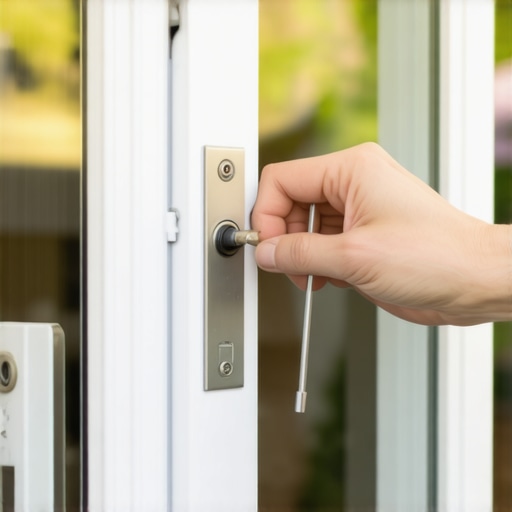
Before you decide to replace windows or doors entirely, let’s look at the fix. First, examine the escutcheon plate. This is the decorative metal plate behind the handle. Most modern patio doors have two long screws passing through the interior plate, through the door stile, and into the exterior handle. Over thousands of cycles, these screws can back out due to vibration. [image placeholder] To fix this, you must use a manual screwdriver, not a power drill. A power drill can easily strip the threads in the aluminum or vinyl door stile. Tighten these screws until the handle is snug, but do not over-tighten, as this can bind the mortise lock and make the door difficult to latch. If the handle has a small set screw on the underside (common in lever-style handles), you will need a hex key to tighten it against the spindle. This is where the glazing bead and the glass thickness come into play; if the handle is too close to the glass, be careful not to scratch the surface with your tools.
Maintenance and Long-Term Care
Once the handle is tight, you should check the rest of the system. Use a high-quality window cleaner on the glass, but keep it away from the hardware. Many cleaners contain ammonia or vinegar which can degrade the finish on your handle over time. Instead, use a dry silicone spray on the mortise lock and the rollers. Check the weep hole at the bottom of the track. If these are clogged, water will back up into the sill pan and eventually rot out your subfloor. This is the ‘shingle principle’ of water management: everything must flow down and out. If your door is older and the handle remains loose despite tightening, the internal springs in the lock case may have snapped. At that point, you aren’t just looking at a simple adjustment; you’re looking at hardware replacement. But remember, the goal is always to maintain the seal. A well-maintained door is a silent guardian of your home’s energy bill. Don’t let a loose screw be the reason your furnace is running overtime this winter.