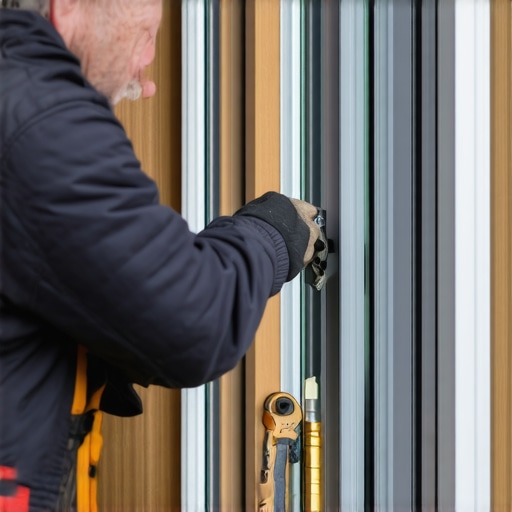
In my twenty five years as a master glazier, I have seen it all: from high rise curtain walls to the delicate restoration of historic wood sash frames. One of the most frustrating phone calls I receive from homeowners involves a window that refuses to close or open properly. Most of the time, they have already had a high pressure salesman tell them that the entire unit is compromised and they need to replace windows throughout the whole house. I recall sitting in a kitchen in a chilly northern suburb where a homeowner was nearly in tears because a local contractor told her that her twenty year old casement windows were totaled. The culprit? A stripped operator handle. I spent ten minutes identifying the hardware, forty dollars on a replacement part, and saved her a twenty thousand dollar investment. This is the reality of the glazing industry: many windows are discarded simply because the technician lacked the patience to perform a hardware autopsy.
The Anatomy of Casement Window Hardware
Before you reach for a replacement catalog, you must understand the mechanical assembly of an operable casement window. The crank is not just a handle; it is the visible component of an operator system. This system typically consists of a worm gear housed in a metal casing, which drives a primary arm or a set of linkages. These linkages are connected to the sash via a track or a hinge. When you turn that handle, you are converting rotational force into linear motion to push the sash away from the rough opening. In northern climates where the U-Factor is the primary concern for energy efficiency, a functioning operator is critical. If the operator cannot pull the sash tight against the weatherstripping, your windows will suffer from significant air infiltration, negating the benefits of your expensive Low-E glass. This is why window repair is often a matter of physics rather than aesthetics.
“Installation and maintenance of hardware are just as critical as the window performance itself. A high-performance window installed poorly or maintained improperly will fail to meet its thermal and structural ratings.” – AAMA Installation Masters Guide
Diagnosing the Failure: Gears vs. Handles
When a window crank fails, the problem usually originates in one of three places. First, the splines on the handle or the operator shaft may be stripped. These are the small teeth that allow the handle to grip the shaft. If you turn the handle and it spins freely without the shaft moving, your fix is a simple handle replacement. Second, the internal worm gear inside the operator housing may be stripped or seized. This often happens in cold climates when the lubrication freezes or dries out, and a user tries to force the window open against a frozen seal. Third, the linkage arms may be bent or disconnected from the sash track. As a professional, I always check the weep hole and the sill pan for signs of metal shavings. If I see silver dust on the sill, I know the gears are grinding themselves to death. A professional window cleaner often notices these issues first, as they see the buildup of oxidation on the hardware during their semi-annual maintenance.
Step by Step Technical Guide to Operator Replacement
If the internal gears are shot, you must replace the entire operator. Start by opening the window as far as it will go. If it is stuck shut, you may need to remove the screen and gently pry the sash open while someone turns the handle. Once the window is open, locate the point where the operator arm connects to the sash. This is usually a sliding track or a quick-release clip. Disconnect the arm. Next, remove the plastic or metal trim cover from the operator base. You will typically find several screws securing the operator to the window stool or the frame. This is where the rough opening tolerances matter. If the window was installed with a slight twist in the frame, the operator might have been under constant tension, leading to premature failure.
When you have the old operator out, do not throw it away. You need to match the arm length and the hole pattern exactly. There are hundreds of variations from manufacturers like Truth, Caldwell, and Amesbury. Look for a stamping on the metal housing. Replacing the operator is the reverse of removal. Ensure the new unit is level and the arm moves smoothly through its full range of motion. Use a high-quality lithium grease on the gears but avoid over-lubricating, as this can attract dirt and debris that will act as an abrasive over time.
“Standard practice for the installation of exterior windows requires that all hardware be checked for functionality and that all joints be properly sealed to prevent water bypass into the wall cavity.” – ASTM E2112
The Physics of Hardware Stress
Why do these components fail in the first place? In northern regions, the primary enemy is the expansion and contraction cycle. A vinyl window frame can expand and contract significantly as the temperature swings from sub-zero to eighty degrees. If the shim placement was incorrect during the initial install, the frame can bow, putting immense pressure on the sash. When the sash is out of square, the operator has to work twice as hard to pull it into the frame. This is why I always check the reveal around the sash before I leave a job. If the gap between the sash and the frame is not uniform, a new crank is only a temporary band-aid. You may need to adjust the hinges or even the rough opening shims to ensure the window is plumb, level, and square.
The Role of Maintenance and Cleaning
Maintenance is the best defense against hardware failure. A diligent window cleaner does more than just wipe glass; they should be clearing debris from the tracks and ensuring the weep holes are not clogged. If water sits in the sill because the weep holes are blocked, it will eventually corrode the steel components of the operator. I recommend a dry silicone spray for the tracks and a light grease for the gears once a year. Avoid using heavy oils that can gum up in the winter. If you live in an area with high humidity, keep an eye on the glazing bead. If it starts to pull away from the glass, moisture can seep into the sash and reach the internal hardware, leading to hidden rot and rust. By taking these small steps, you can avoid the high cost to replace windows and keep your home energy efficient for decades to come. Remember, a window is a system, not just a pane of glass. Treat the hardware with the same respect you treat the glazing, and it will serve you well.