The Silent Flood: An Autopsy of the Sliding Door Sill
Every year, after the first major seasonal downpour, my phone starts ringing with the same panicked report: water is coming through the glass. Most homeowners assume their seals have failed or the glass is magically porous. In reality, the culprit is often a series of tiny, rectangular slots that most people never notice until their expensive white oak flooring starts to cup and discolor. These are the weep holes, and they are the most misunderstood component of any operable fenestration system. As a master glazier with over two decades in the field, I have seen more floors ruined by a handful of dirt in a track than by actual glass failure.
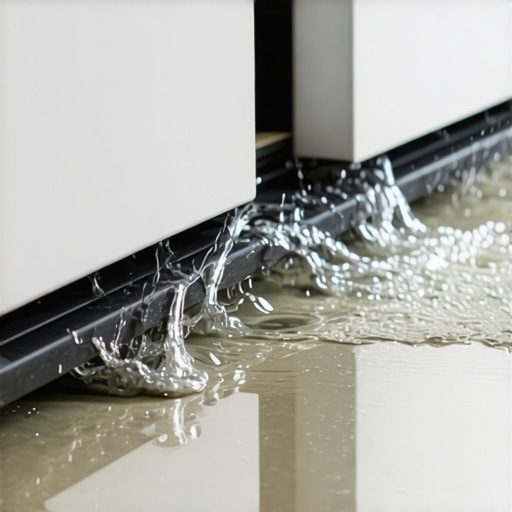
A homeowner called me in a panic because their new sliding doors were sweating and pooling water on the interior rug. I walked in with my hygrometer and a simple gallon of water. I showed them that the humidity was nearly 65 percent in the room, which was contributing to surface condensation, but the real flooding was coming from the track itself. I poured water into the track, and it just sat there, stagnant. It wasn’t the doors that were the problem; it was their maintenance routine. They had recently hired a window cleaner who used a heavy, wax-based soap that had effectively sealed the drainage ports shut. It was a classic case of the secondary defense system being sabotaged by simple debris.
“Installation is just as critical as the window performance itself. A high-performance window installed poorly will fail.” AAMA Installation Masters Guide
The Anatomy of Water Management: The Shingle Principle
In the world of glazing, we follow the Shingle Principle. This means every layer of the building envelope must shed water to the layer below it and eventually to the exterior. A sliding door is essentially a massive hole in your wall that is expected to remain water-tight while also being easy to slide back and forth on a track. To achieve this, manufacturers design the bottom frame, or the sill, with a series of internal chambers. The water that hits the glass runs down the glazing bead, bypasses the primary weatherstripping, and collects in the track. This is intentional. The track is not a seal; it is a gutter.
When water enters this gutter, it must have an exit strategy. This is where the weep holes come in. These are small apertures routed into the vinyl or aluminum extrusions that allow water to exit the frame through the force of gravity. However, in coastal or high-wind environments, we also have to deal with atmospheric pressure. If the wind is blowing hard enough against the face of the door, it can actually push water backward through the weep holes, a phenomenon known as wind-driven rain penetration. Higher-end doors use a flapper valve or a weighted cover over the weep hole to prevent this backflow while still allowing drainage.
Why Your Track Is Filling Like a Bathtub
If you see water rising over the interior leg of the door track, your drainage system has failed. This usually happens for three reasons. First, the most common is physical obstruction. Dust, pet hair, and organic debris settle into the track. When it rains, this becomes a thick sludge that plugs the internal chambers. Second, improper installation often plays a role. If the installer did not level the sill perfectly, or if they failed to use a proper sill pan, the water may not be reaching the weep holes at all. A sill pan is a secondary flashing component that sits under the door frame. If the door leaks, the sill pan catches the water and directs it back outside.
“The use of a sill pan with an upward-turned interior leg and end dams is essential for successful water management in fenestration installations.” ASTM E2112 Standard Practice
Third, we have the issue of the rough opening tolerances. If a house settles and the frame becomes racked, the operable sash may not sit squarely against the weatherstripping. This allows more water into the track than the weep holes were ever designed to handle. This is why a simple window repair often turns into a discussion about whether to replace windows entirely. If the frame is warped beyond the point where the sash can seal, no amount of cleaning will stop the flooding during a hurricane-force storm.
Glazing Zooming: The Physics of Capillary Action
When we look at the design of a weep hole, we are looking at a battle against surface tension and capillary action. If the hole is too small, water will actually bridge the gap and stay inside the frame due to the polar nature of water molecules. This is why professional glaziers are so adamant about using the correct drill bit size when field-routing additional drainage. We also have to consider the dew point. In cold climates, if water stays trapped inside the frame, it can freeze, expand, and crack the vinyl extrusions. This is why warm-edge spacers and proper drainage are not just about keeping your floor dry; they are about protecting the structural integrity of the window unit itself.
If you are looking at a window cleaner for your annual maintenance, ensure they are not just wiping the glass. A true professional will vacuum the tracks and ensure the weep holes are clear. If you find that your tracks are consistently filling up, it might be time to investigate a window repair that involves checking the flashing tape and the integration of the house wrap with the door frame. In many cases where we see rot in the subfloor, it is because the previous installer relied on the nailing fin as the only defense against water, ignoring the need for a comprehensive drainage plane.
Maintenance vs. Replacement: Making the Call
Before you decide to replace windows, perform a simple test. Open your sliding door and pour a cup of water into the track. If the water exits the exterior weep holes within a few seconds, your drainage system is functioning. If the water sits there, you likely have a clog. You can use a small piece of wire or a compressed air canister to clear the path. However, if you see water appearing on the drywall underneath the door, the problem is likely a failed sill pan or improper flashing. In those instances, a full-frame replacement is often the only way to ensure the home remains protected from mold and structural decay.