The Invisible Barrier: Why Your Glass Maintenance Protocol Matters
As a master glazier with a quarter-century in the field, I have seen it all: from high-rise curtain walls to delicate historic restoration. Most homeowners think a window is a simple piece of glass. In reality, it is a sophisticated thermal barrier, a complex assembly of gas-filled chambers, chemical coatings, and precision-engineered seals. When you see streaks or a hazy film on your windows, you are not just looking at dirt; you are looking at a failure in maintenance that can lead to long-term degradation of the glazing system. Getting crystal clear panes is not about elbow grease; it is about the chemistry of the water you use. Most people reach for a blue spray and a paper towel, but if you want professional results, you must understand the physics of evaporation and the behavior of minerals on a microscopic level.
The Condensation Crisis: A Master Glaziers Perspective
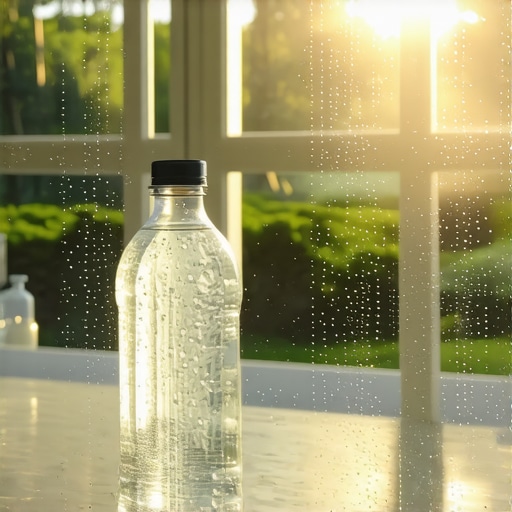
I recall a specific instance where a homeowner in a cold northern climate called me in a panic because their new, expensive windows were constantly ‘sweating.’ I walked into the home with my hygrometer and found the relative humidity was sitting at a staggering 60 percent during a deep freeze. I had to explain that it was not a window repair issue; it was their lifestyle. They were boiling water for pasta, taking long showers without fans, and keeping the house airtight. The windows were performing perfectly: they were the coldest surface in the room, so the excess moisture in the air was naturally condensing there. This homeowner had spent hours scrubbing those windows with tap water, only to find that the condensation left behind a white, chalky residue. This is the exact moment I introduced them to the concept of distilled water. Tap water contains dissolved minerals like calcium and magnesium. When the water evaporates, it leaves those minerals behind in a crystalline structure that bonds to the glass surface. Distilled water, having gone through the process of vaporization and condensation to remove impurities, has a Total Dissolved Solids (TDS) count of zero. It acts like a vacuum, pulling contaminants off the glass without leaving its own footprint.
“Installation is just as critical as the window performance itself. A high-performance window installed poorly will fail.” – AAMA Installation Masters Guide
The Science of Distilled Water and Surface Tension
To understand why distilled water is superior for cleaning, we have to look at the molecular level. Glass might feel smooth to your hand, but under a microscope, it is a jagged landscape of peaks and valleys. When you use tap water, the minerals fill these microscopic valleys. Over time, these minerals can undergo a process called glass etching, especially if they are subjected to high heat from the sun. This is particularly dangerous for windows in a northern climate where the U-Factor is critical. We want the glass to remain as transparent as possible to allow for passive solar gain during the winter months. A lower U-Factor means better insulation, but if your glass is coated in mineral deposits, it can actually affect the visible transmittance of the unit. Distilled water has a unique property: it is hungry. Because it lacks ions, it wants to bond with whatever it touches. When you spray distilled water on a window sash or a pane, it aggressively grabs onto the dust, pollen, and detergent residue left behind by previous cleanings. This is why you do not need harsh chemicals. A 50/50 mix of distilled water and high-grade isopropyl alcohol is often all you need to achieve a streak-free finish that lasts longer than any commercial cleaner.
Thermal Performance and the Role of Low-E Coatings
In our northern climate context, heat loss and condensation are the primary enemies. We typically look for windows with a Low-E coating on Surface #3. This is the inward-facing surface of the inner pane of an Insulated Glass Unit (IGU). This coating is designed to reflect long-wave infrared radiation (heat) back into the room. If you are cleaning your windows improperly, you are not just affecting the aesthetics; you are potentially risking the integrity of the glazing bead. If moisture sits in the glazing pocket because the weep holes are clogged with mineral-heavy sludge from tap water cleaning, you risk seal failure. Once the seal fails, the argon or krypton gas escapes, and your U-Factor skyrockets. This is when you stop needing a window cleaner and start needing to replace windows entirely. The clarity of the glass is your first warning system. If you cannot get the glass clear with distilled water, the haze might be internal, indicating that the desiccant in the spacer bar is saturated and the unit has reached the end of its functional life.
The Anatomy of a Proper Clean: From Sash to Weep Hole
When I teach my apprentices how to maintain a window, I start with the frame, not the glass. You must clean the rough opening and the tracks first. If you clean the glass while the tracks are full of debris, the first rain will splash that dirt back onto your clean panes. Use a vacuum to clear the sill pan. Check the weep holes, those small openings on the exterior of the frame designed to let water escape. If these are blocked, water will back up into the house, potentially rotting the wooden components or causing mold on the drywall. Once the frame is clear, move to the glass. Use a lint-free microfiber cloth. Why? Because paper towels contain wood fibers that can create microscopic scratches. These scratches, while invisible at first, provide more surface area for minerals to bond to. Spray your distilled water solution onto the cloth, not the glass, to prevent the liquid from running down into the glazing bead and sitting where it could potentially degrade the secondary seal of the IGU. Work from the top down, following the shingle principle of water management: everything should flow down and out.
“The NFRC label provides the only reliable way to determine window energy performance and compare products.” – National Fenestration Rating Council
The Math of Window Maintenance vs. Replacement
Many homeowners are told that new windows will pay for themselves in energy savings within a few years. As a glazier, I have to be honest: that is usually a myth. The real ROI on new windows is measured in decades, not years. However, the ROI on comfort and curb appeal is immediate. If you have drafty, single-pane windows, no amount of distilled water will make them energy efficient. In that case, you are looking at a full frame tear-out to ensure proper flashing tape application and the installation of a modern sill pan. But if your frames are structurally sound, a simple window repair or an IGU replacement can save you thousands. By using distilled water for your regular maintenance, you extend the life of your seals. You prevent the buildup of corrosive minerals on the hardware and the sash. You ensure that the thermal logic of your home remains intact. A clean window is a high-performing window. It allows for the maximum visible transmittance, which is vital for your mental health during those long, grey winter months in the north.
Conclusion: Precision in Every Drop
In the world of professional glazing, we do not settle for ‘good enough.’ We understand that every component of a window, from the shim to the muntin, plays a role in the buildings envelope. Using distilled water for cleaning is a small but vital part of a larger strategy of water management and thermal efficiency. It is the difference between a window that lasts fifteen years and one that lasts fifty. When you look through your glass, you should not see the glass itself; you should only see the world outside. By respecting the chemistry of water and the physics of glass, you ensure that your home remains a sanctuary of light and warmth, protected from the elements by a barrier that is as clear as it is strong. Do not let mineral deposits or poor cleaning habits undermine the performance of your home. Treat your windows with the technical respect they deserve, and they will serve you for a lifetime.