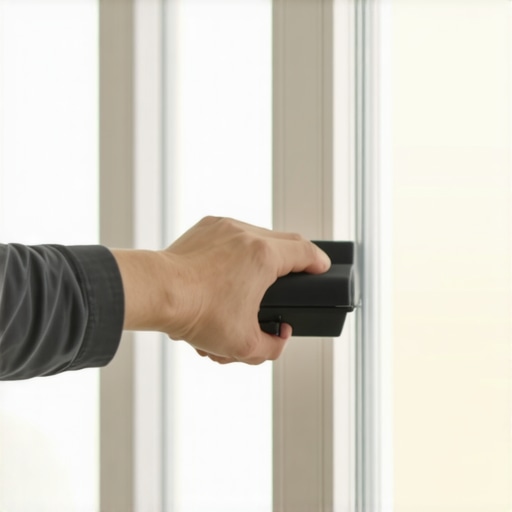
The Hidden Mechanics of the Window Track
In twenty five years of handling glass and frames, I have seen more windows destroyed by well meaning homeowners with a stiff wire brush than by actual storm damage. You look at your window tracks and see a bit of dust, but I see a critical drainage component that dictates the thermal performance of your home. A window is not a static object: it is a complex assembly where the sash must interface perfectly with the sill to maintain a seal against air infiltration. When that track fills with grit, you aren’t just looking at an aesthetic problem: you are looking at the slow death of your window hardware and the compromise of your building envelope.
The Condensation Crisis: A Narrative of Neglected Drainage
A homeowner called me in a panic last February because their new high performance double hung windows were ‘sweating’ so much that water was pooling on the hardwood floors. They were convinced the insulated glass units had failed. I walked in with my hygrometer and showed them the interior humidity was sitting at 60 percent, but the real culprit was the track system. Dust and pet hair had mixed with condensate to create a sludge that completely plugged the weep holes. Because the water couldn’t exit the frame, it backed up and sat against the secondary seal of the glass. It wasn’t a manufacturing defect: it was a maintenance failure. This is why understanding the mechanics of your window is the first step toward effective window repair and longevity.
“Installation and subsequent maintenance are just as critical as the window performance itself. A high-performance window installed poorly or maintained incorrectly will fail to meet its energy ratings.” AAMA Installation Masters Guide
The Physics of the North: Why Clean Tracks Save Money
In cold climates like Chicago or Minneapolis, the window track is the front line of defense against the stack effect. In these regions, the U-Factor is the most important number on your NFRC label. The U-Factor measures the rate of non solar heat loss. When your tracks are filled with debris, the sash cannot sit fully in the pocket. Even a three millimeter gap caused by a pebble or a buildup of dust allows cold air to bypass the weatherstripping. This forces your heating system to work harder and can shift the dew point to the interior surface of the glass, leading to mold growth on the glazing bead. By keeping the tracks pristine, you ensure the compression seals can do their job, maintaining the thermal integrity of the rough opening.
The Pro Secret: The Chemical Emulsification Method
Stop reaching for the scrub brush. Abrasive bristles can scratch the specialized coatings on vinyl or the anodized finish on aluminum, creating microscopic grooves where dirt will hide even deeper next time. Instead, we use a process of chemical lifting and vacuum extraction. This method is safer for the sash and more effective at clearing the weep holes that are vital for water management. First, use a vacuum with a narrow crevice tool to remove all loose particulates. Do not skip this: if you add liquid to a pile of dust, you just create mud.
Step by Step: Lifting the Grime
Once the loose debris is gone, sprinkle a light layer of baking soda into the track, focusing on the corners where the jamb meets the sill. This acts as a mild surfactant. Next, spray a solution of fifty percent white vinegar and fifty percent distilled water. The resulting reaction will create a foam that expands into the tight crevices behind the sash balance and under the hardware. Let this sit for five minutes. The bubbling action physically lifts the grease and mineral deposits away from the frame material without any mechanical abrasion required. Use a microfiber cloth to wipe the slurry away in a single motion. For the weep holes, use a small can of compressed air to ensure the path to the exterior is clear. This is the difference between a amateur window cleaner and a specialist who understands fenestration dynamics.
“Standard practice for the installation of exterior windows and doors must include a path for moisture to exit the wall system. Blocked drainage paths are a primary cause of structural rot.” ASTM E2112
When Cleaning Reveals the Need to Replace Windows
Sometimes, during the cleaning process, you will realize that maintenance is no longer enough. If you see daylight through the corners of the frame even after cleaning, or if the vinyl has started to warp and ‘oil can’ due to thermal expansion, it may be time to replace windows. In our northern climate, we look for triple pane units with argon gas fills and Low E coatings on surface number three to reflect heat back into the room. A clean track on a failed window is still a failed window. If the spacer between your glass panes shows signs of oxidation or if there is permanent fogging, the seal has been lost. In these cases, no amount of vinegar and baking soda will restore the R-value of the opening.
Maintenance of the Operable Parts
After the track is clean, you must address the friction. Never use a petroleum based lubricant in a window track: it will attract dust and create a grinding paste that destroys the sash rollers. Instead, use a dry silicone spray. This provides a hydrophobic layer that allows the sash to glide without becoming a magnet for future debris. This is especially important for the longevity of the hardware in heavy double hung or sliding units where the weight of the glass puts significant pressure on the tracks. Proper lubrication ensures the window remains operable for its full twenty five year life cycle.