Beyond the Surface: The Reality of Glass Degradation
When you see those stubborn, milky white rings on your glass, you are not just looking at dirt. You are looking at a chemical bond between alkaline minerals and the silica structure of your window. While many homeowners search for a quick fix like a window cleaner, the underlying cause often points toward a breakdown in the thermal envelope of the home. Before we get into the acidic science of the lemon, we must address why your windows are attracting this level of moisture and mineral buildup in the first place.
The Condensation Crisis: A Master Glazier Narrative
I recall a specific project in a high-wind zone where a homeowner called me in a panic because their new windows were ‘sweating’ so profusely that puddles formed on the sill. They were convinced the units were defective. I walked in with my hygrometer and showed them the interior humidity was sitting at a staggering 60 percent while the outside temperature was dropping toward the dew point. It wasn’t the windows; it was their lifestyle and a complete lack of mechanical ventilation. This condensation is the primary vehicle for hard water spots. When interior moisture hits the cold surface of the glass, it stays there, evaporates, and leaves behind the calcium and magnesium that eventually eat into the glass surface. If left untreated, these spots become etched, and at that point, no amount of cleaning will suffice: you are looking at a full glass replacement or extensive window repair.
“Installation is just as critical as the window performance itself. A high-performance window installed poorly will fail.” AAMA Installation Masters Guide
The Science of the Lemon: Citric Acid vs. Mineral Alkalinity
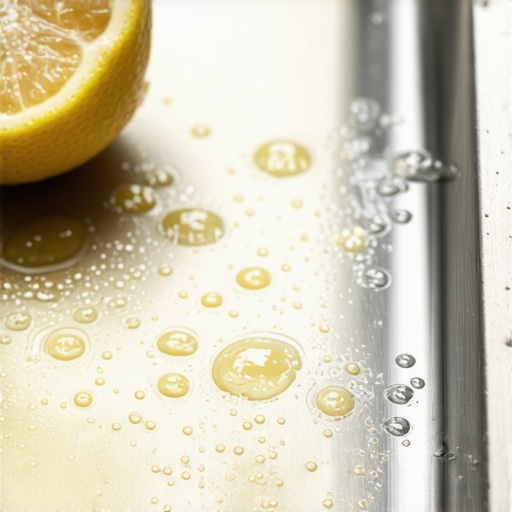
If the mineral deposits are still in the ‘staging’ phase, meaning they haven’t yet chemically etched the silica, a lemon is an surprisingly effective tool. Glass is an amorphous solid with a porous surface at the microscopic level. Hard water consists of dissolved minerals like calcium carbonate. Because lemon juice contains citric acid (usually around 5 to 6 percent), it acts as a natural chelating agent. The acid breaks the ionic bonds of the alkaline minerals, allowing them to be wiped away without the abrasive scratching that comes with ‘caulk-and-walk’ maintenance tactics. To perform this correctly, you slice a fresh lemon and rub it directly onto the Rough Opening area where the glass meets the Glazing Bead. Let the acid sit for exactly three minutes, but do not let it dry. If it dries, the minerals re-bond in a more concentrated form. Neutralize the acid immediately with distilled water and a microfiber cloth. This is a temporary fix for a symptom of a much larger thermal problem.
The Installation Autopsy: Why Windows Fail
If you find yourself constantly scrubbing hard water spots from the exterior, the issue is likely a failure of the ‘Shingle Principle’ in your window installation. Water management is a science, not a suggestion. A proper window repair often involves looking at the Sill Pan and the Flashing Tape. If the previous installer relied solely on the nailing fin and a bead of cheap sealant, water will eventually find its way into the Rough Opening. I have seen countless headers rotted out because an installer forgot the drip cap. Water runs down the siding, gets behind the trim, and sits on top of the window frame. This creates a micro-climate of high humidity right at the sash, leading to the very spots you are trying to clean. When we replace windows, we don’t just ‘drop and plop.’ We ensure the rough opening is lined with a high-quality flashing membrane and that the unit is leveled with a precision Shim to ensure the Operable parts move without friction.
Climate Logic: The North and Cold Perspective
In colder climates, the enemy is Heat Loss and the resulting interior condensation. This is where the U-Factor becomes the most important number on your NFRC label. A low U-Factor indicates better insulation. For my clients in the north, I always advocate for triple-pane units with a warm-edge spacer. Standard aluminum spacers are highly conductive; they get cold fast, which drops the temperature of the glass edge and triggers condensation. By using a structural foam or composite spacer, we keep the edge of the glass warm, preventing the moisture that leads to hard water buildup and mold. Furthermore, the Low-E coating should be placed on Surface #3. This placement reflects long-wave infrared radiation (heat) back into the room during the winter, keeping the glass surface above the dew point. If your current windows are constantly foggy, the seal has likely failed, the Argon gas has escaped, and no window cleaner in the world can fix that. You are looking at a loss of R-value that is costing you hundreds in heating bills every season.
“The NFRC label is the only way to compare different window products fairly. It provides a reliable way to determine if a window will meet the energy needs of a specific climate.” NFRC Performance Standards
The Components of a High-Performance Window
To understand window repair, you must understand the anatomy of the unit. The Sash is the part that holds the glass and moves. The Muntin refers to the grids that divide the glass into smaller panes. Often, modern windows use ‘simulated divided lites’ where the muntins are glued to the surface. These are magnets for hard water spots because they interrupt the natural flow of water off the glass. If you are choosing to replace windows, consider the maintenance implications of your grid choices. A smooth, unobstructed glass surface is always easier to keep clean and less prone to mineral ‘damming.’ Furthermore, check your Weep Holes. These are small gaps at the bottom of the exterior frame designed to let water escape from the tracks. If these are clogged with debris or painted shut by an amateur, water will back up and seep into your home, causing catastrophic structural damage to the framing over time.
The ROI Myth and the Comfort Reality
Many salesmen will tell you that new windows pay for themselves in energy savings within five years. That is a lie. The real ROI of choosing to replace windows is found in home comfort and the preservation of the structure. High-quality glass keeps your floor from fading and stops that ‘drafty’ feeling that forces you to wear a sweater indoors. When you invest in a proper installation with a high-performance Sill Pan and integrated flashing, you are protecting the Rough Opening from rot. That is where the real value lies. Don’t buy the hype of the high-pressure ‘Tin Man’ salesmen; buy the technical specifications that match your local climate. Whether it is managing the SHGC in the south or the U-Factor in the north, the glass chemistry must work for your specific environment.
Final Technical Checklist for Window Health
Before you commit to a full replacement, perform a visual inspection of your Glazing Bead. If the bead is cracked or pulling away, water is entering the sash. Check the perimeter sealant. If it is peeling, it is no longer a barrier. If you decide to use the lemon trick for hard water spots, remember that it is a diagnostic tool as much as a cleaner. If the spots return within a week, you have a humidity and thermal bridging issue that needs professional attention. Stop looking for a better window cleaner and start looking for a better thermal solution. Window repair is about more than just glass; it is about the integrity of the entire wall assembly.