The Sound of a Costly Mistake: Why Your Window Cleaner is a Liability
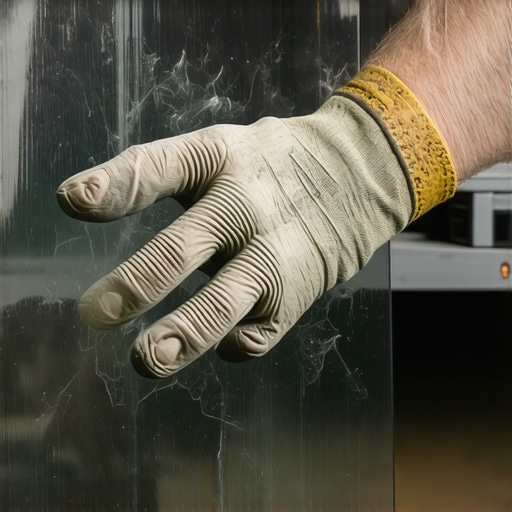
I recently walked onto a job site in Scottsdale where a homeowner was devastated. They had just spent sixty thousand dollars to replace windows throughout their desert estate, opting for high-performance, tempered units designed to handle the intense Arizona solar load. The windows were beautiful, with a Solar Heat Gain Coefficient (SHGC) that would make any energy auditor weep with joy. But then, they hired a budget window cleaner to prep the house for a housewarming party. I arrived just as the sun was setting, hitting the glass at that low, punishing angle. What I saw wasn’t dirt; it was a spiderweb of microscopic scratches across thirty-two panes of glass. The cleaner had used #0000 steel wool, thinking it was the ‘pro trick’ for removing construction debris. He didn’t realize he was dragging microscopic glass particles across a tempered surface, effectively sanding the units into oblivion. This wasn’t a simple window repair job. This was a total loss.
“Installation is just as critical as the window performance itself. A high-performance window installed poorly will fail, but a high-performance window maintained improperly will be destroyed before its time.” – AAMA Installation Masters Guide
The Physics of the ‘Roller Pick-Up’ Phenomenon
To understand why steel wool is a death sentence for certain glass, you have to understand the manufacturing process of tempered glass. Unlike annealed glass, which is cooled slowly to relieve internal stresses, tempered glass is heated to over 1,100 degrees Fahrenheit and then blasted with cold air in a process called quenching. This creates a surface in high compression and a core in high tension. This molecular tug-of-war is what gives tempered glass its strength and its ‘safety’ break pattern. However, as the glass moves through the tempering furnace, it sits on ceramic rollers. Over time, microscopic particles of glass—we call them ‘fines’—can accumulate on these rollers. These fines fuse to the surface of the glass as it softens. In the industry, we call this roller pick-up. On a standard day, you can’t see these particles. But when a window cleaner takes steel wool to that surface, they catch those fused fines and drag them across the pane. Because the fines are the same hardness as the glass itself, they create deep, irreparable scratches. This is why a window repair specialist often can’t buff out these marks; you’d have to remove so much material that you’d create optical distortion, making the view look like a funhouse mirror.
The Thermal Logic of Southern Climates
In a hot climate like Phoenix or Dallas, the window isn’t just a view; it’s a thermal barrier. We prioritize the Solar Heat Gain Coefficient (SHGC) above almost everything else. We want that Low-E coating on Surface #2—the inner face of the exterior pane—to reflect long-wave infrared radiation back into the atmosphere before it even enters the home. When you scratch the exterior surface (Surface #1) with steel wool, you aren’t just damaging the aesthetics. You are creating micro-fissures that can trap contaminants, salts, and pollutants. Over time, these scratches can lead to localized heat absorption issues. While the Low-E coating is safely tucked inside the insulated glass unit (IGU), the clarity of the glass is what allows the visible light to pass through without being absorbed as heat. A scratched surface increases the surface area and creates turbulence in how light interacts with the pane. This is the technical reality that ‘caulk-and-walk’ installers and cheap cleaners never consider. They don’t understand that a window is a managed hole in the building envelope.
The Myth of the ‘Magic’ Abrasive
I’ve seen it a thousand times: a technician wants to get off some stubborn silicone or paint overspray, and they reach for the steel wool. They’ll tell you that steel is softer than glass on the Mohs scale, so it can’t scratch. That is a dangerous half-truth. It’s not the steel that does the damage; it’s the debris trapped by the steel. When you are performing a window repair or cleaning, the only safe abrasive is a brand-new, surgical-grade stainless steel scraper blade, and even then, only on glass that has been properly lubricated and tested for roller pick-up. If you have a window cleaner who doesn’t check for the tempered ‘P’ mark in the corner of the sash before reaching for an abrasive, fire them immediately. They are a threat to your property value. If you’re looking to replace windows, ensure your contractor explains the cleaning requirements for the specific glass type they are installing.
“The National Fenestration Rating Council (NFRC) provides the only reliable way to compare window energy performance. But no rating accounts for the degradation of the glass surface due to improper maintenance.” – NFRC Homeowner’s Guide to Performance
Why ‘Pocket Replacement’ Won’t Save You from Poor Glass Care
Many homeowners think that if their glass gets scratched, they can just do a quick window repair or a ‘pocket replacement’ where the new window is slipped into the existing frame. But if your rough opening is already compromised by moisture because the previous installer didn’t use a proper sill pan or flashing tape, the glass is the least of your worries. However, if the frames are solid and the damage is purely on the glass, you are still looking at a significant expense. Replacing the IGU (Insulated Glass Unit) involves popping the glazing bead, cutting the sealant, and resealing a new double-pane unit into the existing sash. It is a surgical procedure. If you have muntins or decorative grids, the cost triples. This is why the ‘cleaner’ who charges fifty bucks less is actually the most expensive person on your payroll.
The Technical Protocol for Glass Maintenance
If you want to avoid the nightmare I saw in Scottsdale, you need a protocol. First, identify the glass. Is it tempered? Look for the etched monogram in the corner. If it’s tempered, assume it has roller pick-up. Second, use the ‘wet test.’ Never touch dry glass with anything but air. Third, if you must use an abrasive, use a specialized bronze wool, which is significantly softer and less likely to trap fines in a way that causes deep gouges. But truly, the best window cleaner uses nothing more than a high-quality squeegee, deionized water, and a microfiber cloth for the edges. If you have to replace windows because of scratches, you’ve failed at the most basic level of home maintenance. Proper window repair is about preservation, and preservation starts with the realization that glass is a delicate, high-tech material, not just a clear piece of rock. Always check the weep holes to ensure they aren’t clogged with the very debris you’re trying to clean, as that leads to frame rot that no amount of glass polishing can fix. In the end, your windows are an investment in your home’s thermal performance and your family’s comfort. Treat them with the same precision that went into their engineering. Don’t let a handful of steel wool turn your view into a hazy, scratched reminder of a bad decision.[image_placeholder]{“imagePrompt”: “A macro photograph of a tempered glass window surface showing microscopic scratches from steel wool at a low sun angle, with the etched safety logo visible in the corner.”, “imageTitle”: “Microscopic Scratches on Tempered Glass”, “imageAlt”: “Close-up of scratched tempered glass window after improper cleaning with steel wool”}