The Frustration of the Seized Casement
There is a specific kind of frustration that occurs when you try to open a casement window on the first warm day of spring, only to have the handle resist your effort. You crank harder, the metal groans, and you feel that sickening ‘skip’ in the gears. Most homeowners immediately assume the worst. They see a window that refuses to operate and they think about the thousands of dollars required to replace windows throughout the home. But as a master glazier with a quarter-century in the field, I can tell you that 90 percent of the time, you are not dealing with a structural failure. You are dealing with a lubrication crisis and a lack of basic maintenance.
The Sales Pitch Takedown
I recall sitting across from a homeowner in a drafty suburb of Chicago a few years back. They had a stack of quotes from ‘Tin Men’ high-pressure salesmen who were trying to convince them that their ten-year-old wood-clad windows were total losses. One salesman had quoted them thirty-two thousand dollars for a full-frame replacement, claiming the hardware was ‘obsolete’ and the seals were shot. I took one look at their casement operators and realized the factory grease had simply turned into a sticky, abrasive paste. I asked for a jar of petroleum jelly from their medicine cabinet. Within ten minutes, I had the operable sash swinging freely with a single finger. I had to explain to the homeowner that the ROI on a thirty-thousand-dollar replacement for a lubrication issue was essentially zero. They didn’t need new windows; they needed a window cleaner and ten cents worth of Vaseline.
“Installation is just as critical as the window performance itself. A high-performance window installed poorly will fail.” AAMA Installation Masters Guide
The Science of the Crank: Why Gears Fail
To understand why the Vaseline hack works, you must understand the physics of the casement operator. Most modern operators use a worm gear system. As you turn the handle, the worm gear rotates against a geared arm. In a cold climate like Minneapolis or Chicago, these windows face extreme thermal cycles. The metal components, usually made of zinc-die cast or stainless steel, expand and contract. Over time, the heavy factory-applied lithium grease attracts dust and dead skin cells, eventually hardening into a substance that acts more like glue than a lubricant. When you force a stuck crank, you are putting immense torque on the muntin bars and the sash, which can lead to glass breakage or stripped gears. By applying a high-viscosity petroleum jelly to the worm gear, you are restoring the coefficient of friction to a level where the mechanical advantage of the crank can actually function without over-stressing the metal teeth.
The $2 Vaseline Hack: A Step-by-Step Restoration
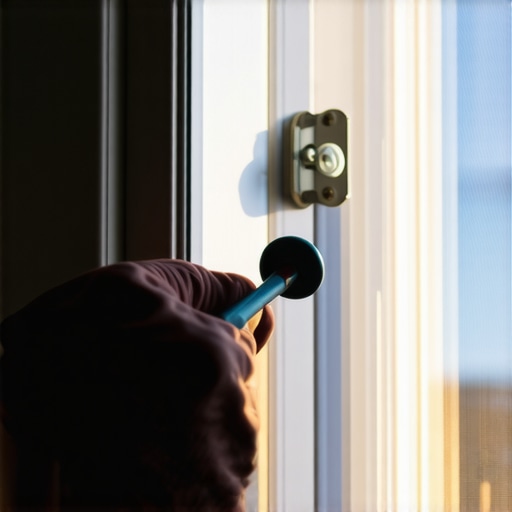
Before you jump into window repair, you must clean the field of play. Start by opening the window as far as it will go. If it is completely stuck, do not force it. Instead, use a small flat-head screwdriver to remove the cover of the operator. You will likely see a buildup of black, grimy gunk. This is your enemy. Use a window cleaner or a mild degreaser to strip away the old, hardened grease. Once the gears are bare, apply a liberal amount of Vaseline to the worm gear and the pivot points of the operator arm. Petroleum jelly is an ideal choice for the homeowner because it is chemically stable, water-resistant, and won’t evaporate like thin spray lubricants. After applying, work the crank back and forth in small increments. You will feel the ‘thaw’ as the lubricant penetrates the gear teeth. [IMAGE_PLACEHOLDER]
When Maintenance Isn’t Enough: The Replacement Reality Check
While the Vaseline hack can save many windows, it cannot fix physics. There comes a point where window repair is no longer viable. If you notice rot in the rough opening or if the sash has warped to the point where it no longer contacts the weatherstripping, maintenance is a moot point. In cold climates, the U-Factor is the most critical metric you must monitor. The U-Factor measures the rate of heat loss. If your windows are twenty years old and single-pane, or if the argon gas has leaked out of your double-pane units (indicated by a permanent fogging between the glass), the energy loss is costing you more than the replacement would.
“The NFRC label provides the only reliable way to determine if a window will actually perform in its intended climate zone.” NFRC Performance Standards
The Physics of the North: Why U-Factor Matters
In the North, we fight a constant battle against the dew point. When warm, moist indoor air hits a cold glass surface, it condenses. If your window has a high U-Factor, that glass surface stays cold, leading to water pooling on the sill pan and eventually rotting out the flashing tape. When you decide to replace windows, you should look for triple-pane units with Low-E coatings on Surface #3. This placement reflects long-wave infrared radiation back into the room, keeping the heat where it belongs. I often see installers neglect the shim space during a replacement. They will slide a new window into the rough opening and fail to use low-expansion foam or proper backer rods, leaving a literal tunnel for cold air to bypass the window’s thermal break entirely.
The Anatomy of a Proper Installation
If the Vaseline hack fails and you must go the route of replacement, do not settle for a ‘pocket’ or ‘insert’ installation if your frames are compromised. A pocket installation involves leaving the old frame in place and sliding a new window inside it. This is faster and cheaper, but it reduces your glass area and does nothing to address potential rot behind the glazing bead. A full-frame replacement is the only way to ensure the sill pan and flashing tape are properly integrated with the home’s water-resistive barrier. This is where the ‘caulk-and-walk’ installers fail. They rely on a bead of sealant rather than the ‘shingle principle’ of overlapping materials to shed water. A properly installed window should be able to keep the interior dry even if every bead of caulk on the exterior fails.
The Hidden Cost of Neglect
The reason I advocate for simple hacks like the Vaseline method is that neglect leads to catastrophic failure. A stubborn crank causes a homeowner to leave the window slightly ajar. That gap allows moist air to infiltrate the rough opening, where it hits the cold shim and condenses. This leads to mold, wood rot, and eventually, a structural repair that costs ten times more than the window itself. Regular maintenance, including cleaning the weep hole and lubricating the hardware, can extend the life of a wood or vinyl window by decades. Don’t buy the hype of the ‘maintenance-free’ window. Everything exposed to the elements requires care. The next time your casement window resists, put down the hammer and reach for the petroleum jelly. It is the most cost-effective window repair tool in your arsenal.