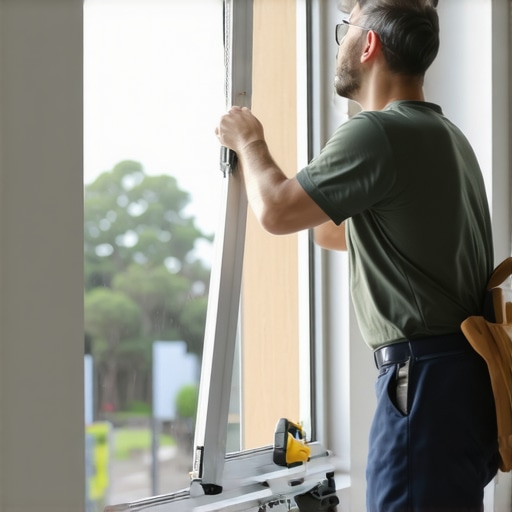
The Mechanical Frustration of a Frozen Window
There is a specific kind of frustration that occurs when you attempt to catch a cross-breeze on a brisk morning only to have the window sash grind to a halt six inches from the sill. As someone who has spent over two and a half decades in the glazing trade, I have seen every possible reason for an operable window to fail. People often assume it is just a bit of dirt, but usually, it is a conflict between the sash and the frame that points to a deeper mechanical or structural issue. When a window refuses to travel its full distance, you are not just losing ventilation; you are often looking at a compromised thermal envelope. In cold climates like Chicago or Minneapolis, a window that does not operate correctly often does not seal correctly, leading to massive heat loss and an astronomical rise in your U-Factor impact.
The Installation Autopsy: A Case Study in Structural Failure
I recall a job in a historic district where a homeowner was convinced they needed to replace windows because none of their double-hung units would open past the midpoint. I pulled a vinyl replacement window out of a house that had been installed only three years prior. When I stripped back the glazing bead and checked the rough opening, the header was completely bowed. Why? The previous installer had failed to account for the settling of the old timber frame and had wedged the window in without sufficient clearance. They relied on the nailing fin and a heavy bead of caulk instead of flashing tape and proper shim placement. The frame had compressed the tracks so tightly that the sash was literally pinched in place. This was not a window problem; it was a failure to respect the physics of the building. As the ASTM E2112 standard dictates, the installation must account for the structural integrity of the opening.
“Installation is just as critical as the window performance itself. A high-performance window installed poorly will fail.” AAMA Installation Masters Guide
The Physics of the Balance System
To understand why a window stops halfway, you must understand what helps it move. Modern windows use a variety of balance systems: block and tackle, constant force, or spiral balances. A block and tackle system uses a pulley and a high-tension cord. If that cord jumps the pulley or if the spring inside the channel snaps, the tension becomes uneven. The sash then tilts slightly, causing it to bind against the tracks. In a constant force system, a stainless steel coil spring provides the lift. If the pivot shoe, the plastic part that connects the sash to the spring, becomes cracked or filled with debris, it will jam. This is where a professional window cleaner might notice the issue first, as they see the buildup of grit in the tracks that can eventually lead to mechanical failure. If you are forcing the window, you are likely bending the coil, which will eventually necessitate a full window repair.
Thermal Expansion and Material Science
In Northern climates, we deal with extreme temperature swings. Vinyl windows have a high coefficient of thermal expansion. On a cold day, the vinyl contracts; on a hot day, it expands. If the rough opening was too tight, that expansion has nowhere to go but inward, bowing the tracks. This is why we insist on a quarter-inch gap around the perimeter, filled with low-expansion foam. If your window opens fine in the morning but sticks in the afternoon sun, you are witnessing material science in action. The Low-E coating on Surface #3 is reflecting heat back into your home to keep you warm, but the frame itself is absorbing radiant energy and physically changing shape. This is a common issue in poorly manufactured units where the internal chambers of the vinyl are not reinforced with steel or aluminum.
The Step-by-Step Diagnostic Process
First, inspect the tracks for any physical obstructions. This is the most basic window repair step. Use a vacuum to remove dead insects, grit, and old paint chips. Do not use petroleum-based lubricants; they attract dust and create a grinding paste that will destroy the sash tracks. Instead, use a dry silicone spray. Second, check the alignment. Use a level to see if the side jambs are bowed. If the center of the window is narrower than the top and bottom, the installer likely over-fastened the screws, pulling the jambs inward. Third, examine the balance. If the window feels heavy or drops suddenly after being pushed up, the balance is broken. Replacing a constant force balance involves removing the sash and unscrewing the balance cover, a task that requires precision to avoid snapping the high-tension springs.
“The primary goal of the installation process is to provide a weather-tight seal and ensure the long-term functionality of the fenestration product.” ASTM E2112 Standard Practice
When to Repair vs. When to Replace
Many homeowners ask if it is worth it to fix a twenty-year-old window. If the frame is wood and the sill pan is showing signs of rot, the answer is usually no. Once moisture has bypassed the flashing tape and entered the wall cavity, the structural damage often exceeds the cost of a new unit. However, if the frame is sound and the issue is merely a broken balance or a fouled track, a window repair is a cost-effective solution. In our cold Northern climate, we prioritize the U-Factor. A window that stays partially open because it is stuck is essentially a hole in your insulation. It allows the dew point to shift inside your wall, leading to condensation on the muntins and potentially mold growth within the glazing bead.
The Importance of Weep Holes and Drainage
Sometimes a window sticks because the bottom sash has buckled due to water retention. Every operable window has weep holes at the bottom of the frame. These are designed to let water that hits the glass and runs down the tracks escape to the exterior. If these holes are clogged by a window cleaner using the wrong technique or by environmental debris, the water sits in the track. In the winter, this water freezes and expands, physically warping the frame and preventing the window from opening. Ensuring these drainage paths are clear is a vital part of seasonal maintenance that prevents long-term mechanical failure.