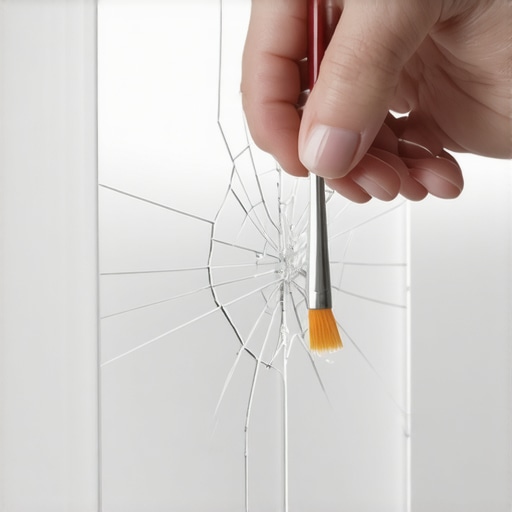
Listen closely because I am only going to say this once. If you are looking for a magic wand to fix a shattered Insulated Glass Unit (IGU), you are in the wrong place. However, if you have a hairline fracture that is threatening to compromise your thermal envelope, we need to talk about physics. As a glazier with over 25 years in the field, I have seen every DIY disaster imaginable. Most people think a window is just a piece of glass, but it is actually a complex system designed to manage vapor drive and thermal transfer. When that glass develops a stress crack, you are not just looking at an aesthetic blemish: you are looking at the beginning of a total seal failure. I have walked into countless homes where a simple crack was ignored until the entire sash was filled with mold and the desiccant in the spacer bar was completely saturated. A homeowner called me in a panic because their new windows were sweating. I walked in with my hygrometer and showed them the humidity was 60 percent. It was not the windows: it was their lifestyle. But in that same house, a small crack in the basement window was pulling in moist air through a process called vapor pressure, turning the interior of the IGU into a miniature rain forest. That is why we address cracks immediately, even if the fix is temporary.
The Science of the Stopgap: Why Clear Nail Polish?
You might think clear nail polish is a crude tool for a master glazier, but there is chemistry at play here. Clear nail polish is primarily nitrocellulose dissolved in a solvent like butyl acetate or ethyl acetate. When applied to a hairline fracture in annealed glass, the liquid fills the microscopic fissures of the crack through capillary action. As the solvent evaporates, it leaves behind a hard, transparent polymer that effectively seals the crack from moisture and air. This is critical in a North or Cold climate where the U-Factor is your primary defense against the elements. A crack allows Argon gas to escape and moisture-laden air to enter. Once that moisture hits the cool surface of the interior pane, it reaches the dew point and condenses. This leads to permanent mineral deposits on the glass that no window cleaner can ever remove. By applying a layer of nitrocellulose, you are essentially creating a sacrificial barrier to protect the integrity of the IGU until a proper glass replacement can be scheduled.
“Installation is just as critical as the window performance itself. A high-performance window installed poorly will fail.” AAMA Installation Masters Guide
Analyzing the Anatomy of an IGU Failure
When we talk about windows, we have to talk about the Glass Class. Most modern homes use double-pane glass with a Low-E (Low Emissivity) coating. In cold climates, we typically see that coating on Surface #3, which is the exterior-facing side of the interior pane. This reflects long-wave infrared radiation back into the room. If you have a crack, even a small one, you are compromising that coating’s ability to function. The crack acts as a thermal bridge. I have seen thermal imaging cameras show a massive heat loss spike centered exactly on a three-inch crack. This is not just about a draft: it is about the structural stability of the sash. If the crack is located near the glazing bead, the expansion and contraction of the frame (especially in vinyl units which have a high coefficient of thermal expansion) will cause the crack to propagate. Every time the sun hits that window, the glass expands. At night, it contracts. Without a stabilizer like nail polish to provide a minor amount of structural tension, that crack will travel across the entire pane in a matter of days.
Step-by-Step: The Professional Stopgap Procedure
First, you must clean the area. This is where many people fail. Do not use a standard ammonia-based window cleaner. Ammonia can react with certain coatings and leave a residue that prevents the polish from bonding. Use 99 percent isopropyl alcohol and a lint-free microfiber cloth. Carefully wipe along the crack, ensuring you do not apply enough pressure to worsen the fracture. Once the surface is chemically clean, apply a thin bead of clear nail polish starting half an inch before the crack begins and ending half an inch after it stops. This is the same principle we use when we shim a window in a rough opening: you have to support the structure beyond the point of stress. Allow the first coat to dry for at least ten minutes before applying a second, slightly wider coat. This creates a tiered seal that mimics the multiple layers of a proper flashing system. While this will not restore the U-Factor of the window to its original 0.27 or 0.30 rating, it will stop the bleeding.
“The integrity of the building envelope depends on the ability of the fenestration units to withstand differential pressure without allowing air or water infiltration.” ASTM E2112 Standard Practice
When to Stop Patching and Replace Windows
I am often asked when it is time to stop the repairs and finally replace windows. If your crack has spider-webbed or if the glass is tempered and has shattered into small cubes, nail polish is useless. You are looking at a safety hazard. Furthermore, if you see a foggy or milky appearance between the panes, your seal is gone. The desiccant is dead. At that point, you are better off looking at a full-frame replacement. When you do replace, look for fiberglass frames. Fiberglass is made of glass fibers and resin, meaning it expands and contracts at almost the exact same rate as the glass panes themselves. This reduces the stress on the glazing bead and the sill pan, leading to a much longer lifespan than vinyl. You also want to ensure your new units include a warm-edge spacer made of a non-conductive material like structural foam rather than aluminum. This keeps the edge of the glass warmer, which significantly reduces the risk of condensation and thermal stress cracks in the future. Remember, a window is an investment in your home’s thermal performance, not just a view of the backyard. Treat the glass with respect, and it will keep your heat inside where it belongs.
[{“@context”:”https://schema.org”,”@type”:”HowTo”,”name”:”How to Temporary Patch a Cracked Window Pane”,”step”:[{“@type”:”HowToStep”,”text”:”Clean the cracked area with isopropyl alcohol to remove oils and debris.”},{“@type”:”HowToStep”,”text”:”Apply a thin layer of clear nail polish along the entire length of the crack.”},{“@type”:”HowToStep”,”text”:”Let the first layer dry completely for ten minutes.”},{“@type”:”HowToStep”,”text”:”Apply a second wider layer of polish to ensure a complete seal.”}],”totalTime”:”PT20M”},{“@context”:”https://schema.org”,”@type”:”LocalBusiness”,”name”:”Master Glazing & Window Repair”,”description”:”Expert window installation and glass repair services with over 25 years of experience in thermal performance and structural integrity.”,”address”:{“@type”:”PostalAddress”,”addressLocality”:”Minneapolis”,”addressRegion”:”MN”}}]