The Molecular Reality of Clean Glass
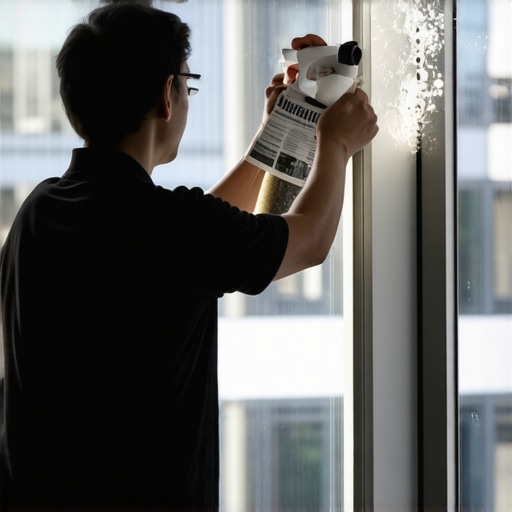
When you look at a window, you see a transparent barrier, but as a glazier with 25 years in the field, I see an amorphous solid that is constantly under thermal stress. The quest for streak-free glass isn’t just about aesthetics: it is about maintaining the integrity of the fenestration unit. Many homeowners reach for a spray bottle of blue liquid and a roll of paper towels, but they are often just moving dirt around. To truly clean glass, you must understand the chemistry of the surface and the mechanical action required to strip away atmospheric pollutants. This is where the old-school method of using newspaper comes into play. Unlike paper towels, which are designed to be absorbent and often leave behind lint and wood-pulp residue, newspaper is a dense, high-friction material. When combined with a mild acidic solution like white vinegar and water, the soy-based ink in modern newsprint acts as a microscopic polishing agent. It breaks the surface tension of the water and lifts the oils that have baked onto the glass under the relentless ultraviolet rays of the sun.
The Condensation Crisis: A Master Glazier’s Tale
A homeowner recently called me in a panic because their new windows were ‘sweating’ and appearing streaky no matter how much they cleaned them. I walked in with my hygrometer and showed them the humidity was 60 percent. It was not a failure of the window cleaner: it was their lifestyle. They had a humidistat set too high in a tightly sealed house during a brutal cold snap. In our northern climate, where the U-Factor is the most critical metric on your NFRC label, the interior surface of the glass can become a magnet for moisture if the dew point is not managed. They were scrubbing at ‘streaks’ that were actually heavy condensation. I had to explain that even the most expensive triple-pane units with warm-edge spacers can only do so much if the interior environment is not controlled. This serves as a vital lesson: cleaning is the first step in a diagnostic window repair assessment. If you cannot get the glass clear, you might be looking at a seal failure rather than a dirty sash.
“Installation is just as critical as the window performance itself. A high-performance window installed poorly will fail.” – AAMA Installation Masters Guide
The Anatomy of the Window: Beyond the Glass
To clean a window properly, you must look at the entire assembly, including the sash, the muntins, and the glazing bead. If you are cleaning an operable window, such as a double-hung or a casement, the cleaning process should always begin with the frame. Use a vacuum to clear out the rough opening tracks and the sill pan. If you see water pooling in the bottom of the frame, your weep holes are likely clogged with debris. This is a common issue that leads to rot in the subfloor and the window header. When you use newspaper, start from the top and work your way down in a circular motion, then finish with vertical and horizontal strokes. This technique allows you to identify which side of the glass a streak is on. If you see a vertical streak, it is on the inside: if it is horizontal, it is on the outside. This systematic approach is what separates a professional window cleaner from a novice. During this process, I always check the glazing bead. This is the strip of plastic or wood that holds the glass unit in the sash. If it is cracked or pulling away, no amount of newspaper will fix the air infiltration that is likely occurring.
Thermal Performance and Surface Coatings
In our cold northern climate, the goal is to keep heat inside the home. This is why we focus on the U-Factor. Most modern windows use Low-E (Low-Emissivity) coatings. On a high-performance unit designed for the north, this coating is typically placed on Surface #3, which is the interior-facing surface of the outboard pane of glass. When cleaning these units, you must be careful. While most Low-E coatings are ‘hard-coat’ or protected inside the Insulating Glass Unit (IGU), some older or specialized coatings are on the exposed surface. Using abrasive cleaners or even a rough piece of newspaper on an exposed coating can cause permanent scratching. This is why we rely on the acetic acid in vinegar to do the chemical work, rather than physical force. The newspaper provides just enough friction to remove the film without gouging the glass. If you are considering the need to replace windows, pay close attention to how they perform during the cleaning process. If you see ‘fogging’ between the panes that you cannot reach with your newspaper, the desiccant in the spacer has become saturated and the seal has failed. At that point, you are no longer looking at a cleaning job: you are looking at a window repair or a full IGU replacement.
“Regular maintenance, including the cleaning of glass surfaces and the clearing of drainage paths, is essential to the long-term durability of the unit.” – AAMA Selection and Maintenance Manual
The Science of the Newspaper Method
Why does newspaper work better than a microfiber cloth? It comes down to the fiber structure. Microfiber is designed to trap particles in its loops. While this is great for dusting, it is terrible for glass because once the cloth is saturated with the cleaning solution, it starts to redeposit the oils back onto the glass, creating the dreaded ‘haze.’ Newspaper is different. The cellulose fibers are tightly packed and do not have the same loft as a cloth. As you rub the glass, the newsprint actually absorbs the cleaning solution and the dissolved minerals simultaneously. The soy-ink residue provides a sacrificial layer that fills in microscopic pits in the glass, making it smoother and more resistant to future dust accumulation. If you are cleaning a window near the coast, this is especially important, as salt spray can be incredibly corrosive to both the glass and the operable hardware. When you finish with the newspaper, you should hear a ‘squeak.’ That sound is the vibration of the paper against a truly clean, bare surface. If it is silent, there is still a film of oil or cleaning solution present.
When Cleaning Reveals Structural Issues
As you move your newspaper across the pane, pay attention to the movement of the sash. If the window rattles, it is a sign that the weatherstripping has compressed or the window was not properly shimmed during installation. A window that is not plumb, level, and square in the rough opening will put uneven pressure on the seals. Over time, this stress causes the spacer to shift, leading to a loss of the argon or krypton gas fill that provides the window its insulating properties. If you find that your windows are consistently difficult to clean because of their height or configuration, it might be time to replace windows with more modern, tilt-in models. Modern vinyl or fiberglass frames are designed with maintenance in mind, allowing the homeowner to access the exterior glass from the safety of the interior. However, remember that the frame material matters. Vinyl is affordable but has a high rate of thermal expansion. Fiberglass is far more stable but carries a higher price tag. In any case, the installer’s use of proper flashing tape and a sill pan is what will ultimately protect your home from water damage, regardless of how clean the glass is.