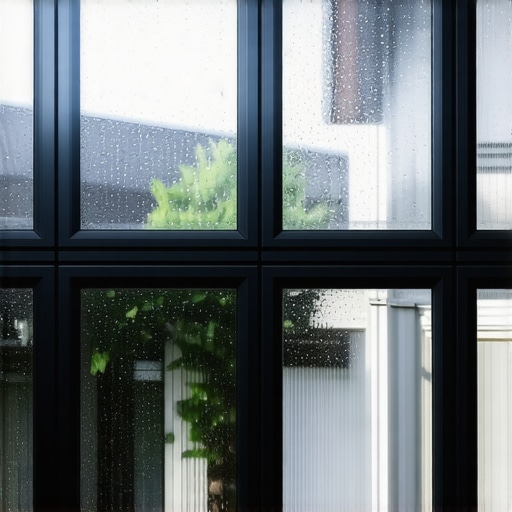
The Anatomy of a Fogged Window
When you look through your window and see a milky haze or actual water droplets that you cannot wipe away, you are witnessing a failure of the Insulated Glass Unit (IGU). As a glazier with over two decades in the field, I can tell you that this is not just an aesthetic annoyance. It is a sign that the thermal boundary of your home has been compromised. A window is a precision-engineered component designed to manage heat, light, and moisture. When that system fails, the physics of your home changes. Most homeowners mistake surface condensation for seal failure. I recall a specific incident in the dead of winter where a homeowner called me in a panic because their new windows were ‘sweating.’ I walked in with my hygrometer and showed them the humidity was 60 percent. It was not the windows; it was their lifestyle: lack of ventilation and a humidifier set way too high. However, when the fog is between the panes, no window cleaner in the world can help you. You are dealing with a breached seal.
“Installation is just as critical as the window performance itself. A high-performance window installed poorly will fail.” AAMA Installation Masters Guide
The Physics of the Edge Seal and Solar Pumping
To understand why your double glazing is fogging, we have to look at how an IGU is constructed. It consists of two or more lites of glass separated by a spacer bar and sealed with a dual-seal system. The primary seal is typically polyisobutylene (PIB), a synthetic rubber that provides the moisture vapor barrier. The secondary seal, often silicone or polysulfide, provides structural integrity. Inside the spacer bar is a desiccant, a material like silica gel designed to absorb any residual moisture trapped during the manufacturing process. The failure begins with a phenomenon called ‘solar pumping.’ During the day, the sun hits the window, heating the air or gas (like Argon) between the lites. This causes the gas to expand, putting pressure on the seals. At night, the glass cools, and the unit contracts. Over thousands of cycles, if the secondary seal has even a microscopic flaw, this pressure forces the internal gas out and pulls moist outside air in. Once the desiccant reaches its saturation point, it can no longer hold that moisture. At that moment, the dew point within the cavity drops below the glass temperature, and condensation forms on surface number two or three.
The Role of Weep Holes and Glazing Beads
One of the most common reasons for premature seal failure is poor water management within the window frame. Every operable sash or fixed frame is designed with weep holes. These are small outlets that allow water to exit the glazing track. If these are blocked by debris or if the glazing bead was improperly snapped into place, water will sit against the bottom edge of the IGU. This constant immersion is the enemy of the secondary seal. Most manufacturers use organic-based seals that will eventually break down when subjected to standing water. This is why a simple window repair often involves more than just swapping glass; it involves auditing the entire drainage path. If the sill pan was not installed with the correct slope or if the rough opening was not properly shimmed, the frame can sag, causing the glass to sit in a pool of water that it can never escape from. This leads to what I call the ‘caulk-and-walk’ disaster, where an installer simply goops silicone over a problem rather than fixing the underlying drainage issue.
U-Factor and Condensation Resistance in Cold Climates
In northern climates, the U-Factor is the most critical metric. It measures the rate of non-solar heat loss. The lower the U-Factor, the better the window is at keeping heat inside. When a seal fails and the Argon gas escapes, your U-Factor spikes. You might notice the room feels colder or that the furnace is running longer. This is because the insulating value of the window has effectively vanished. According to the National Fenestration Rating Council (NFRC), windows are also rated for Condensation Resistance (CR). A higher CR rating means the window is better at resisting moisture formation on the interior surface.
“The NFRC provides a Condensation Resistance (CR) rating to help consumers understand how well a window product will resist the formation of condensation.” NFRC Performance Standards
If you are choosing to replace windows, you must look for units with warm-edge spacers. Older aluminum spacers conduct cold directly to the edge of the glass, which is where the fogging almost always begins. Modern non-metallic spacers maintain a higher temperature at the glass edge, which keeps the internal temperature of the unit above the dew point for longer.
Why You Should Not Buy the ROI Myth
Many high-pressure sales reps will tell you that you should replace windows to save 50 percent on your energy bill. As someone who has spent years in the window repair industry, I will tell you that is a stretch. The real Return on Investment for new windows is found in comfort, curb appeal, and the prevention of structural rot. When an IGU fails, the moisture can eventually lead to mold growth on the muntins or the inner frame. If you have wood windows, that fogged glass is a ticking time bomb for rot. I have seen flashing tape that was perfectly applied, yet the house rotted from the inside out because the homeowner ignored a failed seal for five years. The moisture eventually worked its way into the wood sash and then into the house frame. If the fogging is isolated to the glass, you can often perform a glass-only replacement. This involves removing the glazing beads, cutting the old unit out, and installing a new, hermetically sealed IGU. It is a fraction of the cost of a full frame replacement and keeps the existing architectural look of the home intact.
How to Diagnose and Take Action
Before you call a contractor to replace windows, perform a simple test. Clean the window thoroughly with a professional window cleaner. If the fog remains, take a flashlight and shine it at an angle against the glass. If you see ‘puddling’ or white mineral deposits inside, the seal is gone. Check your warranty. Many manufacturers offer 10 to 20 years on the glass seal. If you are out of warranty, do not fall for ‘defogging’ services that drill holes in the glass and wash the inside. It is a temporary cosmetic fix that does not restore the thermal performance of the window. The only true fix is a new IGU. When the new unit arrives, ensure the installer uses setting blocks to center the glass in the opening, allowing for proper air and water flow around the edges. This ensures that the ‘solar pumping’ does not stress the new seals into an early grave. Proper maintenance, including clearing out your weep holes every spring, will extend the life of your glazing for decades.