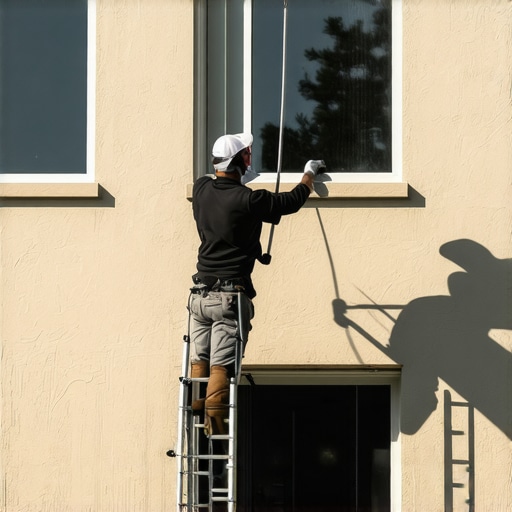
The High-Altitude Maintenance Dilemma
Working in the glazing industry for over two decades has taught me one fundamental truth: a window is only as good as the maintenance it receives. Most homeowners view their second-story windows as inaccessible glass canvases that eventually require a window cleaner or a complete unit replacement once the grime becomes unbearable. However, as a master glazier, I look at those windows and see a complex system of sashes, glazing beads, and weep holes that are all susceptible to environmental degradation. You do not need to risk your life on a 32-foot extension ladder to maintain these systems. In fact, if you are climbing a ladder with a bucket of soapy water, you are likely doing more damage to your operable units than you realize by neglecting the mechanical components.
A Lesson in Visual Misdiagnosis
I recall a specific service call in a humid coastal climate where a homeowner was convinced they needed to replace windows throughout their entire upper floor. They called me in a panic because the glass appeared perpetually ‘milky’ and they assumed the seals in their insulating glass units (IGU) had failed. I walked into the master bedroom with my hygrometer and a high-intensity inspection lamp. Within minutes, I proved the seals were perfectly intact. The ‘failure’ was actually an accumulation of salt spray and mineral deposits that had etched into the exterior surface because they hadn’t been cleaned in five years. The homeowner simply couldn’t see the detail of the grime from the ground. They didn’t need a three-thousand-dollar replacement; they needed a technical approach to cleaning that reached the second story without the instability of a ladder.
“Periodic cleaning of glass and frames is essential to maintain the performance and aesthetic appeal of the fenestration product. Accumulation of surface contaminants can lead to finish degradation if left unaddressed.” – AAMA 609 & 610-15 Cleaning and Maintenance Guide
The Physics of Water-Fed Pole Systems
The gold standard for cleaning high glass without leaving the ground is the water-fed pole system utilizing deionized water. This isn’t just a long stick with a brush. To understand why this works, we have to look at the Total Dissolved Solids (TDS) in your tap water. Standard city water contains minerals like calcium and magnesium. If you spray this on your glass and let it dry, the water evaporates, leaving the minerals behind to create spots. Professional window cleaner equipment uses a resin filter to strip these ions from the water. When this ‘hungry’ deionized water hits the glass, it aggressively bonds with dirt and debris, lifting it from the surface. Because the water is pure, it dries spot-free without the need for a squeegee. This is critical for second-story work because it eliminates the need for manual friction that a ladder-based cleaner would provide.
Anatomy of the Window: Why Cleaning Matters for Longevity
When you are cleaning from the ground, you must pay attention to more than just the transparency of the glass. The sash, which is the part of the window that holds the glass and moves, sits within the frame. Over time, dust and organic matter settle into the tracks. If you ignore this, the debris eventually clogs the weep hole, which is a small exit point designed to let water escape from the bottom of the frame. When weep holes clog, water backs up into the rough opening of your house, leading to rot in the wooden structural members. A proper cleaning routine involves using a specialized nozzle on your extension pole to flush out these drainage paths. This is a form of window repair prevention that most people overlook until they see water stains on their interior drywall.
The Glazing Zoom: Understanding Low-E Coatings
Modern windows often feature Low-Emissivity (Low-E) coatings. In colder northern climates, we typically see these coatings on surface number three (the inward-facing side of the exterior pane) to reflect heat back into the room. In hotter southern climates, the coating is on surface number two to reflect solar radiation outward before it can cross the air gap. When you clean your windows, you are usually touching surface number one (the exterior) or surface number four (the interior). However, some high-performance windows use a ‘hard coat’ Low-E on surface number four. If you are cleaning the interior of your second-story windows using a tilt-in function, you must be extremely careful not to use abrasive chemicals or ammonia-based products that can oxidize these metallic microscopic layers. Always use a pH-neutral solution to ensure the integrity of the thermal barrier remains intact.
“The durability of the seal in an insulating glass unit is the primary factor in the long-term thermal performance of the window. External pressures and chemical exposure can significantly impact this lifespan.” – NFRC Technical Standards
The Tilt-In Method: Technical Execution
If your home features modern double-hung windows, you have an advantage. These units are designed with tilt-latches that allow the sash to swing inward for cleaning. However, I have seen countless homeowners break their glazing bead or snap their balance cords because they didn’t support the weight of the glass during the tilt. To do this correctly, you must unlock the window, raise the bottom sash about six inches, and then engage the tilt-latches. You must support the sash as it rotates. If you let it drop, the torque can crack the vinyl frame or damage the shim placement that keeps the window level. Once tilted, you can clean the exterior glass from the safety of your room. This is the most effective way to address stubborn debris that a water-fed pole might miss, such as bird droppings or tree sap.
Chemical Composition and Glass Safety
When selecting a cleaning agent to use with your extension pole or for interior work, avoid anything with a high alkaline content. Glass is porous at a microscopic level. Using harsh chemicals can lead to ‘glass disease’ or permanent hazing. For second-story windows, a simple mixture of distilled vinegar and water, or a specialized surfactant designed for glazing, is sufficient. These solutions break the surface tension of the water, allowing it to sheet off the glass rather than beading up. This ‘sheeting’ action is what prevents the formation of water spots and keeps the window cleaner results lasting for months rather than weeks.
Summary of Maintenance Priorities
Cleaning is not just about aesthetics; it is a structural necessity. By maintaining the exterior surfaces without the use of ladders, you are more likely to perform the task regularly. This regularity prevents the buildup of corrosive materials on the flashing tape and frame joins. If you notice that the glass remains foggy between the panes despite a thorough cleaning, that is a sign of seal failure. In that case, cleaning will no longer help, and you will need to replace windows or at least the IGU. But for the vast majority of homeowners, a technical, ladder-free cleaning approach will extend the life of their windows by decades.