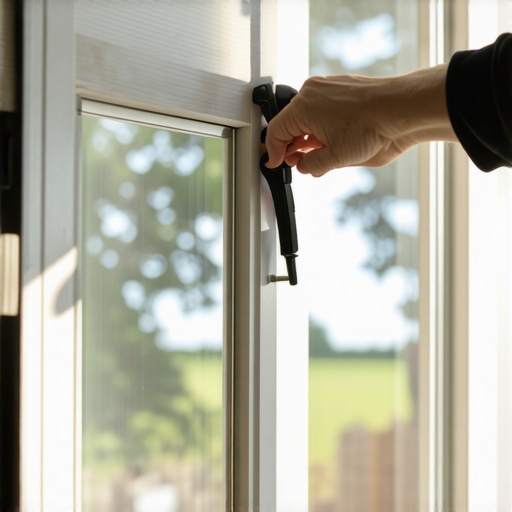
The Mystery of the Gravity-Defying Sash
Every winter, I receive the same frantic phone calls from homeowners in freezing climates. Their windows feel incredibly heavy, they are nearly impossible to lift, and once they are finally open, they come crashing down like a guillotine. Most people assume the entire unit is broken and that it is time to replace windows entirely. However, as a master glazier with over a quarter-century of experience, I know that a heavy window is rarely a sign of structural failure. It is usually a simple case of mechanical fatigue or friction management. Before you spend thousands on a full-frame replacement, you need to understand the physics of the operable sash. A window is a complex system designed to manage heat, light, and air. When it fails to stay open, the delicate equilibrium between gravity and tension has been lost.
Installation and maintenance are the primary factors in fenestration longevity. A high-performance window installed poorly or neglected will fail long before its rated lifespan. – AAMA Installation Masters Guide
The Narrative: The $28,000 Misunderstanding
I once sat across from a high-pressure salesman who was trying to convince a homeowner in a cold-weather zone that their heavy wood windows were beyond hope. He was quoting them $28,000 for a full tear-out because the windows would not stay open. He called it a warped frame. I walked over, inspected the sash, and realized it was a simple spiral balance issue. For the price of a cup of coffee and a few minutes of labor, I had that window functioning like new. The homeowner did not need an expensive replacement; they needed a basic understanding of window repair. I had to explain that the ROI on that salesman’s quote was over 150 years. This is the reality of the window industry: many installers would rather sell you a new unit than fix the one you already have. The issue was not the frame, it was the counterbalance system that had lost its tension over decades of use.
Decoding the Counterbalance System
To understand the $5 fix, you must understand how a window stays up. Most modern windows use one of three systems: block and tackle, spiral, or constant force balances. In a block and tackle system, a series of pulleys and a cord provide the tension. Spiral balances use a coiled spring inside a tube, which can be tensioned using a specific tool. Constant force balances use a stainless steel spring that unrolls as the sash moves. When a window becomes heavy, it is usually because the lubrication in these systems has dried out or the spring has lost its tension. This is where a professional window cleaner or a repair specialist starts. We do not look at the glass first; we look at the tracks and the jamb liners. Friction is the enemy of the operable window. Over years, atmospheric pollutants and dust settle into the PVC tracks, increasing the coefficient of friction against the sash edges. The $5 fix often involves nothing more than a thorough cleaning with a non-ammoniated window cleaner and an application of dry silicone spray. Unlike oil-based lubricants, dry silicone does not attract dust, which would eventually gum up the works again. The chemistry of the lubricant is vital: you want a product that creates a hydrophobic layer without leaving a sticky residue.
The Physics of Thermal Performance
In cold climates like Minneapolis or Chicago, the performance of your window is measured by its U-Factor. This is the rate at which a window conducts non-solar heat flow. The lower the U-Factor, the better the window is at keeping heat inside. When you have a heavy window that will not stay open, you might be tempted to replace it with a cheap vinyl unit. However, a well-maintained wood or fiberglass sash often has better thermal properties than a low-end replacement. A high-quality window utilizes Low-E coatings, specifically on Surface #3 in cold climates, to reflect long-wave infrared radiation back into the room. This coating is a microscopically thin layer of silver that is transparent to visible light but reflects heat. If your current window has a solid U-Factor and a warm-edge spacer system, repairing the balance is far more economical than a full replacement. The spacer, which is the piece that separates the panes of glass, is critical. Traditional aluminum spacers are thermal bridges that conduct cold directly to the interior glass, leading to condensation. Modern spacers use composite materials or structural foam to break that thermal bridge and suppress convection currents within the argon gas fill.
Standardized testing for operable windows assumes a functional counterbalance system and a maintained weatherstrip seal to achieve rated U-Factor and SHGC levels. – NFRC Performance Standards
The Step-by-Step $5 Fix
If your window is falling down, follow this professional protocol. First, use a high-quality window cleaner to strip away any grime from the jamb liners. Look for the sash edges where they meet the frame. If you have spiral balances, which look like a metal rod inside a tube, you may need to tension them. You can buy a tensioning tool for about $5, or sometimes use a pair of needle-nose pliers in an emergency. You simply disconnect the balance from the pivot shoe at the bottom of the sash, give it two or three clockwise turns to increase the spring tension, and reattach it. If the window is just sticky, the fix is even cheaper. Apply a thin layer of dry silicone spray to the tracks. Do not use WD-40 or grease, as these will degrade the plastic components and attract debris over time. Ensure the rough opening has not shifted and that the shim placement is still providing a level platform for the frame. If the frame is out of square, no amount of lubrication will help, but for 90% of homeowners, the issue is simply mechanical tension and friction management.
The Replacement Reality Check
When should you actually replace windows? If you see rot in the header or the sill pan has failed, allowing water to infiltrate the wall cavity, a repair is no longer sufficient. Water management is a science. Proper flashing tape and a drip cap must be integrated into the drainage plane of the house. If these were never installed, your heavy window might be the result of the wood frame swelling from moisture. In that case, a pocket replacement or insert window is a band-aid. You need a full-frame replacement that addresses the rough opening and ensures a water-tight seal. However, if the wood is sound and the glass is clear, the fix is mechanical. Do not let a salesman convince you that a failed balance requires a new window. Use your glazing bead to inspect the seal of the glass. If there is no fogging between the panes, your argon gas fill is likely still intact, and your window’s thermal performance remains high. The weep holes at the bottom of the frame should also be cleared to ensure that any water that reaches the track can escape, preventing the weight of water from contributing to frame damage. In conclusion, maintain your hardware, clean your tracks, and understand the physics of your home. A $5 fix today can save you thousands tomorrow.