The Sound of Failure: Why Your Windows Rattle in the Wind
That rhythmic clicking and tapping of a window sash against its frame is more than just an annoyance that keeps you awake during a storm. It is a technical indicator of a failing system. As a glazier with over two decades in the field, I have seen homeowners ignore this sound until the day the air infiltration becomes so severe that their heating bills mirror the cost of a small mortgage. When a window rattles, it means there is an air gap that should not exist. This is a failure of the tolerances between the sash and the jamb, or perhaps a degradation of the glazing bead. To truly understand why your window is vibrating, we must look at the mechanics of the rough opening and the way the glass is seated within the frame.
The Narrative of the Shaking Sash
I recall a specific call in a drafty suburb of Chicago where a homeowner was convinced their new windows were defective because they would groan and rattle every time the wind hit 20 miles per hour. I walked into the room with my digital hygrometer and a set of feeler gauges. The humidity was actually quite low, which had caused the wood components to shrink slightly, but the real culprit was the previous installer. They had relied entirely on the nailing fin for stability and had neglected to properly shim the side jambs. The window was literally floating in a rough opening that was too large, held in place only by a prayer and some low-quality caulking. This lack of structural integrity meant that the sash had nearly three-eighths of an inch of play. It was a classic case of a high-performance product being undermined by a low-performance installation.
“Installation is just as critical as the window performance itself. A high-performance window installed poorly will fail.” AAMA Installation Masters Guide
The Physics of the Rattle: U-Factor and Air Infiltration
In northern climates, we obsess over the U-Factor. This number represents the rate of heat transfer through the window assembly. A low U-Factor is essential for keeping the heat inside your home during a brutal January freeze. However, even the most expensive triple-pane unit becomes a thermal disaster if it rattles. A rattle implies air infiltration. When air moves through the gap between the sash and the weatherstripping, it carries away the expensive warmth you have paid for. This is why we look for warm-edge spacers and high-performance weatherstripping that remains flexible even in sub-zero temperatures. If the weatherstripping has hardened or flattened over time, the seal is broken, and the wind will find that path of least resistance, causing the vibration you hear.
The Rubber Wedge Hack: A Temporary Master Class
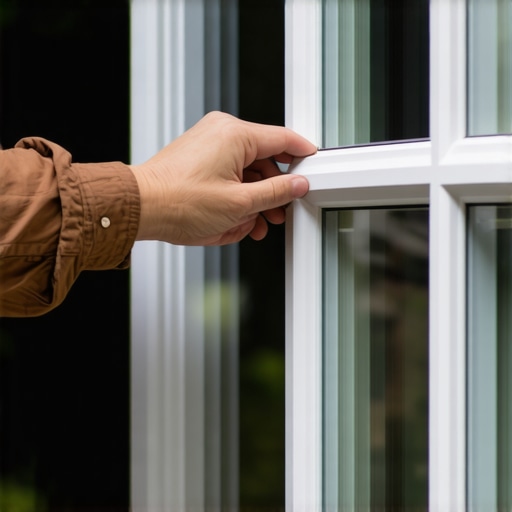
Before you decide to replace windows entirely, there is a technical stopgap that can restore your sanity. The rubber wedge hack is a favorite among old-school glaziers for a reason: it addresses the vibration by increasing the lateral pressure on the sash. You do not want to use wood shims for this, as they do not compress and can actually damage the frame. Instead, you need a high-density rubber wedge, often found in the hardware section or even repurposed from a heavy-duty door stop. [IMAGE_PLACEHOLDER] To perform this hack, you must identify the point of maximum play. Open the window slightly and inspect the channel. You are looking for where the sash meets the jamb. By inserting a small, trimmed rubber wedge into the corner of the tracks, you force the sash to seat firmly against the weatherstripping. This eliminates the ‘chatter’ caused by wind pressure. While this is effective, remember that it is a workaround, not a permanent fix for a structural deficiency.
The Role of the Window Cleaner in Detection
Interestingly, a professional window cleaner is often the first person to identify a failing sash. When they apply pressure with a squeegee, they can feel the movement in the glass that the homeowner might miss. If the glazing bead is loose, the glass itself might be rattling within the sash, which is a significantly more dangerous problem than the sash rattling in the frame. A loose glazing bead can lead to water intrusion, which eventually rots the sills and the headers. If you are performing your own window repair, always check the perimeter of the glass for any signs of movement. If you can push on the glass and see it move more than a sixteenth of an inch, your seal is compromised.
“Standard Practice for Installation of Exterior Windows, Doors and Skylights requires that the flashing system must be integrated with the water-resistive barrier to ensure long-term performance.” ASTM E2112
When to Move from Repair to Replacement
There comes a time when no amount of rubber wedges or fresh caulking will save a window. If your frames are made of older vinyl that has reached its limit of thermal expansion and contraction, the material becomes brittle. In wood windows, if the rot has penetrated the core of the sash, the structural integrity required to hold the glass is gone. When we talk about window repair, we are usually talking about maintenance: replacing weatherstripping, adjusting the balance, or clearing out a clogged weep hole. However, if the air infiltration is so high that you can feel a draft from three feet away, it is time to replace windows. New units with Low-E coatings on Surface #3 will not only silence the rattling but will also reflect long-wave infrared radiation back into your home, significantly improving your comfort levels. Choose a fiberglass or composite frame for maximum stability in extreme temperature swings, as these materials have a lower coefficient of thermal expansion compared to standard vinyl.
The Anatomy of a Quiet Window
A quiet window is a product of precision engineering. It starts with the rough opening being square, level, and plumb. Then, the installer must use the correct flashing tape and a sill pan to ensure that even if water gets past the first line of defense, it is directed back outside through the weep holes. The sash should fit into the frame with tight tolerances, typically no more than one-eighth of an inch of clearance. This space is then sealed by multi-point weatherstripping. If you follow these principles, you will never have to worry about a rattling window again. Until then, keep your rubber wedges handy and your hygrometer calibrated. Understanding the physics of your home’s envelope is the only way to maintain a comfortable, quiet living space.