The Anatomy of a Failed Installation: A Master Glazier’s Perspective
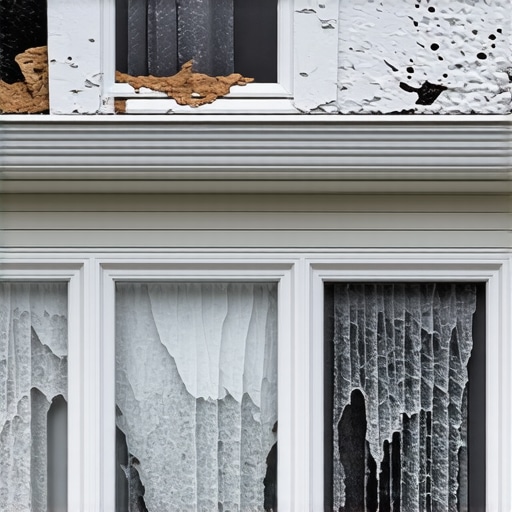
I pulled a double-hung unit out of a masonry opening in Cleveland last November where the entire sill was a sponge of black mold. The homeowner thought they just needed a better window cleaner to get the ‘stains’ off the wood. In reality, the installer had omitted the sill pan, trusting a bead of cheap latex caulk to defend against the wind-driven rain of Lake Erie. This is the reality of the window industry: a high-performance product is only as good as the flashing tape and the person applying it. As we approach the harsh winters predicted for 2026, understanding the physical limits of your glazing is not a luxury; it is a structural necessity.
“Installation is just as critical as the window performance itself. A high-performance window installed poorly will fail.” – AAMA Installation Masters Guide
1. The Interior Ice Formation and Glazing Bead Failure
The first warning sign is the presence of frost or ice on the interior glazing bead during a cold snap. This is not just a sign that it is cold outside; it is a sign of a total thermal bridge failure. In a properly functioning window, the warm-edge spacer should keep the perimeter of the glass assembly above the dew point. If you see ice, it means your spacer system has likely lost its integrity or was never designed for northern latitudes. When the temperature of the interior glass surface drops below the saturation temperature of the indoor air, condensation occurs. If the window is old, the desiccant inside the spacer bar is likely saturated, meaning the argon gas has leaked out and been replaced by moisture-laden air. This leads to inter-pane condensation which no window cleaner can reach. By Winter 2026, these units will not just be cold; they will be active sources of mold growth within your wall cavity.
2. The ‘Lighter Test’ and Low-E Surface Performance
If you want to know if your windows are ready for a deep freeze, perform a simple reflection test. Hold a flame near the glass and look at the reflections. In a dual-pane window, you should see four reflections. If all the flames are the same color, you lack a Low-E coating. For those in cold climates, we look for the coating on Surface #3 (the exterior-facing side of the interior pane). This coating is engineered to reflect long-wave infrared radiation (heat) back into the room. If your current windows are allowing that heat to pass through, your furnace is essentially trying to heat the entire neighborhood. We use the U-Factor to measure this rate of heat loss.
“U-factor measures the rate of non-solar heat loss. The lower the U-factor, the greater a window’s resistance to heat flow and the better its insulating properties.” – NFRC (National Fenestration Rating Council)
By the time the 2026 winter solstice arrives, a window with a U-Factor above 0.30 will be a significant financial liability. If your windows are twenty years old, they are likely sitting at a 0.50 or worse.
3. Structural Warping and Rough Opening Gaps
The third sign is an operable sash that no longer seats correctly in the frame. Go to your window and try to slide a piece of paper between the sash and the weatherstripping. If it slides through easily, you have a bypass. This usually happens because of frame expansion and contraction. Many cheap vinyl windows lack internal steel reinforcement. Over a decade of seasons, the vinyl ‘smiles’ or bows, creating gaps in the rough opening that no amount of window repair can truly fix. When wind hits a warped frame, it creates a pressure differential that sucks cold air into your home. This is why we focus on the shim process during installation. If the frame is not perfectly level, square, and plumb, the weatherstripping cannot compress. For the 2026 season, you need a frame material with a low coefficient of thermal expansion, like fiberglass or a high-quality composite. Fiberglass expands at nearly the same rate as the glass itself, ensuring that the seals remain tight even when the mercury drops to sub-zero levels.
The Science of Water Management: Beyond the Sash
When you decide to replace windows, you must choose between a pocket replacement and a full-frame tear-out. A pocket replacement leaves the old wood frame in place, which is often a mistake if you have already seen signs of rot. A master glazier will always recommend a full-frame replacement if there is any doubt about the integrity of the original sill pan. We use flashing tape in a shingle-style overlap: the bottom piece goes first, then the sides, then the top. This ensures that any water that gets behind the exterior cladding is directed out through the weep holes rather than into your headers. If your current windows have water stains on the drywall underneath the corners, your flashing system has failed. This is not a job for a window cleaner; it is a job for a structural specialist. Do not wait for the first blizzard of 2026 to realize your wall is rotting from the inside out. Inspect your muntin bars for signs of stress, check your operability, and most importantly, look at your energy bills. The math does not lie.